Kenya’s South Lokichar: A New Investment Horizon Opens with Strategic Tax Incentives
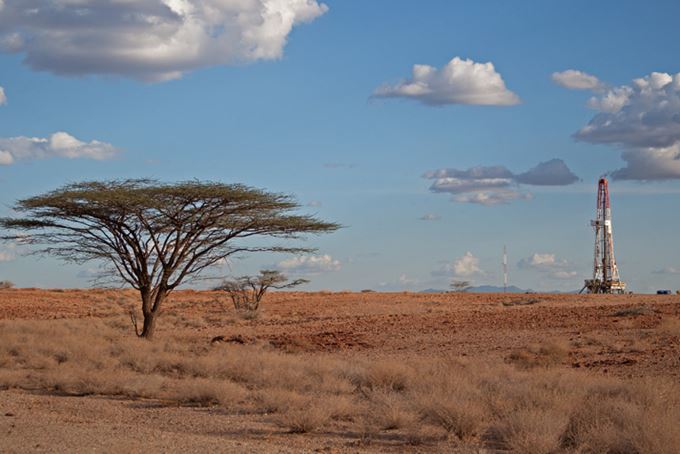
Kenya’s South Lokichar basin, a frontier region long eyed by international and local players, is now poised for accelerated development following a significant restructuring of its fiscal terms. The recent amendments to the production sharing agreement for blocks T6 and T7, now under the stewardship of Nairobi-based Gulf Energy Ltd., represent a pivotal moment for East Africa’s oil ambitions. These strategic adjustments, including substantial tax breaks and an elevated cost recovery ceiling, are designed to rapidly de-risk the $6.1 billion project and propel it towards its ambitious target of over 150,000 barrels per day (bpd) production, with initial output anticipated as early as 2027. For investors tracking emerging market energy plays, this move signals Kenya’s firm commitment to unlocking its hydrocarbon potential, creating a more attractive environment for capital deployment into a project that has historically faced development hurdles.
De-Risking the Investment: A Deep Dive into the New Fiscal Terms
The core of Kenya’s renewed push for South Lokichar lies in the comprehensive incentive package granted to Gulf Energy. Previously, developers faced a 16% value-added tax, along with withholding taxes of 5% on local goods and services and 5.625% on imported ones, compounded by a 2% railway development levy and a 2.5% import declaration fee. Our analysis of the amended agreement reveals that Gulf Energy will now be exempted from these significant VAT, withholding taxes, and import levies on project-related goods and services. This drastically reduces the upfront and ongoing operational costs, directly boosting the project’s internal rate of return and enhancing capital efficiency. Furthermore, the increase in the annual cost recovery ceiling from a previous range of 55-65% (for blocks T6 and T7 respectively) to a harmonized 85% is a game-changer. This higher allowance for recovering exploration and production expenses annually means Gulf Energy can recoup its substantial initial investment faster, improving cash flow and reducing the payback period. These fiscal adjustments are not merely concessions; they are a calculated strategy by Kenya to ensure the economic viability of a project critical to its long-term energy strategy, following Tullow Oil Plc’s decision to divest its interests for $120 million to focus on debt reduction.
Project Economics in a Volatile Global Oil Market
The enhanced fiscal terms come at a critical juncture for the global oil market, adding a layer of resilience to the South Lokichar project’s economics. As of today, Brent Crude trades at $91.87 per barrel, reflecting a significant daily decline of 7.57% from its intraday high, with a daily range between $86.08 and $98.97. This sharp downturn is a stark reminder of the inherent volatility in global energy prices. Looking at the broader trend, Brent has fallen from $112.57 just two weeks ago to its current level, marking a 12.4% decrease. Despite this recent price softening, current levels remain comfortably above the project’s $50 per barrel threshold that triggers a 26% windfall tax for Kenya. This indicates that even with market fluctuations, the project is well-positioned for profitability and significant revenue generation for the Kenyan state, starting with a 50% profit share that escalates to 75% at peak production. Investors are keenly asking about future oil price predictions for the end of 2026, and while short-term volatility is evident, the long-term fundamentals, coupled with these favorable tax terms, suggest that the South Lokichar project is robustly insulated against moderate price swings, making its forward-looking financial models more attractive.
Upcoming Catalysts and Legislative Hurdles
While the Energy Minister has already approved Gulf Energy’s field development plan, the crucial next step involves parliamentary approval of the amended production sharing agreement. This legislative endorsement is the final key catalyst that will fully unlock the project’s development phase, paving the way for the substantial $6.1 billion investment to be deployed. Investors should closely monitor this legislative process, as its successful conclusion will mark a definitive green light for the 2027 production target. Beyond domestic approvals, the broader global energy calendar holds significant influence. This week alone brings the OPEC+ Joint Ministerial Monitoring Committee (JMMC) meeting today, followed by the full Ministerial meeting tomorrow. The outcomes of these gatherings regarding production quotas, a frequent point of inquiry from our readers, will directly impact global supply dynamics and, consequently, future oil prices. Further into the coming weeks, the API and EIA weekly inventory reports, along with the Baker Hughes Rig Count, will provide ongoing market signals, shaping the sentiment and economic environment into which South Lokichar will eventually launch its crude. These external events, combined with the domestic legislative progress, form a critical roadmap for tracking the project’s viability and investment potential.
Investor Outlook: East Africa’s E&P Rebound
The South Lokichar development signals a broader trend in the East African exploration and production (E&P) landscape, attracting renewed investor scrutiny. The shift from a major international player like Tullow to a local entity like Gulf Energy, bolstered by substantial government incentives, highlights a strategic pivot towards facilitating domestic participation and accelerating project timelines. This mirrors a growing investor interest in specific E&P companies and their regional performance, as evidenced by common reader questions concerning the financial outlook for companies operating in similar environments. The project’s targeted output of over 150,000 bpd at peak production would significantly elevate Kenya’s status as an oil producer, offering diversification for global supply chains and a new source of revenue for the nation. For sophisticated oil and gas investors, the combination of robust fiscal incentives, a clear development pathway, and a potentially high-yielding asset in a growing energy market makes South Lokichar a compelling case study for future capital allocation in the evolving global energy mix.