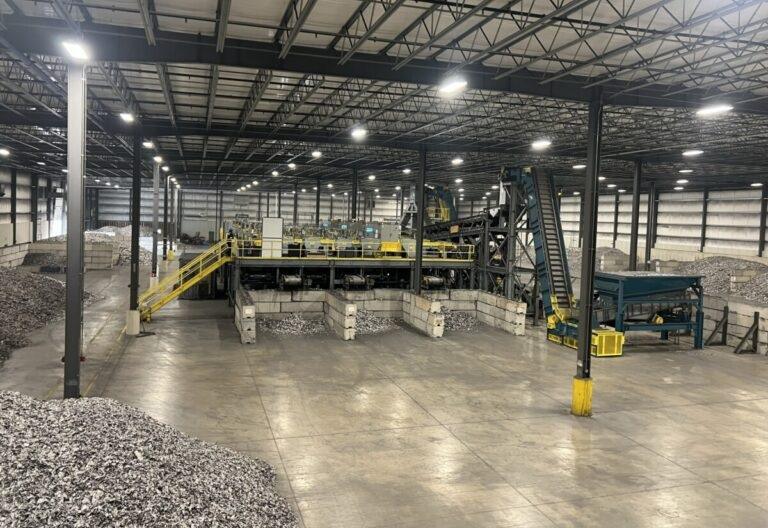
The energy investment landscape is rapidly expanding beyond traditional fossil fuel extraction, with capital increasingly flowing into innovative solutions that promise both sustainability and robust returns. A prime example of this evolving trend is the recent $45 million funding round secured by Sortera Technologies, an Indiana-based startup focused on AI-powered metal recycling. This significant capital injection, led by T. Rowe Price Associates and VXI Capital, not only validates Sortera’s technology but also underscores a broader shift towards material efficiency and circular economy principles that will inevitably impact future energy demand and investment strategies for oil and gas portfolios.
The Energy Transition’s Tangential Beneficiaries: Material Efficiency and Reduced Demand
While much of the energy transition discussion centers on renewable power generation or electric vehicles, the often-overlooked area of industrial material efficiency presents an equally compelling investment thesis. Sortera Technologies stands at the forefront of this segment, utilizing artificial intelligence, advanced sensors, and data analytics to precisely sort and upgrade scrap metals, particularly aluminum, into high-purity feedstocks. The implications for the energy sector are profound: Sortera claims its technology reduces the energy needed for production by approximately 95% compared with virgin aluminum. This substantial energy saving translates directly to reduced demand for the primary energy sources—whether natural gas for smelting, or electricity often generated from fossil fuels—that power traditional manufacturing processes. For oil and gas investors, understanding these shifts in industrial energy consumption is critical, as innovations like Sortera’s promise to decouple economic growth from burgeoning primary energy demand, fostering a more resource-efficient global economy.
Market Dynamics and Evolving Investor Sentiment Beyond the Barrel
In a week where crude markets exhibit notable volatility, with Brent Crude currently trading at $94.55 per barrel, down 0.97% today and a significant 19.8% over the past 14 days from its $118.35 high on March 31st, investor attention is understandably drawn to traditional energy price movements. Our proprietary reader intent data reveals a consistent focus on these dynamics, with many asking questions like “is WTI going up or down?” and seeking predictions for “the price of oil per barrel by end of 2026.” However, the $45 million raise for Sortera signals a parallel, equally important investment current. Sophisticated investors are increasingly allocating capital to companies that address systemic inefficiencies and sustainability challenges, even outside the direct O&G value chain. This investment in a material recycling firm, which promises domestic supply chain resilience and massive energy savings, highlights a growing recognition that future value creation in energy markets will extend far beyond the immediate fluctuations of crude and natural gas prices. It’s an investment in the *embedded energy* within materials, recognizing that efficiency gains can be as impactful as new supply.
Strategic Implications for O&G Portfolios: Diversification and Supply Chain Resilience
Sortera’s expansion plans, including a new 200,000-square-foot facility in Lebanon, Tennessee, slated to be operational by summer next year, are a testament to the surging demand for domestically sourced, high-quality recycled aluminum. This move, mirroring the success of their flagship Markle, Indiana plant, aims to boost annual production to 240 million pounds. For oil and gas investors, this highlights several strategic implications. First, the strengthening of domestic supply chains, particularly for the automotive sector, reduces geopolitical risks and enhances economic stability – themes that resonate strongly with energy security concerns. Second, the drive for manufacturers to meet sustainability goals through recycled content directly pressures traditional energy-intensive production methods. O&G companies, or investors in the sector, should consider how this trend might create opportunities for diversification into industrial decarbonization technologies, carbon capture for primary metal production, or even direct stakes in companies that reduce overall industrial energy footprints. The success of Sortera suggests a growing market for solutions that allow industries to achieve their sustainability targets without compromising on material quality or supply consistency.
Navigating Future Market Signals: Beyond Traditional Indicators
The coming days and weeks are packed with critical energy events: tomorrow’s OPEC+ JMMC Meeting, the EIA Weekly Petroleum Status Report on April 22nd and 29th, and the Baker Hughes Rig Count on April 24th and May 1st. These are indispensable for short-term trading and understanding traditional supply-demand dynamics. However, the investment in Sortera, and its forward-looking expansion, represents a different kind of market signal that investors must increasingly incorporate into their long-term outlook. While the EIA Short-Term Energy Outlook on May 2nd will provide traditional forecasts, astute investors will also monitor the growth trajectory of companies like Sortera. Their ability to divert billions of pounds of material from overseas shipping and dramatically reduce energy consumption indicates a fundamental shift in industrial practices that will increasingly influence future energy demand projections. The operational launch of Sortera’s Tennessee facility by summer next year, and its targeted 240 million pounds of annual production, are tangible milestones in the broader industrial decarbonization movement. For those seeking to position their portfolios for the future, tracking these innovative material solutions is becoming as crucial as monitoring crude inventories or rig counts.


