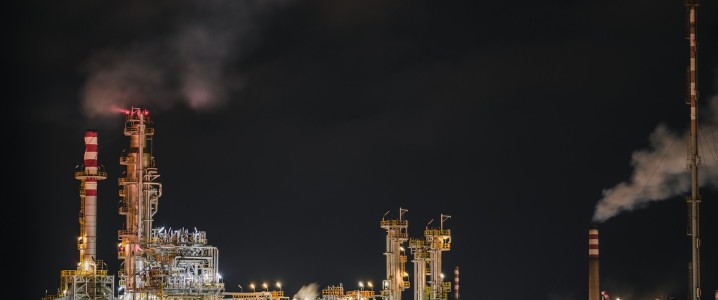
The operational future of Serbia’s sole refinery, Naftna Industrija Srbije (NIS), hangs precariously in the balance, presenting a complex challenge for regional energy stability and a salient case study for investors navigating geopolitical risks in the oil and gas sector. Majority-owned by Russian state energy firms and consequently under U.S. sanctions, NIS faces an urgent deadline: its crude oil supply, halted since a previous U.S. waiver expired on October 8, will only last until November 25. The company has now formally applied for a special U.S. license to continue operations while crucial negotiations for an ownership change unfold, a move that underscores the immediate threat to Serbia’s energy security and the broader implications for regional supply chains.
The Imminent Operational Crisis at NIS
The situation at NIS is critical. Since the U.S. sanctions waiver on the Russian-owned refinery in Serbia expired on October 8, the repercussions have been swift and severe. Banks have ceased processing NIS-related payments, and, perhaps more significantly, Croatia’s JANAF pipeline, Serbia’s primary conduit for Russian and Kazakh crude since 2022, has halted deliveries. This leaves the refinery with a finite crude inventory, projected to sustain operations only until November 25. For investors, this creates a tangible supply risk within the Balkans. A potential shutdown of Serbia’s only refinery would force the nation to import all its refined products, likely at a premium, disrupting regional market equilibrium and potentially impacting downstream profit margins for other players in the vicinity. The Serbian state holds a 29.9% stake in NIS, making this a matter of national energy security and a political hot potato for Belgrade, intensifying pressure on U.S. authorities to grant the requested operational license.
Geopolitics and Market Volatility: A Price-Sensitive Landscape
The predicament facing NIS unfolds against a backdrop of significant market volatility. As of today, Brent crude trades at $90.7 per barrel, reflecting an 8.74% decline from yesterday’s close and oscillating within a day range of $86.08 to $98.97. Similarly, WTI crude is priced at $82.75, down 9.24%, with a daily range of $78.97 to $90.34. This downturn is part of a broader trend; Brent crude has shed over 12% in the last two weeks alone, falling from $112.57 on March 27 to $98.57 on April 16. While a potential operational halt at NIS, a regional refinery, might not directly trigger global price movements, it certainly adds to the cumulative geopolitical risk premium embedded in current crude prices. Any disruption, however localized, sends ripples through supply chains and reinforces market sensitivity to geopolitical events. Many investors are actively inquiring about the trajectory of oil prices by the end of 2026, and such localized supply shocks, while not individually decisive, contribute to the overall unpredictability and necessitate robust risk assessment in energy portfolios. The market remains highly responsive to any news that could impact supply, whether from major producers or critical regional infrastructure.
The Race Against Time: Operational License vs. Ownership Restructuring
The strategic path forward for NIS appears bifurcated: secure an immediate operational waiver or finalize a change in ownership. The U.S. Office of Foreign Assets Control (OFAC) previously issued a license valid until February 13, 2026, but this only authorized negotiations between shareholders and other interested parties regarding changes in NIS’s ownership structure. NIS’s new request is specifically for an operational license, which is distinct and far more urgent given the November 25 crude supply deadline. Reports indicate that Hungarian oil company MOL is nearing an agreement to acquire an 11.3% stake from the Russian owners, a move that could potentially dilute Russian control and pave the way for a more permanent solution to the sanctions issue. However, these ownership talks are complex and time-consuming. The immediate priority is bridging the operational gap until a sustainable ownership solution is achieved. Investors should closely monitor OFAC’s decision, as it will signal the U.S. administration’s willingness to balance its sanctions policy against the humanitarian and economic stability of an allied nation. A swift resolution here could mitigate a significant regional supply disruption and provide clarity on the future investment landscape in Southeast European energy assets.
Navigating Future Energy Events Amidst Sanction Uncertainty
The immediate future holds a series of critical energy events that will shape global market sentiment, even as the NIS situation unfolds. The OPEC+ Joint Ministerial Monitoring Committee (JMMC) meets this Friday, April 17, followed by the Full Ministerial Meeting on Saturday, April 18. These gatherings are paramount for investors, who are keenly asking about OPEC+’s current production quotas and their potential impact on future oil prices. While the NIS issue is regional, a forced shutdown would necessitate Serbia seeking refined products from alternative, likely more expensive, sources, thereby subtly influencing regional demand dynamics and global product flows. Beyond OPEC+, weekly data releases like the API Weekly Crude Inventory on April 21 and the EIA Weekly Petroleum Status Report on April 22 will provide crucial insights into U.S. supply and demand fundamentals. The Baker Hughes Rig Count on April 24 will offer a snapshot of future drilling activity and potential supply capacity. For energy investors, integrating the potential for localized supply shocks, such as the one threatening NIS, with these broader market indicators is essential for developing a comprehensive investment thesis in an increasingly interconnected and geopolitically sensitive energy landscape. The confluence of these factors underscores the need for vigilance and adaptive strategies in oil and gas investing.


