The global energy landscape continues its intricate dance between ambitious climate goals and the stark realities of energy security. Recent developments from COP30 in Brazil highlight this tension, as 82 nations advocated for a clear roadmap to phase out fossil fuels. While such a push signals an undeniable long-term direction, the nuanced response from key economic blocs, particularly the European Union, reveals the complex policy risks and opportunities facing oil and gas investors. Our analysis delves beyond the headlines, leveraging OilMarketCap’s proprietary data to understand how these policy signals, coupled with immediate market dynamics and upcoming events, shape the investment thesis for the sector.
The COP30 Mandate: An Evolving Policy Risk Landscape
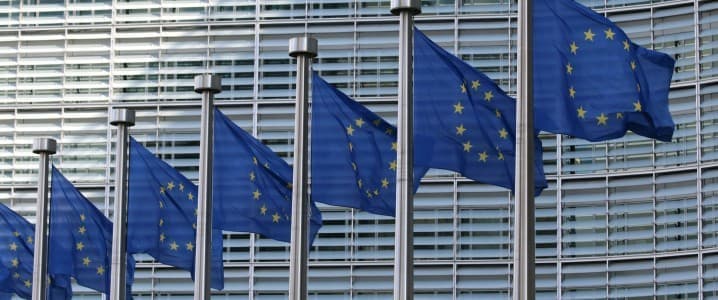
The collective call from 82 nations for a definitive fossil fuel phase-out roadmap at COP30 underscores the growing international pressure on the oil and gas industry. This momentum, while aspirational, creates a tangible layer of policy risk for companies operating globally. Notably, the European Union, often seen as a vanguard in climate policy, did not formally endorse this initiative due to a lack of unanimous consent among its 27 member states. This internal division, particularly following the Russian invasion of Ukraine and the subsequent energy crisis, reveals a prioritization of energy security and affordability over immediate, stringent decarbonization targets for some nations within the bloc. While certain northwest EU members expressed support, the inability of the EU-27 to present a unified front highlights a fragmented policy environment. For investors, this fragmentation means navigating a patchwork of regulations where national energy priorities can, and often do, diverge from overarching climate goals, introducing uncertainty into long-term capital allocation strategies for exploration and production.
Market Volatility Amidst Policy Debates: A Snapshot
Against the backdrop of these long-term policy discussions, the crude oil market has demonstrated significant volatility. As of today, Brent Crude trades at $90.7 per barrel, marking an 8.74% decline within the day, with an intraday range spanning $86.08 to $98.97. Similarly, WTI Crude has seen a sharp 9.24% drop, settling at $82.75, moving between $78.97 and $90.34. This daily downturn extends a broader trend, with Brent having shed $14, or 12.4%, over the past 14 days, falling from $112.57 to $98.57. Gasoline prices have also followed suit, currently at $2.93, down 5.18% today. This recent bearish sentiment in the physical markets adds another dimension to the policy debate. While the long-term phase-out discussions aim to reduce future demand for fossil fuels, the immediate price action suggests that current supply-demand imbalances, geopolitical factors, or a broader risk-off sentiment are exerting more immediate influence on prices. Investors must discern whether today’s price weakness reflects a nascent pricing-in of future demand destruction from climate policies, or if it is primarily a reaction to near-term supply expectations or economic headwinds.
The EU’s Pragmatic Pivot: New Avenues for O&G Investment
While the EU’s unanimous backing for a fossil fuel phase-out remains elusive, the bloc has concurrently demonstrated a more pragmatic approach to its interim 2040 climate goals. The European Parliament recently approved flexibilities in the target for a 90% reduction in net greenhouse gas emissions compared to 1990 levels. This crucial flexibility permits member states to outsource up to 5% of their reduction target to countries outside the bloc through the use of carbon credits. This development is significant for oil and gas investors. It suggests an acknowledgment within the EU that achieving ambitious climate targets requires a multifaceted approach that includes market mechanisms and international collaboration, not just outright bans. For energy companies, this opens potential new revenue streams and investment opportunities in carbon capture, utilization, and storage (CCUS) projects, nature-based solutions, and other initiatives that generate verifiable carbon credits. Companies adept at integrating these solutions into their business models, or those with existing assets that can be retrofitted for decarbonization services, may find themselves better positioned to thrive in this evolving regulatory environment. Investors are increasingly asking about specific company performance in this shifting landscape, such as the outlook for integrated majors like Repsol; their ability to leverage these carbon market flexibilities will be a key determinant of future financial health.
Navigating the Near-Term: OPEC+ and Inventory Signals
Beyond the long-term policy pronouncements, the immediate future for oil and gas markets will be heavily influenced by critical supply-side decisions and inventory data, which our readers are keenly focused on, often asking about 2026 price predictions and OPEC+ production quotas. The upcoming OPEC+ Joint Ministerial Monitoring Committee (JMMC) meeting on April 17th, followed by the Full Ministerial Meeting on April 18th, are pivotal events. Given the significant price drops seen today and over the past two weeks, all eyes will be on whether the cartel will adjust its production strategy to stabilize prices. Any decision to maintain current quotas or, more drastically, to cut production further could provide immediate support to crude benchmarks. Conversely, inaction might signal a willingness to tolerate lower prices, potentially exacerbating the recent declines. Following these meetings, investors will closely monitor the API Weekly Crude Inventory report on April 21st and the EIA Weekly Petroleum Status Report on April 22nd, providing critical insights into U.S. supply-demand dynamics. The Baker Hughes Rig Count on April 24th will offer an indication of future drilling activity. These near-term events create a volatile environment where immediate supply management interacts directly with the broader policy narrative of energy transition, requiring investors to maintain vigilance on both fronts.
Investment Implications: Balancing Transition and Security
The confluence of ambitious climate roadmaps, internal policy divisions, pragmatic market mechanisms, and immediate supply-side decisions paints a complex picture for oil and gas investing. While 82 nations push for a fossil fuel phase-out, the EU’s internal struggles underscore that energy security remains a paramount concern, particularly for economies reliant on stable and affordable supplies. For investors, this means that while the long-term trajectory is towards decarbonization, the path will be uneven and punctuated by periods where conventional energy sources are critical. Companies demonstrating resilience, strategic diversification into lower-carbon solutions, and efficiency in their core operations are best positioned. The emergence of carbon credit flexibilities also signals that the energy transition will not be a monolithic shift but will incorporate market-based solutions, presenting new opportunities for companies that can adapt and innovate within a carbon-constrained world. Successful O&G investing in this decade will require a sharp focus on both the immediate market signals from events like OPEC+ meetings and the evolving, often contradictory, global policy landscape.


