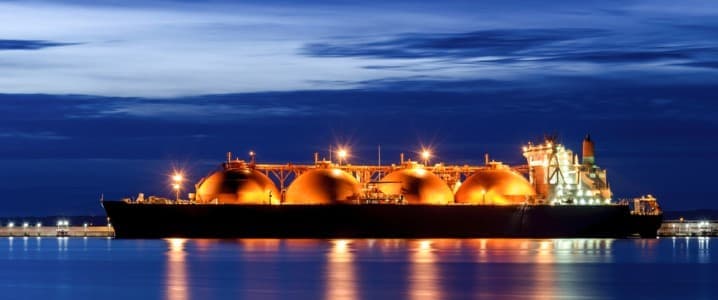
The global energy landscape continues its dynamic evolution, and a significant development is unfolding in the Arctic. Russian energy giant Novatek, operator of the massive Arctic LNG 2 project, is reportedly offering steep discounts—upwards of 30-40% below market rates—to secure buyers for its liquefied natural gas. This strategic move, primarily targeting Chinese importers, highlights the persistent challenges posed by international sanctions on Russia’s energy sector and the innovative, albeit costly, ways companies are adapting. For investors, this scenario presents both unique risks and potential opportunities, underscoring the critical interplay of geopolitics, logistics, and market fundamentals in today’s energy investment thesis.
Arctic LNG’s Deep Discount Strategy Unveiled
Novatek’s decision to significantly slash prices for its Arctic LNG 2 cargoes, reportedly dropping individual cargo values from over $44 million to a range of $28 million to $32 million, is a direct consequence of the extensive sanctions imposed by the United States and the European Union. These measures have effectively curtailed the company’s access to crucial Western financing and, critically, international shipping insurance. The Arctic LNG 2 facility, designed for a maximum capacity of 19.8 million tons, began liquefaction in late 2023, yet the full commercialization of its output has been hampered by these restrictions. While initial exports occurred between August and November 2024, the first truly “sold” cargoes under these discounted terms only began loading in August of the current year, indicating a prolonged struggle to secure buyers at prevailing market rates. This aggressive pricing strategy underscores the urgency for Novatek to monetize its substantial Arctic gas reserves, even if it means sacrificing significant revenue per unit.
Navigating Market Volatility Amidst Geopolitical Pressures
This discounted LNG enters a global energy market already grappling with considerable volatility. As of today, Brent crude trades at $90.17, reflecting a notable 9.28% decline from its previous close, with an intra-day range spanning from $86.08 to $98.97. Similarly, WTI crude has seen a sharp drop of 9.83%, trading at $82.21. This recent downward pressure on crude prices follows a broader trend; Brent, for instance, has shed $14, or 12.4%, over the past 14 days, falling from $112.57 on March 27th to $98.57 by April 16th. While LNG prices operate on different benchmarks, the overall bearish sentiment in the crude market can influence investor perception across the broader energy complex. The influx of deeply discounted Russian LNG, even if primarily directed to a single major consumer like China, introduces an additional element of supply-side competition, potentially exerting further downward pressure on regional LNG spot prices and challenging the margins of other producers. For energy investors, understanding these intertwined dynamics is crucial when assessing the profitability and market share of various players.
Logistical Ingenuity and Its Constraints: The Northern Sea Route
To circumvent traditional shipping routes and insurers, Novatek has increasingly relied on the Northern Sea Route (NSR) to transport its LNG to China. This Arctic maritime pathway offers a significantly shorter transit time to Asian markets compared to conventional routes through the Suez Canal, making it an attractive logistical solution. Indeed, Novatek has leveraged the NSR to boast record production for August, indicating its operational effectiveness during peak periods. However, the NSR presents its own unique set of challenges. Its navigability is highly seasonal, typically limited to the Arctic summer months, which restricts the consistency and volume of year-round shipments. This seasonality creates logistical bottlenecks and puts pressure on Novatek to move as much product as possible within a narrow window. The reliance on this specialized route, coupled with the need for ice-class tankers and the ongoing search for alternative insurance and financing mechanisms outside Western jurisdictions, adds significant complexity and cost to the supply chain, ultimately contributing to the necessity of offering such steep discounts.
Investor Outlook: Strategic Implications and Upcoming Catalysts
Investors closely tracking the energy sector are naturally concerned with the broader implications of these developments. Our proprietary intent data indicates a strong interest in understanding future market direction, with common queries ranging from “what do you predict the price of oil per barrel will be by end of 2026?” to specific questions about OPEC+ production quotas. The Novatek situation directly impacts the global LNG supply picture, a key component of the overall energy mix. While the discounted sales primarily affect Russian revenues, they also highlight the ongoing segmentation of global energy markets and the strategic maneuvers by major consumers like China to secure energy at favorable terms. Looking ahead, a series of upcoming energy events will shape the market backdrop. The OPEC+ Joint Ministerial Monitoring Committee (JMMC) and full Ministerial Meetings on April 17th and 18th, respectively, could introduce shifts in crude oil production policy that reverberate across the energy complex. Subsequent weekly data releases, such as the API and EIA Crude Inventory reports on April 21st, 22nd, 28th, and 29th, along with the Baker Hughes Rig Count on April 24th and May 1st, will offer crucial insights into supply and demand fundamentals. These events, combined with any further developments in the enforcement or circumvention of sanctions, will be critical for investors assessing the long-term viability of projects like Arctic LNG 2 and the broader investment landscape for global LNG.
The Geopolitical Chessboard and Long-Term Energy Strategy
The saga of discounted Russian Arctic LNG is more than just a pricing anomaly; it represents a significant move on the global geopolitical chessboard. For Russia, it’s a pragmatic strategy to sustain energy revenues and maintain market share in the face of unprecedented sanctions. For China, it’s an opportunity to secure long-term, cost-effective energy supplies, bolstering its energy security and industrial competitiveness. For the wider global market, it signals a continued fragmentation, where energy flows are increasingly dictated by political alignment and the resilience of alternative trade mechanisms. Investors must consider how these dynamics will reshape future LNG projects, potentially encouraging more direct state-to-state energy deals and accelerating the development of non-Western financial and insurance infrastructures. The long-term implications for global LNG pricing benchmarks, competitive landscapes for other producers, and the stability of traditional energy supply chains remain subjects of intense scrutiny and will undoubtedly influence capital allocation decisions in the years to come.


