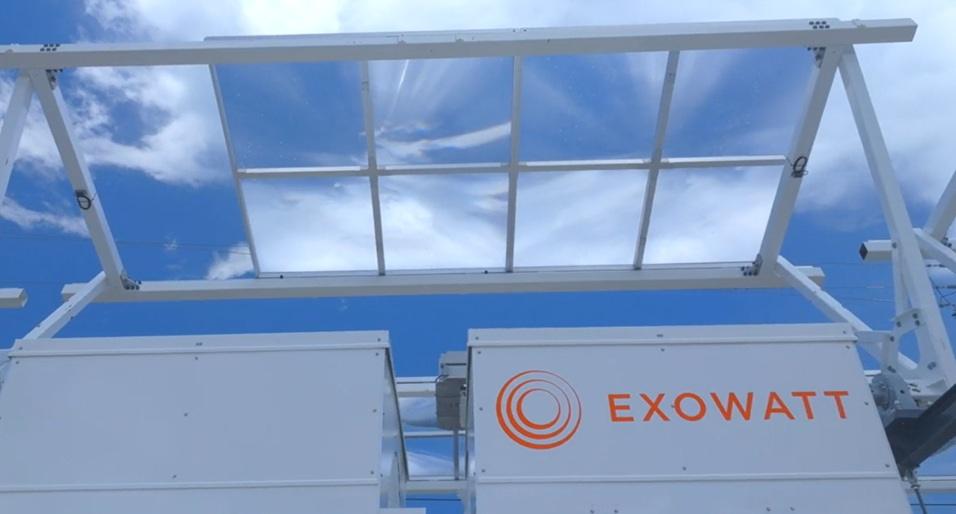
The energy landscape is experiencing a profound transformation, driven by unprecedented demand from artificial intelligence and a relentless push for sustainable, reliable power. In a significant development for the evolving energy sector, Exowatt, a renewable energy technology startup, has successfully secured $50 million in new funding. This latest capital infusion brings Exowatt’s total raised to a substantial $140 million within just two years, signaling robust investor confidence in its mission to provide 24/7 clean energy solutions for AI data centers and industrial sites across the U.S. For oil and gas investors, this news isn’t merely about a niche renewable play; it represents a critical indicator of shifting capital flows, emerging energy demand vectors, and the increasing pressure on traditional grid infrastructure, all of which will inevitably influence long-term commodity pricing and investment strategies.
AI’s Insatiable Energy Appetite Reshaping Grid Dynamics
The accelerating expansion of AI data centers has created an extraordinary surge in electricity demand, placing immense strain on existing grid infrastructure and highlighting the urgent need for innovative, dispatchable power solutions. Exowatt’s success, particularly its reported commercial pipeline backlog exceeding 90 GWh, underscores the scale of this demand. AI’s growth is not just a technological phenomenon; it’s an energy event that is fundamentally altering consumption patterns. Traditional energy sources, including natural gas and other fossil fuels, have historically been the backbone of reliable baseload power. However, the imperative for both sustainability and localized resilience is driving investment into alternatives like Exowatt’s P3 system, which captures solar energy as heat in a long-duration battery, converting it into electricity on demand, day or night, without grid reliance.
Investors are keenly observing how these macro trends will impact the broader energy complex. For instance, a recurring question from our readers revolves around the long-term price trajectory of oil per barrel. While the direct energy source for AI data centers isn’t crude oil, the increased electricity demand could, in theory, indirectly support natural gas prices for grid backup, or conversely, accelerate the shift away from fossil fuels if dispatchable renewables prove scalable and cost-effective. The substantial capital flowing into Exowatt is a clear signal that a significant portion of the market is betting on decentralized, clean power to meet this new, intense demand, potentially mitigating some of the traditional growth drivers for hydrocarbon-based electricity generation in the long run.
Navigating Market Volatility with Strategic Energy Investments
Against a backdrop of fluctuating crude markets, where Brent trades today at $90.19, reflecting a significant 9.26% daily decline from its opening, the substantial investment in Exowatt underscores a strategic pivot in capital towards localized, firm power solutions. This divergence in investment focus, even as WTI crude experienced a sharp 9.79% drop to $82.24 and gasoline prices softened to $2.92, suggests investors are increasingly hedging against grid instability and long-term energy security concerns driven by AI’s insatiable appetite. The investment community recognizes that while global oil prices react to geopolitical events and supply-demand imbalances, the domestic demand for reliable, controllable electricity for critical infrastructure like data centers presents a distinct, less volatile opportunity.
Exowatt’s system, designed for placement at or near energy-intensive facilities, offers “firm capacity” and reduces reliance on grid interconnection. This “edge of load” strategy is particularly appealing in an environment where new transmission interconnections struggle to keep pace with demand. The emphasis on “American made solar” also resonates with national energy security narratives, adding another layer of investment appeal beyond purely economic returns. For oil and gas companies diversifying their portfolios, understanding these emerging localized energy markets is crucial. While traditional exploration and production remain central, strategic investments or partnerships in dispatchable renewable technologies could offer a valuable hedge and access to new growth vectors within the broader energy sector.
Upcoming Events and the Future of Energy Supply
The strategic deployment of Exowatt’s P3 systems, backed by leading investors like MVP Ventures and 8090 Industries, is poised to reshape how energy-intensive industries secure their power. CEO Hannan Happi’s statement about announcing new customers and partners in the months ahead indicates an aggressive scaling trajectory. This forward momentum occurs simultaneously with pivotal moments for the broader energy market that oil and gas investors are closely tracking. As we look ahead to critical macro energy indicators, the impact of micro-level shifts like Exowatt’s expansion becomes more pronounced.
The next 14 days, for instance, are packed with events that will shape global oil supply and pricing dynamics. Investors are keenly awaiting the OPEC+ Joint Ministerial Monitoring Committee (JMMC) Meeting on April 17th, followed by the Full Ministerial Meeting on April 18th. Decisions on production quotas, a frequent inquiry from our readers, will undeniably influence crude prices. Following this, the API and EIA Weekly Crude Inventory reports on April 21st/22nd and April 28th/29th, respectively, will offer crucial insights into U.S. supply and demand. While these events directly impact the oil market, the rapid development of solutions like Exowatt highlights a parallel, increasingly significant trend: the diversification and decentralization of power generation. The pressing demand from AI data centers, unconstrained by traditional oil supply dynamics, creates a distinct investment thesis for localized, dispatchable power that operates on a different fundamental axis than the global crude market. Investors must consider how these evolving power paradigms will influence long-term energy demand projections, potentially altering the energy mix in ways that traditional oil and gas companies will need to adapt to or strategically participate in.


