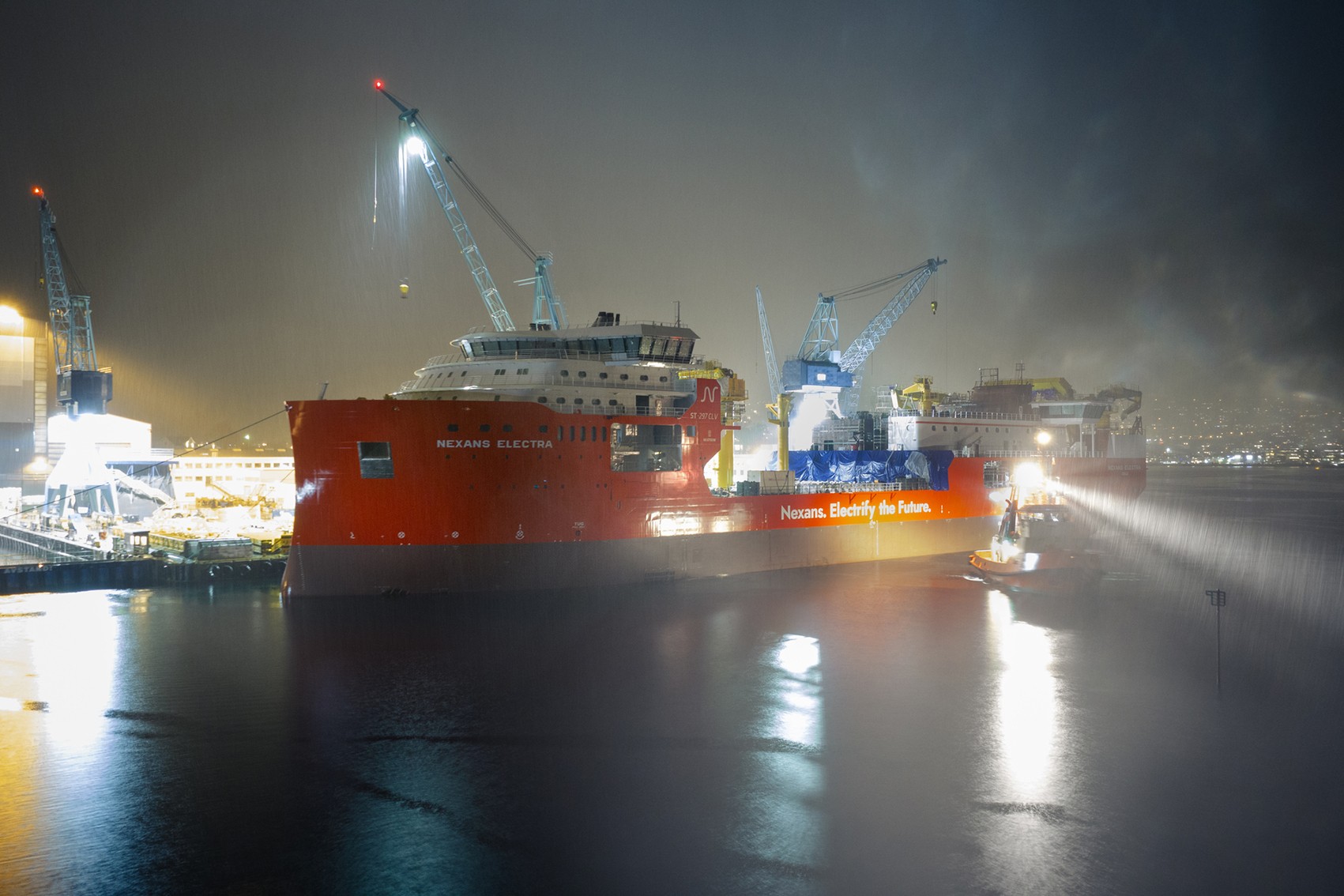
The launch of the CLV Electra’s hull represents a pivotal moment in the ongoing global build-out of renewable energy infrastructure. As the world accelerates its transition towards cleaner power sources, the demand for sophisticated subsea cable installation capabilities is skyrocketing. This next-generation vessel, designed for high-voltage subsea cables crucial for offshore wind farms, international power grids, and deep-sea electrification, signifies a substantial upgrade in the industry’s ability to deliver complex energy projects. For investors navigating the evolving energy landscape, Electra’s progression from construction to eventual commissioning in Spring 2026 highlights a strategic investment in the foundational assets driving the energy transition.
Electra’s Role in the Energy Transition Backbone
The strategic importance of the CLV Electra cannot be overstated within the context of global energy decarbonization efforts. With its advanced design, including the capacity to lay up to four cables simultaneously and accommodate 13,500 tonnes of cable across three turntables, the vessel is engineered to tackle the most demanding subsea installation projects. This specialized capability directly addresses a critical bottleneck in the expansion of offshore wind power, where efficient and reliable cable laying is paramount to project timelines and cost-effectiveness. Furthermore, Electra will facilitate the construction of crucial cross-border power interconnectors, enhancing grid stability and enabling the more efficient distribution of renewable energy across regions. The investment in such a high-spec asset underscores a clear commitment to capturing a significant share of the rapidly expanding market for high-voltage subsea infrastructure, positioning the company at the forefront of the energy transition’s physical build-out.
Navigating Volatile Crude Markets with Infrastructure Plays
The current volatility in traditional crude markets underscores the increasing appeal of long-term infrastructure plays, particularly those underpinning the energy transition. As of today, Brent crude trades at $90.61, marking an 8.83% decline within the day’s range, which saw prices swing from $86.08 to $98.97. Similarly, WTI crude is down 9.31% at $82.68, reflecting significant intraday pressure. This sharp downturn follows a 14-day trend where Brent shed over 12%, declining from $112.57 to $98.57. Such rapid price movements often prompt investors to seek more stable, predictable growth vectors. Our proprietary data indicates that many investors are currently asking about the predicted price of oil per barrel by the end of 2026 and the specifics of OPEC+ production quotas. This intense focus on short-to-medium term crude market dynamics highlights a broader search for resilient investment opportunities. The Electra project, with its focus on enabling future energy infrastructure, offers exposure to the structural growth in renewable energy, providing a compelling counter-narrative to the cyclical swings of commodity markets. Investing in the specialized assets that facilitate this transition can offer a degree of insulation from the direct impacts of crude price fluctuations, appealing to those seeking portfolio diversification.
Upcoming Catalysts and the Path to Commissioning
The progression of the CLV Electra toward its sea trials, scheduled for Spring 2026, marks a significant forward-looking catalyst for the company and the broader subsea installation sector. This crucial phase will validate the vessel’s advanced systems and operational readiness, paving the way for its entry into service. For investors, monitoring such milestones is essential, as the successful commissioning of Electra will unlock new revenue streams from high-demand projects. In parallel, the broader energy market remains highly dynamic. With critical OPEC+ Joint Ministerial Monitoring Committee (JMMC) and full Ministerial meetings scheduled for April 17th and 18th respectively, investors are keenly aware of potential shifts in global oil supply policy. Furthermore, weekly data releases such as the API Crude Inventory (April 21st, 28th) and the EIA Weekly Petroleum Status Report (April 22nd, 29th) will continue to shape market sentiment. Against this backdrop of ongoing commodity market adjustments, the steady advancement of projects like Electra, which contribute to long-term energy infrastructure, provides a clear, tangible growth narrative distinct from daily price fluctuations. The successful integration of generator sets, power systems, deck machinery, and topside equipment currently underway underscores the project’s adherence to its ambitious timeline.
Engineering Prowess and Market Leadership
The construction of the CLV Electra at Ulstein Verft shipyard in Norway showcases exceptional engineering and shipbuilding capabilities, reinforcing Norway’s position as a leader in specialized offshore vessels. The meticulous process, which involved building and preserving the hull in a covered dock hall to ensure optimal conditions for structural work and precision coating, speaks volumes about the quality and longevity expected from this asset. As the vessel transitions to the outfitting quay, the focus shifts to the intricate integration of its complex systems. This phase, preceding the critical sea trials, is vital for ensuring the vessel can perform its highly specialized role of deep-sea cable laying with maximum efficiency and reliability. The ability to accommodate 13,500 tonnes of cable and lay four simultaneously sets a new benchmark, enhancing operational flexibility and reducing project timelines for large-scale offshore developments. This technological edge is a key differentiator in a competitive market, enabling the company to bid for and execute larger, more complex projects, solidifying its market leadership in subsea transmission infrastructure.
Investment Implications and Diversification Potential
For investors seeking exposure beyond traditional upstream oil and gas, the development of assets like the CLV Electra offers a compelling diversification strategy. While questions about the performance of specific oil companies, such as Repsol by April 2026, and the intricate details of oil price predictions remain top-of-mind for many, the investment thesis around Electra focuses on the structural growth of the renewable energy sector. This growth is driven by global policy mandates, technological advancements, and increasing energy demand, offering a more predictable revenue stream compared to the often volatile commodity markets. The vessel’s critical role in expanding renewable energy capacity worldwide positions its operator as an enabler of the future energy mix, attracting capital flows increasingly directed towards ESG-aligned and sustainable investments. As the vessel moves closer to commissioning, its strategic value to the global energy transition infrastructure becomes increasingly clear, presenting a long-term growth opportunity for discerning investors.