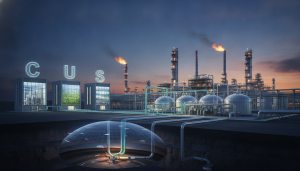
In a significant stride towards decarbonizing the global energy supply chain, a monumental carbon capture and storage (CCS) project in Qatar is set to process and transport an astounding 4.1 million tons of CO2 annually. This initiative, targeting completion by 2030, signals a deepening commitment from major energy producers to mitigate emissions from critical assets like LNG liquefaction plants. For investors navigating the complex currents of the energy market, this project represents more than just an engineering feat; it’s a tangible investment in the future viability and sustainability of natural gas, offering a compelling case for the expanding role of decarbonization infrastructure within diversified energy portfolios.
The Strategic Imperative of Carbon Capture in LNG Production
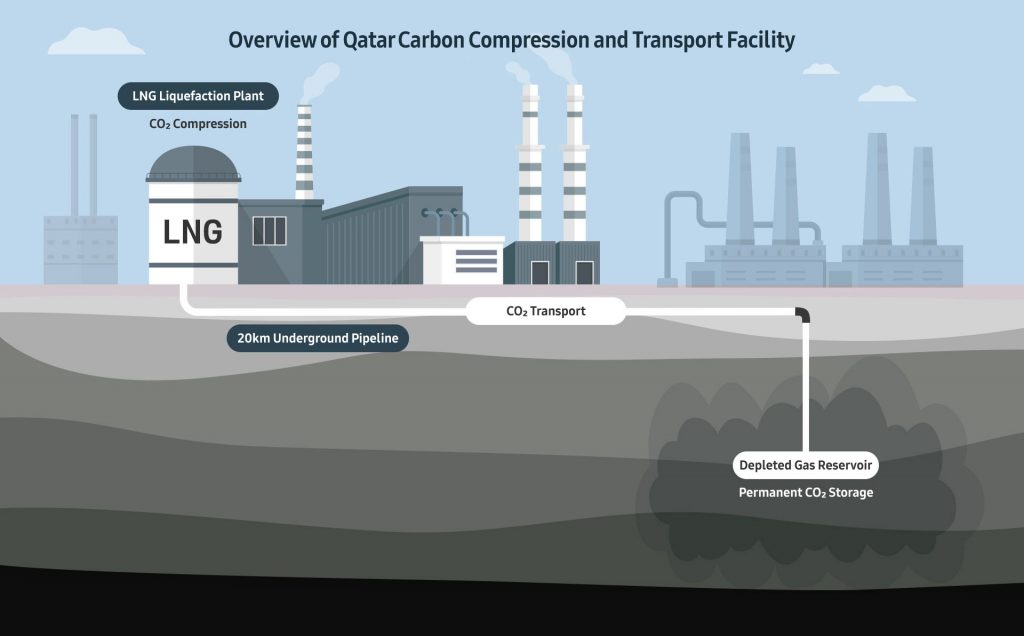
The project, strategically located in Ras Laffan Industrial City, approximately 80 kilometers north of Doha, is designed to capture carbon dioxide directly from nearby LNG liquefaction facilities. This CO2 will then undergo compression, moisture removal, and safe transportation through a 20-kilometer underground pipeline network for permanent geological storage in depleted gas reservoirs. With an annual capacity of 4.1 million tons, this facility is poised to become one of the Middle East’s largest carbon management operations, cementing its role as a cornerstone of Qatar’s ambitious energy transition strategy.
The developer, Samsung C&T, brings extensive experience from previous major LNG projects in Qatar, underscoring the technical expertise required for such a complex undertaking. The project demands precise control systems for pressure and temperature to ensure the safe and efficient movement of compressed CO2. This commitment to advanced engineering and collaborative partnerships with local entities highlights the global effort to integrate sustainability into core energy operations. For investors, this project signifies a critical de-risking strategy for LNG assets, enhancing their long-term social license and market appeal in an increasingly carbon-conscious world.
Navigating Volatility: Decarbonization as an Investment Hedge
The current energy market landscape underscores the volatile nature of commodity prices, making strategic investments in decarbonization infrastructure increasingly attractive. As of today, Brent Crude trades at $89.81, marking a significant 9.64% drop within the day, with its price range fluctuating between $86.08 and $98.97. Similarly, WTI Crude stands at $82.08, down 9.97% today, ranging from $78.97 to $90.34. This immediate downturn follows a broader trend, with Brent having declined by $14, or 12.4%, from $112.57 on March 27 to $98.57 on April 16. Even gasoline prices reflect this volatility, currently at $2.92, down 5.5% today.
Against this backdrop of fluctuating crude and product prices, investments in robust, long-term infrastructure like Qatar’s 4.1 million ton CCS project offer a compelling counter-narrative. While traditional oil and gas investments are directly exposed to the daily swings of commodity markets, decarbonization projects provide a distinct value proposition. They address the growing global demand for lower-carbon energy solutions, securing the future demand for LNG by making it a more environmentally palatable option. This effectively creates a “decarbonization premium” for companies and nations that proactively invest in emissions reduction, offering a degree of insulation from pure hydrocarbon price volatility and appealing to a broader base of ESG-focused capital.
Investor Focus: Capitalizing on the Energy Transition and Long-Term Value
Our proprietary reader intent data reveals a clear focus among investors on forward-looking performance and market predictions, with questions like “What do you predict the price of oil per barrel will be by end of 2026?” dominating discussions. While direct oil price forecasts remain inherently challenging, the Qatar CCS project offers a different lens through which to evaluate long-term value in the energy sector. This project directly addresses the core challenge facing major LNG producers: how to meet global energy demand responsibly while adhering to stringent carbon reduction targets.
For investors, participation in companies driving such projects, or those whose assets are significantly de-risked by them, offers exposure to the burgeoning energy transition economy. It’s an investment in resilience, ensuring that LNG, a crucial bridge fuel, remains a viable and attractive energy source for decades. The capital allocation towards carbon compression and transport solutions, moving beyond traditional renewable energy sectors, signals a maturing market for comprehensive decarbonization strategies. This strategic pivot provides a long-term growth vector distinct from the cyclical nature of commodity prices, appealing to those seeking sustained value creation in the evolving energy landscape.
Future Catalysts and the Path to 2030
The journey to the project’s operational target in 2030 will be influenced by a confluence of market forces and policy developments. While the project itself represents a long-term commitment, upcoming energy events provide crucial context for the broader investment environment. This week, the OPEC+ Joint Ministerial Monitoring Committee (JMMC) meets on April 17, followed by the Full Ministerial OPEC+ Meeting on April 18. These gatherings will shape global crude production quotas, directly impacting supply dynamics and indirectly influencing the economic calculus for decarbonization investments by major producers.
Further insights will come from the API Weekly Crude Inventory reports on April 21 and 28, and the EIA Weekly Petroleum Status Reports on April 22 and 29, which offer snapshots of immediate market supply and demand. The Baker Hughes Rig Count on April 24 and May 1 will provide indicators of future upstream activity. While these events primarily focus on conventional hydrocarbon markets, their outcomes collectively inform the strategic decisions of global energy companies regarding investments in both traditional and transition assets. A robust and sustained demand for LNG, coupled with continued regulatory pressure for emissions reductions, will only accelerate the adoption and profitability of projects like Qatar’s 4.1 million ton CO2 facility, reinforcing its strategic importance for investors looking at the long game in energy.