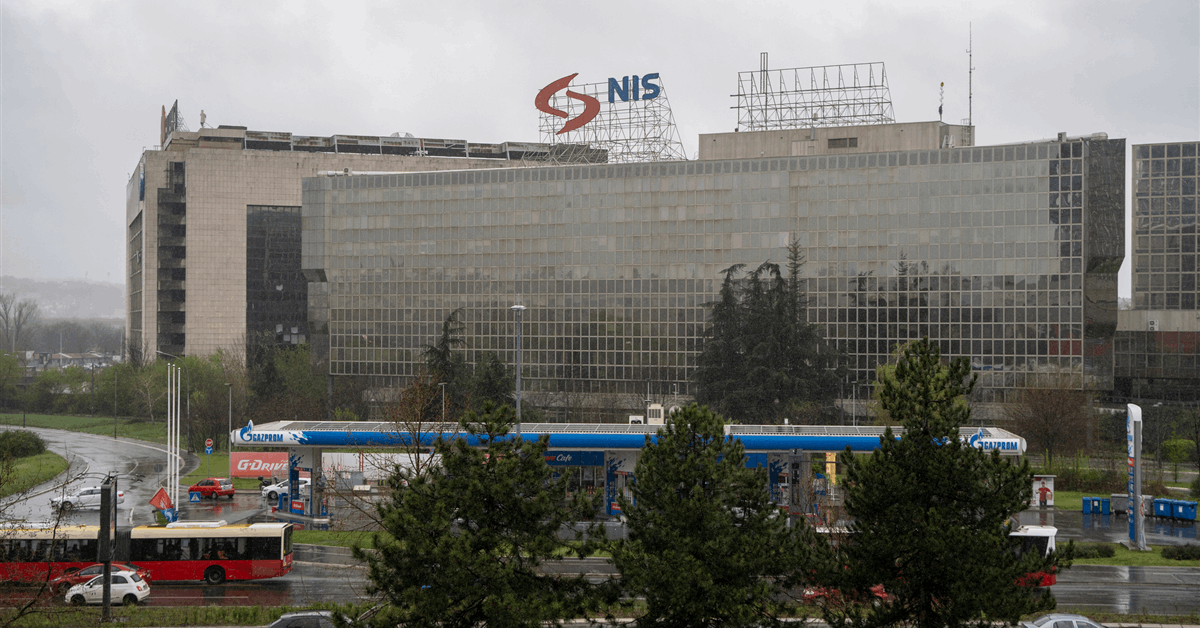
Serbia’s Premium Gambit for NIS: A Bellwether for Geopolitical Energy Risk
In a move underscoring the escalating geopolitical pressures on global energy supply chains, Serbia has declared its readiness to pay a significant premium to regain control of oil refiner NIS AD. This strategic maneuver by Belgrade to unshackle the Russian-owned entity from crippling US sanctions is far more than a localized dispute; it represents a critical indicator of how nations are prioritizing energy security in an increasingly fragmented world. For investors, this situation highlights the complex interplay of political will, economic necessity, and the volatile valuation of energy assets caught in the crossfire of international diplomacy. The willingness to “overpay” for a majority stake in NIS signals a new frontier in sovereign intervention, where national interests supersede conventional market economics, potentially setting precedents for other challenged energy assets.
The Urgent Imperative in Belgrade: Avoiding a Fuel Crisis
The immediate catalyst for Serbia’s bold stance is an impending fuel crisis. With US sanctions, which took effect on October 9th, having severed NIS’s critical crude supply route through neighboring Croatia, the country’s sole refiner faces running out of crude within days. President Aleksandar Vucic has articulated the dire consequences, warning of devastating impacts on Serbia’s economy and its credit rating if a solution isn’t found within a week. The Russian majority owners, units of Gazprom PJSC, have been in talks with third-party investors from Asia and Europe, but with Washington rejecting an appeal for a license extension and insisting on a full Russian withdrawal, Serbia is now stepping in. Vucic’s explicit declaration that “we are ready to even overpay” for the 56 percent stake held by Gazprom units, and his firm commitment to “find the money whatever it costs,” demonstrates the extreme lengths nations will go to secure their essential energy infrastructure against external pressures. This scenario presents a unique investment challenge, where traditional asset valuation is distorted by geopolitical imperatives and national security concerns.
Global Oil Backdrop and Regional Turbulence
This localized crisis in Serbia is unfolding against a backdrop of significant volatility in global energy markets. As of today, Brent crude trades at $89.11 per barrel, marking a sharp 10.34% decline from its daily high, and extending a broader downward trend that saw prices fall from $112.57 just two weeks ago to $98.57 yesterday. Similarly, WTI crude stands at $81.73, also down over 10% today, while gasoline prices have dipped to $2.91 per gallon. This overall market softening, with Brent shedding over $14 in the past fortnight, reflects a complex mix of demand concerns, supply adjustments, and broader macroeconomic sentiment. However, the Serbian situation introduces a distinct element of regional supply risk that is not fully captured by these broader benchmarks. While crude prices have trended down, the potential for a localized fuel shortage in the Balkans could create severe regional price dislocations and heightened demand for alternative supply routes or refined products, potentially offering arbitrage opportunities for nimble traders. The willingness of a sovereign state to overpay for a refinery, even amidst falling global crude prices, underscores the critical value of secure, localized refining capacity.
Investor Focus: Decoding Future Price Signals and Sovereign Risk
Our proprietary reader intent data reveals that investors are keenly focused on understanding the future trajectory of oil prices and the stability of supply. Questions frequently surface around the oil price outlook for year-end 2026 and OPEC+’s current production quotas, indicating a pervasive search for clarity amidst global uncertainties. The Serbian situation, while geographically specific, serves as a potent case study for evaluating geopolitical risk premiums in energy asset valuations. When a government explicitly states its willingness to “overpay” for an asset to prevent an economic catastrophe, it introduces a new dimension to risk assessment. This reflects a growing trend where national energy security can override conventional market principles, forcing investors to re-evaluate the true cost and strategic value of assets in politically sensitive regions. For entities holding or considering investments in assets with even indirect ties to sanctioned entities, Belgrade’s actions offer a stark reminder of potential sovereign intervention and the complex exit strategies that may become necessary.
The Valuation Dilemma and Precedents for State Intervention
Serbia’s pledge to “overpay” for NIS raises profound questions about asset valuation in an era of geopolitical fragmentation. The refusal to engage in “confiscation or nationalization,” despite the urgency, highlights a desire to maintain legal propriety, albeit at a financial cost. The precedent of Bulgaria’s decision last week to seize control of Lukoil PJSC’s local refinery, also threatened by US sanctions, illustrates a growing trend of governments taking direct action to shield their markets. This environment complicates the valuation of energy infrastructure, as the “market price” becomes less about discounted cash flows and more about strategic national imperative. Negotiations with international financiers and potential budget reviews for funding suggest a complex financial engineering task ahead for Serbia. For investors, this implies that assets in geopolitically sensitive regions carry an implicit “sovereign put” option for the host country, where national governments may step in to secure operations, potentially at a premium, but also carrying the risk of seizure or forced sale under duress. This makes understanding the political risk landscape as crucial as evaluating geological prospects or refining margins.


