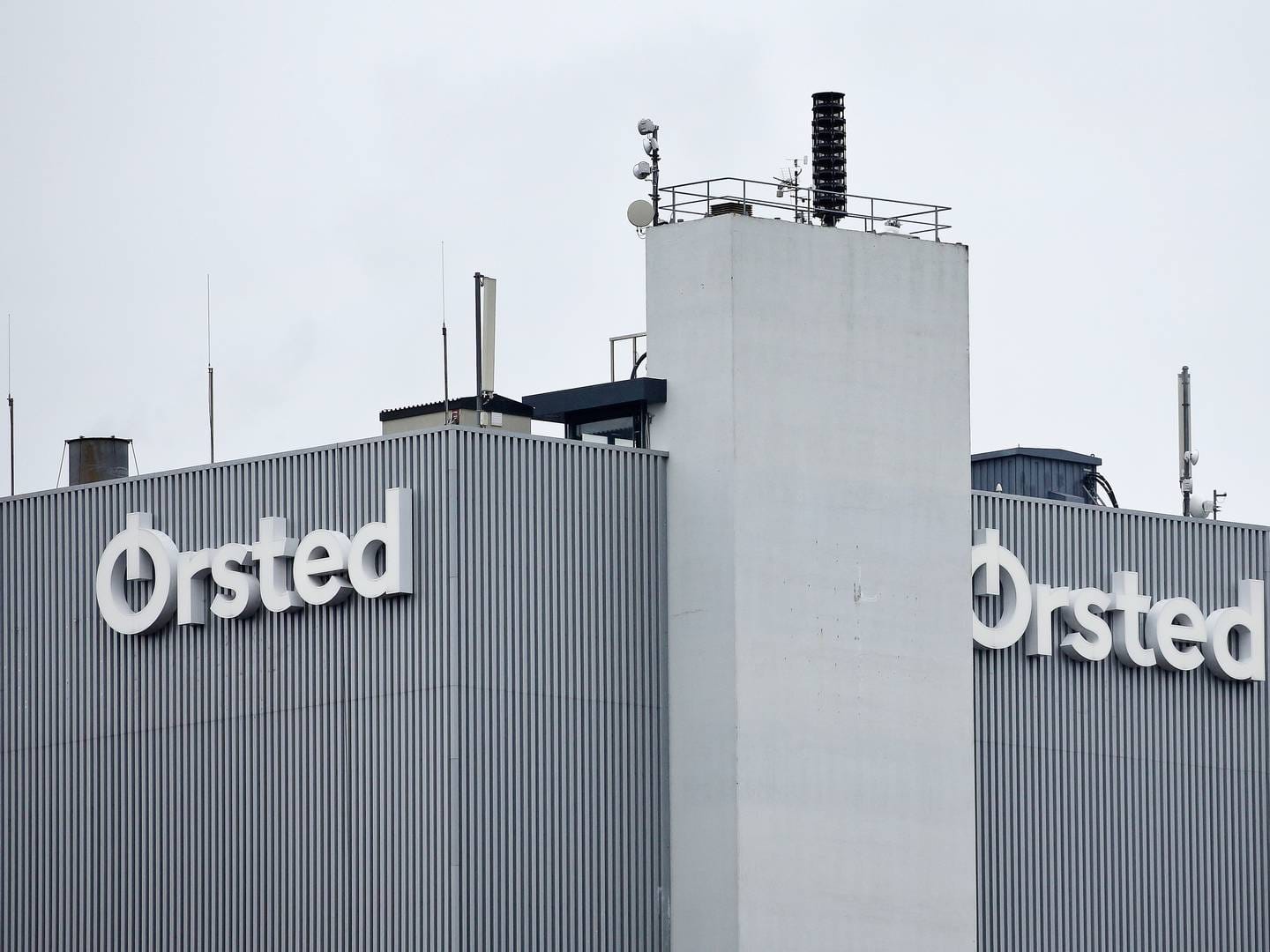
While traditional oil and gas giants navigate complex energy transition pathways, one European utility has declared a significant victory in its operational decarbonization journey. Ørsted, the Danish energy major, is poised to achieve a monumental 98% reduction in Scope 1 and 2 greenhouse gas intensity from its 2006 baseline, simultaneously raising its renewable energy share to an impressive 99%. This achievement, marked by the closure of its final coal-fired combined heat and power plant in 2024, positions Ørsted as a global benchmark for what a complete energy sector transition can look like. For investors in the broader energy landscape, this transformation offers invaluable insights into the feasibility, strategy, and challenges of pivoting away from fossil fuels, compelling a re-evaluation of long-term portfolio allocations amidst shifting market dynamics and evolving investor expectations.
Ørsted’s Blueprint: From Fossil Giant to Renewable Pioneer
Ørsted’s journey is a compelling case study in strategic corporate metamorphosis. Beginning its pivot in 2009, the company systematically divested from oil, gas, and coal assets, directing its capital and expertise towards wind, solar, and bioenergy. By 2017, a firm commitment to phasing out coal was in place, culminating in the complete cessation of coal-fired operations in 2024. This aggressive timeline allowed the company to meet its 2025 science-based decarbonisation target ahead of schedule, with its Scope 1 and 2 emissions intensity reduced to approximately 4 grams of CO₂ per kilowatt-hour. Furthermore, Ørsted was the first energy firm to establish a science-based net-zero target across its full value chain by 2040, a testament to its holistic approach to sustainability. This pivot wasn’t merely an environmental initiative; it was a fundamental recalibration of its business model, underpinned by robust governance, a disciplined capital allocation strategy prioritizing over 18 GW of renewable capacity build-out, and a clear alignment with climate goals. For investors seeking tangible proof that large incumbents can profitably pivot to low-carbon business models, Ørsted provides a compelling narrative of foresight and execution.
Current Market Volatility: A Stark Contrast to Green Transition
This monumental green shift by Ørsted unfolds against a backdrop of significant volatility in the global crude markets, highlighting the bifurcated realities of the energy sector. As of today, Brent Crude trades at $90.38, reflecting a sharp 9.07% decline within the day, with its range fluctuating between $86.08 and $98.97. Similarly, WTI Crude stands at $82.59, experiencing a 9.41% drop, navigating a day range of $78.97 to $90.34. Gasoline prices have also felt the pressure, currently at $2.93, down 5.18%. This recent downturn marks a noticeable shift from the past two weeks, during which Brent crude plummeted from $112.78 on March 30th to its current $90.38, representing a substantial $22.4 or 19.9% decrease. This market turbulence underscores the ongoing sensitivity of commodity prices to geopolitical events, demand fluctuations, and supply dynamics. For investors, this volatility presents both challenges and opportunities, compelling a deeper look at the resilience of traditional oil and gas portfolios versus the stability and long-term growth potential offered by increasingly decarbonized entities like Ørsted. The contrast couldn’t be starker: while one part of the energy market grapples with daily price swings, another is celebrating a near-complete transition away from fossil fuels, demonstrating divergent risk profiles and return expectations.
Upcoming Events and Their Implications for Energy Investors
Looking ahead, the next two weeks are packed with critical events that will undoubtedly shape the near-term trajectory of oil prices and influence investment decisions across the energy spectrum. This weekend, the OPEC+ JMMC Meeting on April 19th, followed by the full OPEC+ Ministerial Meeting on April 20th, will be closely watched. Any decisions on production quotas could significantly impact global supply and, consequently, crude prices, potentially exacerbating or alleviating the recent declines. Following these, the API Weekly Crude Inventory reports on April 21st and 28th, alongside the EIA Weekly Petroleum Status Reports on April 22nd and 29th, will provide crucial insights into U.S. supply and demand dynamics. Investors will be dissecting these figures for signs of inventory builds or draws, which are key indicators of market health. Furthermore, the Baker Hughes Rig Count on April 24th and May 1st will offer a snapshot of drilling activity, indicating future supply potential. While these events primarily impact the fossil fuel segment, their outcomes ripple across the entire energy complex, influencing capital flows and investor sentiment. In a world where companies like Ørsted are actively reducing their reliance on these very commodities, the ongoing dance between supply, demand, and policy decisions among oil producers creates a fascinating juxtaposition for energy portfolio managers.
Addressing Investor Concerns: The Future of Oil and Green Investments
Our proprietary reader intent data reveals that investors are keenly focused on the future direction of the energy market, grappling with fundamental questions that underscore the current uncertainty. Queries such as “What do you predict the price of oil per barrel will be by end of 2026?” and “Is WTI going up or down?” dominate discussions. This strong interest in price forecasts reflects the immediate impact of market volatility on traditional energy holdings. The dramatic transformation of Ørsted offers a crucial lens through which to view these questions. While short-term commodity prices remain subject to geopolitical and economic forces, the long-term structural shifts exemplified by Ørsted suggest a growing divergence in investment performance. Companies that successfully transition, demonstrating robust decarbonization pathways and investing heavily in renewables, may offer a more stable and predictable growth trajectory, insulated from the extreme price swings of fossil fuels. Investors are increasingly seeking clarity on how to navigate this evolving landscape, balancing the immediate returns from traditional energy with the long-term potential and sustainability credentials of green pioneers. The success of Ørsted in financing its transition through green bonds and public-private partnerships provides a blueprint for how capital can be effectively deployed in the low-carbon economy, offering a counter-narrative to the persistent commodity price speculation.
Beyond Operational Decarbonization: The Scope 3 Challenge
While Ørsted’s achievement in Scope 1 and 2 emissions is undeniably groundbreaking, the company itself acknowledges that its next significant hurdle lies in tackling Scope 3 emissions across its entire value chain. With a science-based net-zero goal set for 2040, deep cuts in emissions linked to the production of essential materials like steel and copper, as well as maritime transport, are imperative. This challenge highlights that even the most advanced green transitions are multi-faceted and extend far beyond direct operational control. For investors, this emphasis on Scope 3 signals a broader trend: the increasing scrutiny of entire supply chains for environmental impact. Companies that can demonstrate a clear strategy for decarbonizing their upstream and downstream activities will likely attract greater capital and command premium valuations. Ørsted’s executive team continues to advocate for clear, predictable policy frameworks to sustain private-sector investment at scale – a topic central to ongoing global climate discussions like COP30. This demand for supportive policy underscores that while corporate will is paramount, systemic change requires a collaborative effort between industry, finance, and government to unlock the full potential of green investment and secure a truly sustainable energy future.


