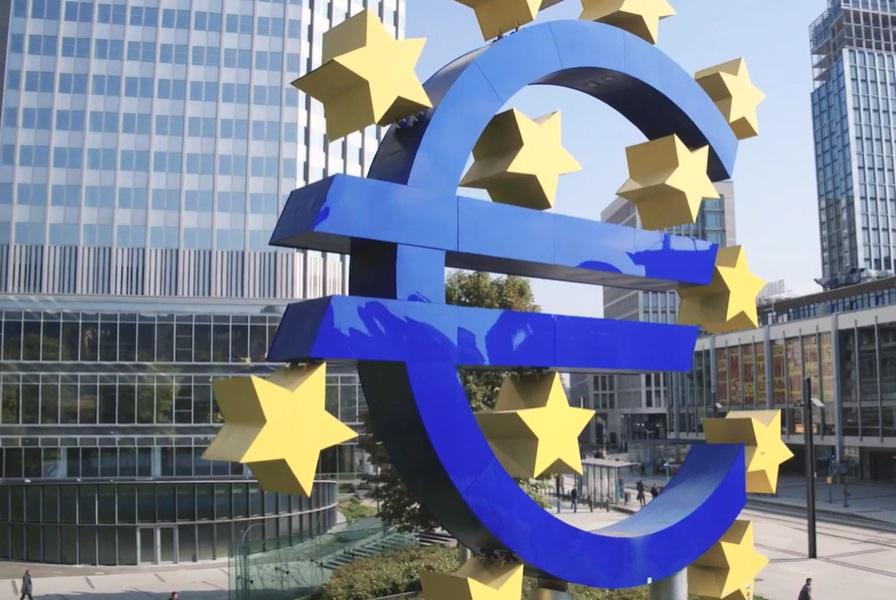
The European Central Bank’s recent decision to impose a penalty on Spanish bank ABANCA marks a pivotal moment in the escalating landscape of financial climate risk. This isn’t merely an administrative action; it’s the first publicly disclosed fine of its kind by the ECB, signaling a clear shift from guidance and warnings to direct financial enforcement. For investors in the oil and gas sector, this development carries significant weight, underscoring that climate-related and environmental (C&E) risks are no longer abstract concerns but tangible liabilities impacting capital allocation, lending practices, and ultimately, asset valuations. This move by a major financial regulator serves as a powerful indicator that the cost of failing to adequately assess and manage climate risks is set to rise, directly influencing the operational and financial frameworks of institutions that fund the energy industry.
The ECB’s Unwavering Stance on Climate Risk Management
The penalty against ABANCA stems from its failure to meet requirements to reinforce its identification of material C&E risks, specifically missing a December 2023 deadline for a materiality assessment. The bank’s non-compliance for 65 days in 2024 resulted in periodic penalty payments of €187,650. This action is the culmination of a deliberate strategy initiated by the ECB in late 2022 to make climate change a top priority for bank supervision. Earlier that year, the ECB’s climate stress test vividly demonstrated that banks had an urgent need to accelerate the integration of climate risk into their risk management frameworks, revealing significant exposure to emissions-intensive industries. Following these findings, the ECB issued detailed feedback letters to banks, setting clear timelines for managing C&E risks and establishing binding requirements that included periodic penalty payments as an enforcement mechanism. This consistent escalation from assessment to guidance, and now to direct financial penalties, solidifies the ECB’s commitment and sets a precedent for how financial institutions globally will be expected to account for climate risk.
Market Volatility Amidst Rising ESG Pressures
The backdrop for these regulatory shifts is a volatile energy market. As of today, Brent Crude trades at $90.38, reflecting a significant -9.07% decline within the day, with its range spanning $86.08 to $98.97. This volatility is not an anomaly; over the past two weeks, Brent has seen a substantial drop from $112.78 on March 30th to its current level, marking a nearly 20% contraction. Similarly, WTI Crude stands at $82.59, down -9.41% today. While short-term price swings are driven by a complex interplay of supply and demand dynamics, geopolitical events, and economic indicators, the longer-term investment horizon for oil and gas is increasingly being shaped by non-traditional factors. The ECB’s actions underscore that climate risk, once considered an external variable, is now an internal financial liability. This rising cost of compliance and capital for institutions tied to carbon-intensive sectors will inevitably impact investment flows into the oil and gas industry, especially as market volatility amplifies the need for stable, predictable financial environments. Energy companies with robust ESG frameworks and clear transition strategies are likely to find themselves better positioned to attract and retain capital in this evolving landscape.
Forward-Looking Implications: Capital Allocation and Upcoming Events
The ECB’s firm stance will undoubtedly influence how financial institutions, particularly those under its supervision, assess and manage their exposure to the oil and gas sector. Banks will likely tighten lending criteria, increase due diligence, and potentially raise the cost of capital for projects or companies perceived to have inadequate climate risk management or ambitious decarbonization plans. This re-evaluation of risk will ripple through project financing, mergers and acquisitions, and even operational expenditures across the energy value chain. Looking ahead, these regulatory pressures will subtly, yet significantly, color the discussions at critical industry events. The upcoming OPEC+ Joint Ministerial Monitoring Committee (JMMC) Meeting on April 19th and the subsequent OPEC+ Ministerial Meeting on April 20th will focus on production quotas and market stability. While direct climate mandates are not on the agenda, the increasing financial scrutiny by global regulators could influence long-term investment strategies of member nations, potentially accelerating diversification efforts or shaping future capacity expansion decisions. Furthermore, as investors await the API Weekly Crude Inventory (April 21st, April 28th) and EIA Weekly Petroleum Status Reports (April 22nd, April 29th), as well as the Baker Hughes Rig Count (April 24th, May 1st), the underlying cost environment for new drilling and production will be incrementally higher due to these rising climate risk-related financial obligations on banks and, by extension, their energy clients. This means that while these reports provide vital short-term supply signals, the long-term investment decisions for future production will be increasingly tethered to climate risk management capabilities.
Addressing Investor Concerns: Navigating a Changing Landscape
Our proprietary reader intent data reveals a keen interest among investors regarding future oil prices, with questions like “what do you predict the price of oil per barrel will be by end of 2026?” frequently surfacing. There’s also significant curiosity about OPEC+ production quotas and the performance of specific energy companies, such as “How well do you think Repsol will end in April 2026.” These questions underscore a fundamental need for clarity in a market grappling with numerous uncertainties. The ECB’s enforcement action provides a crucial piece of this puzzle: the long-term price trajectory and investment viability of oil and gas are no longer solely dependent on traditional supply-demand fundamentals. They are now inextricably linked to the rising cost of capital, regulatory compliance, and the diminishing social license for high-carbon projects. Investors must recognize that financial institutions, driven by regulatory mandates like the ECB’s, will increasingly prioritize lending to and investing in energy companies that demonstrate robust climate risk governance, transparent reporting, and credible transition strategies. For companies like Repsol, which operate within the European regulatory sphere, proactive integration of climate risk into their business models will be paramount for maintaining access to affordable capital and ensuring long-term shareholder value. Evaluating an energy company’s climate risk framework and its ability to adapt to a decarbonizing economy is becoming as critical as assessing its reserves or production capabilities.
The ECB’s first climate-related fine is a clear and unequivocal signal to the financial world and, by extension, to the global oil and gas industry. Climate risk is no longer a peripheral concern but a direct financial liability, with concrete penalties for non-compliance. This development will accelerate the integration of ESG factors into financial decision-making, influencing capital flows, project financing, and ultimately, the long-term viability of energy assets. Investors in the oil and gas sector must recalibrate their valuation models to account for these escalating regulatory costs and the increasing premium on robust climate risk management. Companies that proactively adapt, innovate, and transparently manage their environmental footprint will be better positioned to attract capital and thrive in this rapidly evolving investment landscape, while those that lag risk facing higher costs of capital and diminished market access.


