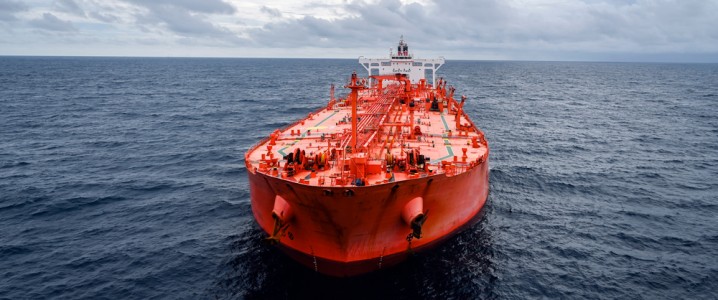
The strategic allure of Russia’s Northern Sea Route (NSR) for oil exports to Asia has hit an unexpected snag, with proprietary data from OilMarketCap.com revealing a significant slowdown that challenges previous growth projections. Far from the anticipated increase, crude oil shipments via this critical Arctic channel have actually declined by 4.2% for the current season compared to the prior year. This disruption, driven by a confluence of Western sanctions and the early onset of formidable Arctic ice, introduces a new layer of complexity to global energy supply dynamics and demands a revised outlook from astute oil and gas investors.
Arctic Ambitions Thwarted: A Deeper Dive into NSR Underperformance
Russia’s pivot to Asian markets, particularly China and South Korea, relies heavily on efficient shipping routes. The Northern Sea Route, offering a journey ten days shorter than the Suez Canal, was positioned as a cornerstone of this strategy. Yet, the current season has seen a stark reversal of fortunes. Rather than an anticipated surge, Russian oil exporters shipped just 1.83 million tons of crude via the NSR, equating to approximately 13.41 million barrels. This figure represents a 4.2% drop from the 1.91 million tons (around 14 million barrels) transported last year, a year that itself saw a robust 30% increase over the period prior. This reversal is critical, especially considering NSR volumes accounted for just 1% of Russia’s total oil exports this year, indicating a systemic challenge rather than a minor blip.
The disruption isn’t confined to crude. Russian LNG deliveries, particularly from facilities like Novatek’s Arctic LNG-2 plant, are also facing severe headwinds. Reports indicate that the Buran vessel, after offloading cargo on October 26, struggled to navigate the early winter ice north of the Bering Strait since October 29. Novatek, impacted by Western sanctions, is reportedly rerouting its LNG vessels via the Suez Canal, a longer and more costly journey. This dual challenge – both crude and LNG struggling to maintain Arctic throughput – underscores the growing logistical and geopolitical hurdles confronting Russia’s Arctic energy ambitions. Investors should recognize this as a structural constraint, not merely a seasonal inconvenience, affecting Russia’s long-term export efficiency.
Market Volatility Amidst Supply Shocks and Investor Sentiment
The news of these Arctic supply constraints arrives during a period of heightened volatility in the broader energy market. As of today, Brent Crude trades at $90.38 per barrel, representing a significant 9.07% decline from its opening. This daily drop is part of a more substantial trend, with Brent having fallen by 19.9% from $112.78 just 14 days ago. WTI Crude mirrors this sentiment, currently priced at $82.59, down 9.41% today, while gasoline prices have also eased to $2.93, a 5.18% decrease.
This market action highlights a critical point for investors: while Arctic supply disruptions are theoretically bullish for crude prices, broader macro factors and demand concerns are currently exerting greater downward pressure. Our proprietary reader intent data reveals a common question among investors this week: “What do you predict the price of oil per barrel will be by the end of 2026?” While a definitive answer remains elusive, these Russian supply challenges introduce an upward bias to the supply-side equation. However, the current market downturn suggests that factors like global economic growth, potential demand weakness, or even strategic releases from reserves are currently dominating the narrative. The underperformance of the NSR means less Russian oil is reaching Asian markets efficiently, potentially tightening regional balances, but the global market remains highly sensitive to broader economic indicators.
Sanctions, Logistics, and the Enduring Challenge for Arctic Energy
The intersection of Western sanctions and the harsh realities of Arctic navigation creates a formidable barrier to Russia’s energy export strategy. Sanctions have not only complicated financing and technology access but have also significantly impacted the availability of specialized ice-class tankers and crucial insurance coverage for Arctic operations. This makes the 10-day shorter journey via the NSR increasingly difficult to leverage consistently. The struggles of the Buran vessel and Novatek’s decision to reroute via the Suez Canal are concrete examples of these operational limitations taking precedence over geographical advantage.
For investors, this signifies that even as Russia seeks new markets, its ability to reliably and cost-effectively service those markets is compromised. The failure to increase NSR volumes, despite strong demand signals from Asia, points to a deeper structural issue. This will likely lead to higher freight costs for Russian exports, eroding margins and potentially impacting the competitiveness of Russian crude and LNG in global markets. Furthermore, the prolonged reliance on longer routes contributes to a larger carbon footprint, a factor increasingly scrutinized by ESG-conscious investors and policymakers.
Navigating Upcoming Catalysts: OPEC+ and Inventory Signals
Looking ahead, the energy market is poised for several pivotal events that will shape investor sentiment and price direction, especially given the backdrop of these Russian supply challenges. Our proprietary event calendar highlights the upcoming OPEC+ Joint Ministerial Monitoring Committee (JMMC) Meeting on April 19th, followed by the full OPEC+ Ministerial Meeting on April 20th. Investors are keenly asking about “OPEC+ current production quotas,” and these meetings are critical for understanding potential shifts in supply policy. Will the unexpected shortfall from Russia’s Arctic routes influence OPEC+’s decisions on output levels, potentially leading to a more cautious approach to increasing supply, or even a reinforcement of current cuts?
Beyond OPEC+, the market will closely monitor the API Weekly Crude Inventory report on April 21st and the EIA Weekly Petroleum Status Report on April 22nd, with subsequent reports on April 28th and April 29th. These data points will provide crucial insights into U.S. demand and inventory levels, offering a counterbalance or amplifier to the Russian supply narrative. Furthermore, the Baker Hughes Rig Count on April 24th and May 1st will indicate the health and future production trajectory of North American producers. For investors, the combined impact of these events will be instrumental in calibrating expectations for crude prices through the remainder of 2026. The continued struggle for Russia to stabilize its Arctic exports adds an unpredictable, yet ultimately supply-constraining, element to an already complex global energy landscape.


