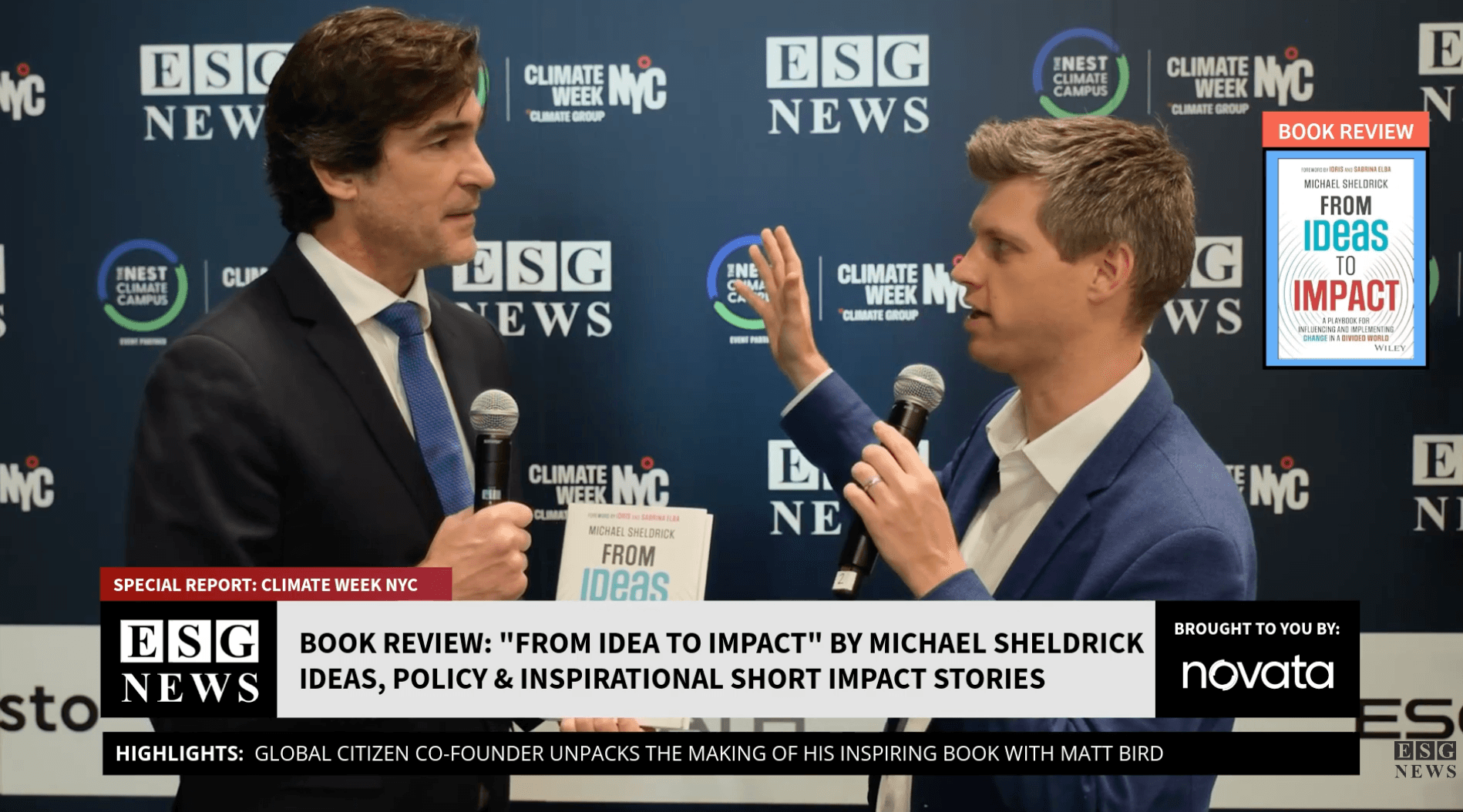
In a world increasingly shaped by global initiatives and policy shifts, understanding the mechanics of change is paramount for investors. Michael Sheldrick, co-founder of Global Citizen and author of “From Ideas to Impact,” offers a compelling framework for how ideas translate into tangible policy. While his work primarily focuses on climate change and extreme poverty, the underlying principles of policy entrepreneurship and systemic influence hold profound implications for the oil and gas sector. For energy investors, Sheldrick’s insights serve as a potent reminder that market dynamics are not solely dictated by supply and demand fundamentals, but are increasingly shaped by the powerful currents of public policy, ESG mandates, and societal expectations. Navigating this complex landscape requires a proactive approach, identifying not just the ‘what’ of market movements, but the ‘why’ driven by global changemakers.
Policy as a Price Driver: Deciphering Macro Trends
Sheldrick’s emphasis on policy change as a catalyst for systemic impact resonates deeply within the oil and gas industry, where regulatory shifts, carbon pricing mechanisms, and international agreements can dramatically alter investment landscapes. Investors are constantly grappling with the long-term trajectory of hydrocarbon demand, often asking, “what do you predict the price of oil per barrel will be by end of 2026?” The answer is inextricably linked to the success or failure of global policy initiatives targeting climate change and energy transition. As of today, Brent Crude trades at $90.38, marking a significant 9.07% decline on the day, with a day range between $86.08 and $98.97. Similarly, WTI Crude stands at $82.59, down 9.41%, having traded between $78.97 and $90.34. This acute volatility is not merely a reflection of immediate supply-demand imbalances, but also the market’s sensitivity to geopolitical events, economic outlooks, and crucially, anticipated policy interventions. Looking back, Brent’s sharp descent from $112.78 just two weeks ago to its current $90.38 represents a nearly 20% drop, shedding $22.4 per barrel. This rapid repricing underscores the market’s constant attempt to digest a myriad of signals, many of which are rooted in the very policy discussions Sheldrick champions.
Navigating the Energy Transition: Beyond Apathy to Actionable Strategies
Sheldrick’s call to overcome the “crisis of apathy” and turn ideas into real-world ripples finds a direct parallel in the energy sector’s ongoing transition. For many O&G companies, the challenge of decarbonization can seem abstract or overwhelming. However, as Sheldrick illustrates, systemic impact often begins with a single, purposeful step. Investors are increasingly scrutinizing how oil and gas majors are not just reacting to, but proactively shaping their futures in a carbon-constrained world. This includes assessing their investments in renewable energy, carbon capture technologies, and sustainable fuels. The “8-point playbook” Sheldrick distills from conversations with world leaders can be interpreted as a guide for corporations to engage with stakeholders, influence policy, and drive internal transformation. Companies that demonstrate clear pathways for reducing emissions, investing in green technologies, and contributing to global energy security while transitioning are likely to attract more favorable capital. Conversely, those perceived as resistant to change or lacking a credible transition plan face increasing pressure from shareholders, regulators, and even the broader public, impacting their long-term valuations and access to capital.
Upcoming Catalysts and the Proactive Investor
For investors focused on the oil and gas sector, staying ahead means not just understanding existing policies but anticipating future developments. Sheldrick’s emphasis on policy as a dynamic force underscores the importance of our upcoming event calendar. The next two weeks are particularly packed with market-moving events that demand close attention. Critical among these are the OPEC+ JMMC Meeting on April 19th and the subsequent OPEC+ Ministerial Meeting on April 20th. Many of our readers are asking, “What are OPEC+ current production quotas?” and these meetings are precisely where those quotas, and any potential adjustments, will be discussed and potentially decided. Given the recent significant decline in crude prices, any signals regarding supply discipline or increased output from this influential bloc could trigger substantial market reactions. Beyond OPEC+, investors will be closely monitoring the API Weekly Crude Inventory reports on April 21st and 28th, followed by the EIA Weekly Petroleum Status Reports on April 22nd and 29th. These data releases provide vital insights into U.S. supply and demand dynamics, influencing short-term price movements. Furthermore, the Baker Hughes Rig Count on April 24th and May 1st will offer an indication of future production trends in North America. These scheduled events are not just data points; they are the tangible manifestations of ongoing policy and strategic decisions that directly impact the investment thesis for any energy portfolio. Proactive investors will use Sheldrick’s framework to interpret how these events, driven by collective action and strategic intent, will translate into market impact.
ESG Integration and Long-Term Value Creation
Sheldrick’s broader work with Global Citizen, mobilizing millions to tackle extreme poverty and advance global health, highlights the interconnectedness of environmental, social, and governance (ESG) factors. For oil and gas investors, this translates into a growing imperative to evaluate companies not just on their operational efficiency and reserves, but on their holistic ESG performance. Readers often inquire about the performance of specific companies, for example, “How well do you think Repsol will end in April 2026?” While precise predictions are elusive, a company’s success increasingly hinges on its ability to manage its social license to operate, engage transparently with communities, and demonstrate robust governance structures, alongside its environmental commitments. Sheldrick’s argument that “systemic impact starts close to home” applies equally to corporate responsibility. Companies that effectively manage their social and governance risks, foster innovation in sustainable practices, and contribute positively to the communities where they operate are better positioned for long-term value creation. Ignoring these facets, or treating them as mere compliance exercises, leaves companies vulnerable to reputational damage, regulatory hurdles, and ultimately, a higher cost of capital. In an era where impact is increasingly measured beyond financial returns, a comprehensive ESG lens, informed by the principles Sheldrick advocates, is indispensable for discerning oil and gas investment.


