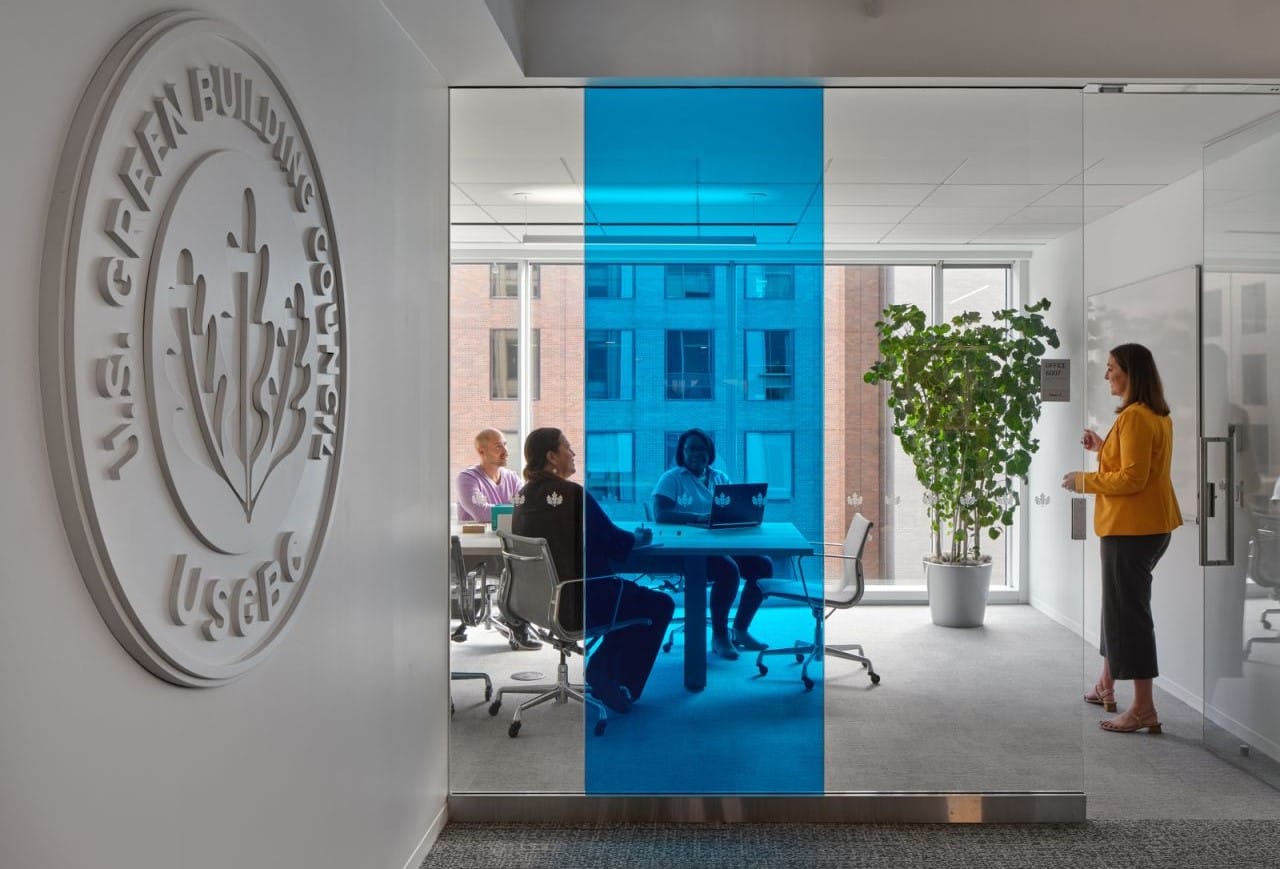
The global energy landscape is undergoing a profound transformation, and while the immediate focus for oil and gas investors often centers on supply-side dynamics and geopolitical events, a deeper structural shift is emerging from the built environment. The U.S. Green Building Council’s official opening of project certification for its LEED v5 rating system marks a significant inflection point. This latest evolution of the world’s most widely adopted green building standard introduces stringent new benchmarks for decarbonization and resilience, signaling a future where high-performance assets are not just preferred but increasingly mandated. For oil and gas investors, understanding the implications of LEED v5 is crucial, as it directly influences long-term energy demand, capital allocation, and asset valuation across diverse portfolios.
Decarbonization at the Core: Demand-Side Pressure on Fossil Fuels
LEED v5 represents a robust acceleration in the drive towards near-zero carbon buildings, integrating stricter metrics for energy performance, resilience, and human health. This isn’t merely an incremental update; it’s a foundational shift, particularly with LEED Platinum projects now requiring minimum verified carbon-reduction thresholds. Such mandates inherently place sustained downward pressure on long-term energy demand, especially for traditional fossil fuels. As buildings become more energy-efficient and increasingly powered by renewable sources, the aggregate demand for oil and natural gas for heating, cooling, and electricity generation will inevitably diminish over time. This structural change in energy consumption patterns in the built environment, a major global energy consumer, cannot be overlooked. While market volatility can obscure these long-term trends, the direction is clear. As of today, Brent Crude trades at $90.38, reflecting a 9.07% drop within the day, ranging from $86.08 to $98.97. Similarly, WTI Crude stands at $82.59, down 9.41% within its daily range of $78.97 to $90.34. Gasoline prices are also feeling the pressure at $2.93, a 5.18% decrease. While these immediate price movements are driven by a confluence of factors, the sustained push for building decarbonization via standards like LEED v5 contributes to a broader, underlying shift in global energy demand that investors must integrate into their long-term models.
Future-Proofing Assets: Where Capital Will Flow
The introduction of LEED v5 fundamentally redefines what constitutes a high-value asset in the real estate sector, with direct implications for investment portfolios that include or are exposed to property. Data already indicates that LEED-certified buildings tend to outperform their peers in terms of asset value, occupancy rates, and rental yields. LEED v5 aims to amplify this value proposition, making verifiable carbon reduction and efficiency central to top-tier certifications. For investors, this creates a clear incentive to prioritize green building projects and retrofits. The updated tools, digital scorecards, and calculation utilities, alongside revised “crosswalks” aligning LEED v5 with the WELL standard for human health and the SITES program for landscape sustainability, simplify the certification process. This convergence reduces administrative hurdles and costs, making multi-framework compliance more accessible and attractive. Our proprietary reader intent data reveals a keen interest in long-term oil price predictions, with questions like “what do you predict the price of oil per barrel will be by end of 2026?” frequently appearing. This underscores the market’s search for clarity amidst evolving demand drivers, where standards like LEED v5 play a subtle but persistent role in shaping future energy consumption and, by extension, commodity prices. Investors are clearly looking for signals on where capital should be deployed to mitigate risks and capture opportunities in a decarbonizing world.
Navigating Immediate Volatility Amidst Long-Term Shifts
While the long-term investment landscape is being reshaped by standards like LEED v5, the immediate market remains highly sensitive to supply-side dynamics and geopolitical factors. The significant 19.9% decline in Brent crude from $112.78 on March 30th to $90.38 on April 17th highlights this acute sensitivity. Investors are justifiably focused on upcoming events that could dictate short-term price movements. The upcoming OPEC+ JMMC Meeting on April 19th, followed by the OPEC+ Ministerial Meeting on April 20th, will be critical. Any signals regarding production quotas will be scrutinized intensely, especially given the recent price volatility. Further insights into supply-demand balances will come from the API Weekly Crude Inventory report on April 21st and the EIA Weekly Petroleum Status Report on April 22nd, with subsequent reports on April 28th and 29th, respectively. These events, alongside the Baker Hughes Rig Count reports on April 24th and May 1st, represent immediate catalysts that demand investor attention. However, savvy investors must simultaneously look beyond these immediate drivers. The adoption of LEED v5, championed by figures like USGBC President and CEO Peter Templeton, represents a persistent, structural force that will gradually but inexorably reshape energy demand, influencing these supply-side dynamics over a longer horizon. The challenge for oil and gas investors is to balance reactive trading around these immediate events with proactive strategic planning for a decarbonized future.
Strategic Imperatives for Oil & Gas Investors
For traditional oil and gas companies and their investors, LEED v5 presents a dual challenge and opportunity. The challenge lies in adapting business models to a world where a significant portion of energy demand, particularly from the built environment, is increasingly met by highly efficient, lower-carbon solutions. This requires strategic foresight beyond simply forecasting oil and gas prices based on historical trends or immediate supply-side factors. The opportunity, however, is substantial. Companies with diversified portfolios, those investing in energy efficiency technologies, smart building solutions, or even green real estate development, stand to gain. Integrating sustainability into corporate strategy, from operational emissions to asset holdings, is no longer a peripheral concern but a core driver of long-term value. For example, oil and gas giants with extensive real estate footprints can leverage LEED v5 to enhance asset value, reduce operational costs, and align with investor expectations for ESG performance. Early adopters, as evidenced by measurable carbon, cost, and energy reductions, are already positioning themselves as market leaders. As the global transition gains momentum, assets that meet or exceed standards like LEED v5 will command a premium, while those lagging in sustainability may face devaluations, stranded asset risks, and higher capital costs. Understanding and integrating the implications of LEED v5 is therefore not just about green principles, but about robust financial strategy for the decades to come.


