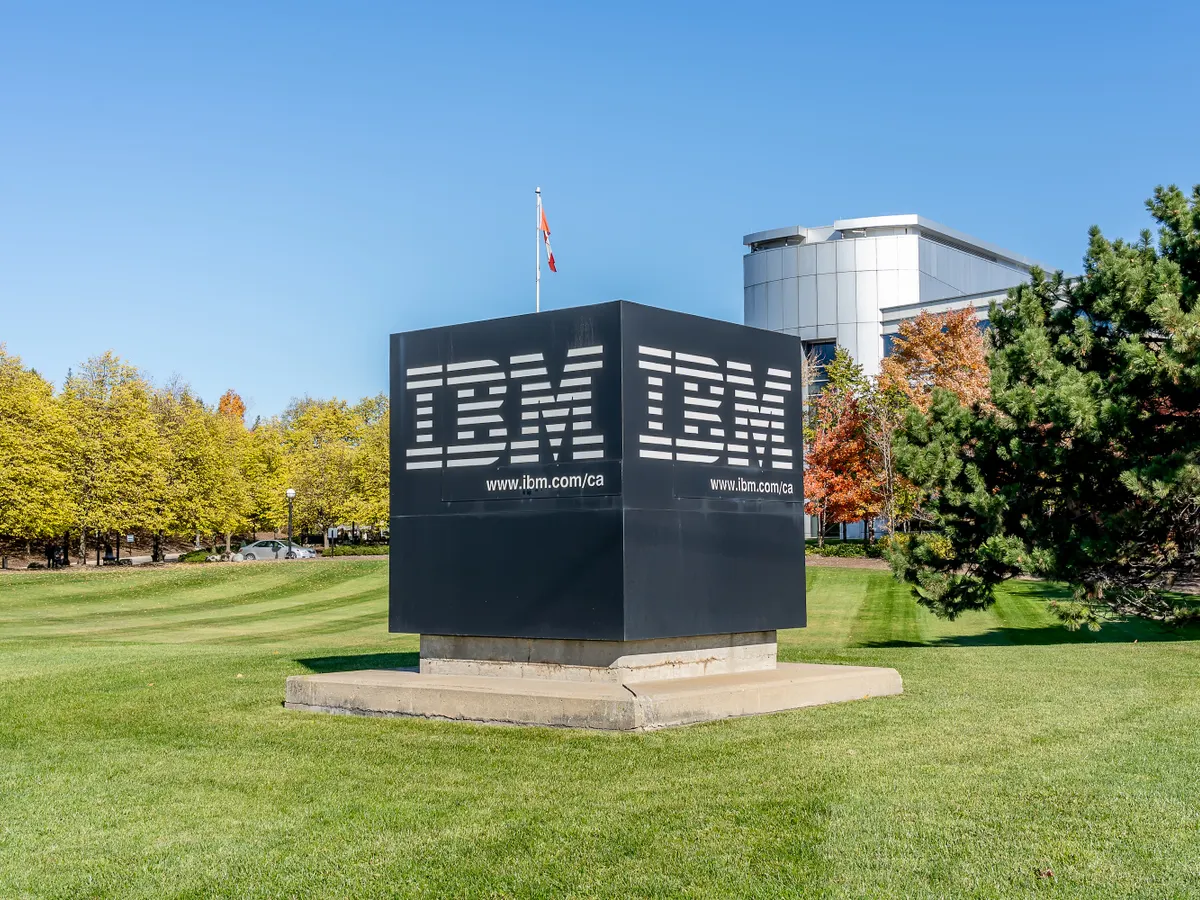
The global energy landscape continues to present a complex interplay of volatility and innovation. As of today, Brent Crude trades at $90.38 per barrel, marking a significant 9.07% decline within a single session, while WTI Crude sits at $82.59, down 9.41%. This sharp correction follows a challenging period, with Brent having fallen by $22.4, or nearly 20%, over the last 14 days alone. Against this backdrop of fluctuating commodity prices and an increasingly complex geopolitical environment, the strategic integration of advanced technologies becomes not just an advantage, but a necessity. IBM’s recent commitment of $45 million over five years to deploy AI, cloud, and quantum computing through its Impact Accelerator program directly addresses this need, aiming to bolster critical supply chains across energy, logistics, and food security in vulnerable regions. For oil and gas investors, this initiative signals a tangible push towards enhanced operational efficiency, improved resilience, and a clearer path to sustainable growth, fundamentally altering the risk-reward calculus within the sector.
AI’s Imperative in Stabilizing Volatile Energy Markets
The current market snapshot, with Brent trading at $90.38 and WTI at $82.59, underscores the profound volatility that defines today’s energy sector. Gasoline prices, currently at $2.93, also reflect this downward pressure. Such dramatic price swings, exemplified by Brent’s nearly 20% drop in just two weeks, create significant challenges for producers, refiners, and distributors alike. This environment amplifies investor concerns, with many asking about the trajectory of oil prices by the end of 2026. IBM’s investment, by focusing on optimizing supply chains, offers a powerful tool to mitigate some of this inherent market instability. Projects like Al-Baha University’s AI-driven fleet coordination in Saudi Arabia aim to cut emissions and improve efficiency at major logistics hubs, directly impacting the cost and speed of energy product delivery. Similarly, Polytechnique Montréal’s work on AI- and quantum-enabled planning for resource use demonstrates how advanced analytics can streamline operations, reduce waste, and build more predictable supply lines. While AI won’t eliminate geopolitical shocks, it can significantly improve the sector’s ability to respond to and absorb them, contributing to a more stable operational environment and potentially a more predictable pricing landscape over the long term.
Enhancing Energy Supply Chain Resilience and ESG Metrics
The core of IBM’s Impact Accelerator program lies in its ability to translate cutting-edge technology into practical solutions for real-world infrastructure challenges, particularly within the energy sector. A key example is the WRI Polsky Energy Center’s initiative in India and Kenya, utilizing AI and satellite imagery to map distributed solar PV systems. This project directly addresses off-grid energy access, a critical component of energy transition and social equity in developing regions. For investors, this represents a dual opportunity: contributing to global ESG goals while unlocking new market potential in decentralized energy solutions. The NREL Foundation’s work in Indonesia and Southeast Asia, integrating data across food-energy-water systems, further highlights the holistic approach to resilience. By understanding the intricate dependencies between these vital resources, AI can identify vulnerabilities and optimize resource allocation, preventing cascading failures. These initiatives align strongly with the UN Sustainable Development Goals, providing a clear pathway for energy companies to enhance their ESG profiles, a factor increasingly scrutinized by institutional investors. Companies that proactively integrate such AI-driven resilience and sustainability measures will likely see improved long-term valuation and reduced operational risks.
Geographic Opportunities and Investor Questions on Regional Stability
The geographic scope of IBM’s program, spanning Canada, India, Kenya, Indonesia, Brazil, Mexico, and Saudi Arabia, reveals a strategic focus on regions critical to both current energy supply and future energy transition. India and Kenya represent burgeoning markets for renewable energy, where AI-powered mapping of solar PV can accelerate adoption and deployment. Indonesia’s focus on integrated food-energy-water systems underscores the complexities of resource management in a rapidly developing archipelago nation. Saudi Arabia, a cornerstone of global oil production, stands to benefit from AI-driven logistics optimization, which can significantly improve efficiency and reduce the carbon intensity of its vast energy infrastructure. These regional investments are particularly relevant given investor questions about the stability of specific markets and the performance of regional players. While the program doesn’t directly address individual company performance like Repsol’s April 2026 outlook, it lays foundational groundwork for improved operational environments that benefit all market participants. Enhanced digital readiness assessments in Brazil and Mexico, led by UNIDO, aim to strengthen industrial infrastructure and workforce capacity, creating more robust environments for energy investment and operations in Latin America. This distributed approach means that the benefits of AI-driven efficiency and resilience are not confined to a single market but are instead spread across diverse energy ecosystems, reducing systemic risk.
Forward-Looking Catalysts and AI’s Long-Term Value Proposition
The immediate future of the oil and gas market is punctuated by a series of critical events. The OPEC+ JMMC and Ministerial Meetings are scheduled for April 19th and 20th respectively, where decisions on production quotas will undoubtedly influence near-term price movements. Following these, the API Weekly Crude Inventory on April 21st and the EIA Weekly Petroleum Status Report on April 22nd will provide crucial insights into supply-demand dynamics. While these events will drive short-term sentiment and address immediate investor questions about current OPEC+ production quotas, the strategic integration of AI, as championed by IBM, represents a far more profound, multi-year catalyst for the sector. Imagine a future where AI-enhanced supply chain transparency allows for more informed and agile responses to inventory shifts or production changes, leading to less reactive and more strategic market management. The Baker Hughes Rig Count reports on April 24th and May 1st will indicate drilling activity, a metric that could eventually be optimized by AI for greater efficiency and resource allocation. Ultimately, for investors asking about the long-term price of oil per barrel by the end of 2026, the widespread adoption of AI in energy supply chains offers a compelling narrative of increased efficiency, reduced operational costs, and enhanced resilience. This technological shift promises to temper volatility and unlock new value, transforming how the energy sector operates and how investors evaluate its potential.


