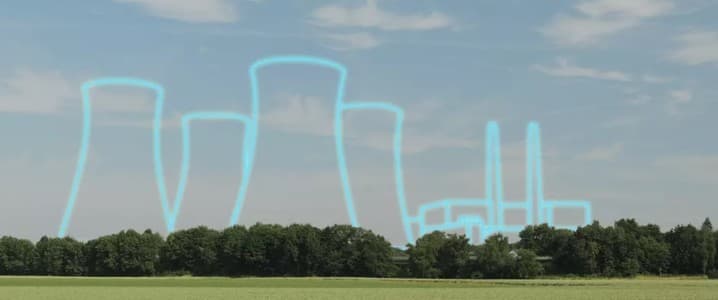
The U.S. energy landscape is on the cusp of a profound transformation, driven by an insatiable demand from the rapidly expanding artificial intelligence and cloud-computing sectors. This unprecedented electricity requirement is reigniting interest in nuclear power, a sector long considered stagnant. For oil and gas investors, this resurgence presents a critical question: What does a post-2035 nuclear surge mean for future natural gas power demand, and how should this long-term outlook be balanced against immediate market volatility?
The AI Revolution Fuels Nuclear’s Second Act
The relentless build-out of hyperscale data centers, fueled by advancements in AI development, cloud storage, and electrified manufacturing, is fundamentally reshaping national electricity demand patterns. These facilities require immense, reliable, round-the-clock power, a challenge traditional intermittent renewables struggle to meet alone. New analysis projects a significant shift, with U.S. nuclear generation expected to rise by 27% between 2035 and 2060. This growth marks a potential second expansion phase for nuclear energy, reversing a decades-long decline in its share of total electricity output. The renewed outlook is heavily predicated on the commercialization and deployment of small modular reactors (SMRs) and advanced-fission units, which are specifically designed for load-following capabilities to complement intermittent renewable sources.
Quantifying the Nuclear Capacity Expansion
The scale of this projected nuclear renaissance is substantial. Experts anticipate that nuclear power’s share of total U.S. electricity generation could stabilize near 20% through 2040, before beginning a steady ascent as these post-2035 reactors come online. This trajectory suggests total U.S. nuclear capacity could reach levels approximately one-quarter higher than today’s roughly 95 GW. This ambitious expansion is not merely a forecast but is backed by concrete initiatives. We’ve seen significant strategic collaborations, such as the $80-billion reactor-deployment program involving industry leaders and government support, aimed at accelerating next-generation designs, securing enriched-uranium availability, and expanding the specialized workforce. This robust private and public sector commitment signifies a paradigm shift from limited policy support to expectations of large-scale reinvestment in nuclear infrastructure.
The Gas Demand Conundrum: A Post-2035 Outlook
For investors heavily exposed to natural gas, the projected nuclear surge presents a nuanced long-term challenge. With data center consumption alone forecast to triple over the next decade, the demand for stable, carbon-free baseload power is undeniable. Nuclear energy is re-emerging as the only carbon-free source capable of sustaining such round-the-clock generation at scale. If nuclear successfully captures a significant portion of this new demand and potentially displaces some existing thermal generation, it directly impacts the long-term growth trajectory for natural gas power generation. Our reader data indicates that investors are keenly focused on forward price predictions, exemplified by questions like “what do you predict the price of oil per barrel will be by end of 2026?” While this specific query targets oil, it underscores a broader investor anxiety about long-term commodity price drivers. For natural gas, the nuclear expansion introduces a powerful structural headwind for demand growth beyond 2035. While near-term natural gas demand remains robust, driven by industrial use and LNG exports, the long-term substitution risk from nuclear cannot be ignored. Investors should pay close attention to the EIA Weekly Petroleum Status Reports (upcoming on April 22 and April 29) and the Baker Hughes Rig Count (April 24 and May 1) to understand current supply and demand dynamics, but these immediate data points must be viewed through the lens of a rapidly evolving future energy mix.
Navigating Current Market Volatility Amidst Long-Term Shifts
While the nuclear outlook shapes the distant horizon, oil and gas investors must contend with immediate market realities. As of today, Brent crude trades at $90.38, reflecting a significant 9.07% decline on the day, with WTI crude similarly impacted at $82.59, marking a 9.41% drop. This sharp correction follows a broader 14-day downtrend that saw Brent shed $22.4, or nearly 20%, from its March 30 peak of $112.78. Gasoline prices are also experiencing pressure, currently at $2.93, down 5.18% today. This volatile environment highlights the inherent unpredictability of short-term commodity markets, influenced by geopolitical events, inventory reports, and macroeconomic sentiment. Investor intent data, revealing questions about current OPEC+ production quotas and the impact of their upcoming meetings (JMMC on April 19, Ministerial on April 20), clearly indicates a focus on these near-term supply-side dynamics. Balancing the immediate pressures of a volatile oil market and the upcoming decisions by key producers with the long-term, structural shifts posed by nuclear energy’s resurgence is the core challenge for astute energy investors. The nuclear narrative, while years away from full impact, represents a fundamental re-evaluation of long-term natural gas demand and underscores the need for a diversified, adaptable investment strategy in the evolving energy transition.


