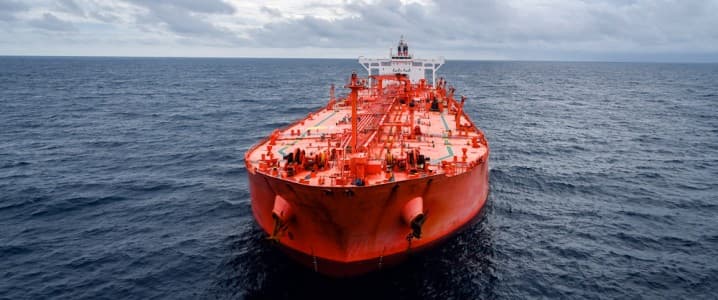
The global oil market is once again grappling with the complexities of geopolitical maneuvering, as fresh U.S. sanctions targeting key Russian energy exporters introduce a new layer of uncertainty. Investors are closely watching the immediate impact on crude flows and the broader implications for supply-demand dynamics. The recent reversal of an Aframax tanker carrying Russian crude for India serves as a stark early indicator of the disruption, prompting a deeper dive into how these measures will reshape global energy trade and price trajectories for the remainder of 2026.
Immediate Disruptions to Russian Crude Flows
The ripple effect of the recent U.S. sanctions against major Russian oil exporters, Rosneft and Lukoil, is already becoming evident. A prime example is the Aframax tanker ‘Furia,’ which loaded approximately 730,000 barrels of Urals crude from Primorsk on October 20, destined for the Indian port of Sikka. However, in a clear response to the evolving sanctions landscape, the vessel reversed course shortly after leaving the Russian coast and is now idling in the Baltic Sea. This incident underscores the immediate hesitancy and operational challenges faced by market participants navigating the new regulatory environment. Rosneft and Lukoil collectively account for a significant portion of Russia’s total oil exports, roughly 2 million barrels daily or about half of the nation’s overseas sales. Companies engaged in business with these entities have until November 21 to wind down their operations, a deadline that is undoubtedly influencing shipping decisions and contractual arrangements. Lukoil’s announcement to divest its overseas business further highlights the strategic shifts underway, signaling a protracted period of adjustment for Russia’s global energy footprint.
Market Volatility and Investor Price Concerns
Despite the clear threat to Russian supply, the immediate market reaction has been characterized by significant volatility, with prices recently trending downward. As of today, Brent Crude trades at $90.38 per barrel, marking a substantial 9.07% decline within the day, with its range fluctuating between $86.08 and $98.97. Similarly, WTI Crude has fallen to $82.59, down 9.41%, trading in a daily range of $78.97 to $90.34. This recent dip is part of a broader trend, with Brent having shed $22.4, or nearly 20%, since March 30, when it stood at $112.78. This divergence between geopolitical risk and observable price action is a key area of concern for investors. Many are asking: “What do you predict the price of oil per barrel will be by the end of 2026?” The current market dynamics suggest that while the threat of supply disruption is real, the market might be weighing the nuances of the sanctions — specifically, that they are not secondary sanctions and thus allow non-U.S. entities like Indian, Chinese, and Turkish refiners to continue purchases directly from sanctioned Russian companies. This delicate balancing act by policymakers, aimed at inflicting economic damage without “blowing up the global economy,” creates a complex environment for price discovery, making accurate long-term predictions challenging without considering upcoming market catalysts.
The Nuance of Sanctions and Global Flow Re-routing
The effectiveness of the latest sanctions hinges on a critical distinction: they are not secondary sanctions. This means that while U.S. entities are prohibited from transacting with Rosneft and Lukoil, non-U.S. companies, particularly major importers like India, China, and Turkey, can legally continue their direct purchases. This legal loophole creates a pathway for Russian crude to find alternative buyers, albeit potentially at discounted prices or through complex shipping arrangements. While short-term disruptions, such as the Furia’s change of course, are inevitable as market participants assess risk and reconfigure logistics, the consensus among many industry observers is that a structural change to global oil markets is unlikely. Instead, we anticipate a re-routing and re-optimization of existing flows. The U.S. strategy appears to be a “signaling operation” designed to increase the cost and complexity of Russian oil exports, rather than aiming for a complete embargo that could trigger a global supply shock and send crude prices skyrocketing. However, the sheer volume involved – some 2 million barrels per day from Rosneft and Lukoil alone – means that even a partial re-routing or reduced efficiency in these flows could still tighten the market significantly, impacting refining margins and potentially leading to higher product prices globally, including gasoline, which currently trades at $2.93 per gallon, down 5.18% today.
Upcoming Events to Watch for Investor Strategy
For investors navigating this complex landscape, the next few weeks will be crucial, with several key events poised to influence market direction. High on the agenda are the OPEC+ Joint Ministerial Monitoring Committee (JMMC) Meeting on April 19 and the full OPEC+ Ministerial Meeting on April 20. With investors actively asking about “OPEC+ current production quotas,” these gatherings will be paramount. The group’s response to the current market volatility and the potential for Russian supply disruptions will dictate much of the near-term price action. Will OPEC+ maintain its current production strategy, or will it signal adjustments to stabilize the market amidst geopolitical tensions and recent price declines? Beyond OPEC+, weekly inventory data will provide vital clues about the underlying supply-demand balance. The API Weekly Crude Inventory reports on April 21 and April 28, followed by the EIA Weekly Petroleum Status Reports on April 22 and April 29, will be closely scrutinized for any signs of tightening or loosening fundamentals. Furthermore, the Baker Hughes Rig Count on April 24 and May 1 will offer insights into U.S. production trends, which remain a significant swing factor in global supply. Monitoring these events closely will be essential for investors to position themselves strategically, anticipating how the interplay of geopolitical pressures and fundamental market data will shape crude and product prices moving forward.


