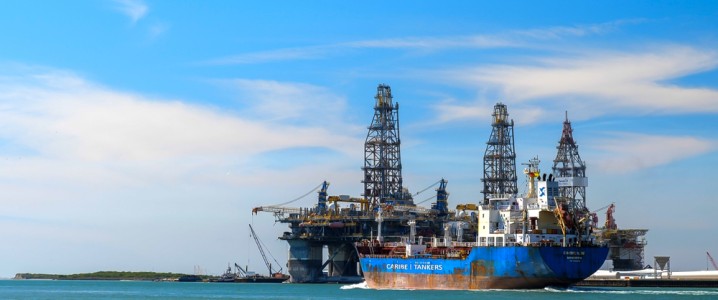
The energy investment landscape is perpetually shaped by a complex interplay of geological potential, market fundamentals, and geopolitical realities. A recent development involving Venezuela’s formal request for detailed information from Trinidad and Tobago regarding Exxon Mobil’s planned first field-tests in the ultra-deepwater Block TTUD 1 encapsulates these dynamics perfectly. This situation, unfolding adjacent to the countries’ maritime border, adds a significant layer of geopolitical risk to what might otherwise be a highly promising deepwater play. For investors assessing regional opportunities, this isn’t merely a diplomatic spat; it’s a critical signal about sovereign risk, potential project delays, and the broader stability of energy investments in a key hydrocarbon-rich basin.
Geopolitical Currents Threaten Deepwater Potential
At the heart of the current friction lies Block TTUD 1, an ultra-deepwater exploration block off Trinidad’s east coast, recently awarded to Exxon Mobil. Its strategic location, adjacent to the maritime boundary with Venezuela and northwest of Guyana’s prolific Stabroek block, immediately flags it as an area of high interest and potential contention. Venezuela has formally invoked Article 8 of its delimitation treaty with Trinidad, which mandates mutual notification of exploration activity within 500 meters of the boundary line, to demand detailed operational plans. While Trinidad has expressed willingness to share seismic survey plans scheduled for next year, it has firmly declined to disclose specific operational data, citing confidentiality provisions surrounding Block TTUD 1.
This request from Caracas is not an isolated incident; it aligns with a broader, more assertive Venezuelan stance on energy projects in neighboring territories. Most notably, it echoes the long-standing tensions with Guyana over the Stabroek block, a dispute that has seen Venezuela suspend energy cooperation agreements with Trinidad in the past due to its support for the United States. For investors, this pattern indicates a deliberate strategy by Venezuela to project its influence and assert claims over disputed or adjacent maritime areas. The implication for Exxon’s multi-billion-dollar investment, potentially involving seismic acquisition and the drilling of exploration wells in waters 2,000-3,000 meters deep, is clear: the geological promise, enhanced by proximity to proven Stabroek acreage, must now be weighed against the tangible risks of diplomatic friction, regulatory entanglement, or even unilateral actions should a discovery straddle the boundary or raise sovereign entitlement issues.
Exxon’s Strategic Return Amidst Volatile Markets
Exxon Mobil’s re-entry into Trinidad and Tobago’s waters after more than two decades marks a significant strategic move, particularly given the block’s perceived comparability to Guyana’s Stabroek basin in terms of potential. The prospect of unlocking substantial ultra-deepwater reserves in a new frontier is undoubtedly attractive, offering long-term growth opportunities for a supermajor like Exxon. However, the path to commercial viability, requiring extensive seismic work and potentially multi-billion-dollar investments, is now complicated by the emerging geopolitical dispute. Managing both the formidable technical challenges of ultra-deepwater exploration and the unpredictable geopolitical landscape of the region presents a trying task for the company.
This heightened regional risk unfolds against a backdrop of significant volatility in global energy markets. As of today, Brent crude trades at $90.38, marking a notable 9.07% decline from its opening, having swung within a day range of $86.08-$98.97. This sharp drop mirrors the WTI crude price, which is down 9.41% at $82.59, trading between $78.97 and $90.34. This recent market turbulence follows a broader bearish trend, with Brent having fallen nearly 20% over the past fortnight, from $112.78 on March 30th to its current level. Such pronounced market swings underscore the imperative for energy companies like Exxon to meticulously de-risk their long-term, high-capex projects against both operational and geopolitical headwinds. The added uncertainty of border disputes can exacerbate investor apprehension during periods of market instability, making capital allocation decisions for deepwater exploration even more scrutinized.
Investor Concerns and Forward-Looking Catalysts
Our proprietary reader intent data reveals a keen focus among investors on market stability and future price direction, with frequent inquiries about the predicted price of oil per barrel by the end of 2026 and current OPEC+ production quotas. This underscores the pervasive anxiety surrounding market volatility, which is only exacerbated by geopolitical flashpoints like the Venezuela-Trinidad situation. The direct link between geopolitical stability and crude prices is a constant concern for our readership, as regional tensions can quickly translate into supply risk premiums or, conversely, dampen investor confidence in long-term projects.
The immediate future holds several key events that could significantly impact market sentiment and, by extension, the perceived risk of projects like Block TTUD 1. The upcoming OPEC+ Joint Ministerial Monitoring Committee (JMMC) Meeting on April 19th, followed by the full OPEC+ Ministerial Meeting on April 20th, will be closely watched for any shifts in supply policy. Given the current price declines, any discussions around production adjustments could significantly influence market direction. Further insights into supply and demand dynamics will emerge from the API Weekly Crude Inventory reports on April 21st and 28th, and the EIA Weekly Petroleum Status Reports on April 22nd and 29th. These fundamental data points, coupled with the Baker Hughes Rig Count on April 24th and May 1st, will provide a clearer picture of market fundamentals that could either amplify or mitigate the impact of regional geopolitical risks on investor confidence. For projects like Exxon’s in Trinidad, the broader market’s health and stability are crucial, as they influence the availability and cost of capital for such high-risk ventures.
Strategic Implications for Regional Energy Development
The unfolding scenario has profound strategic implications not just for Exxon Mobil, but for Trinidad and Tobago’s broader energy ambitions and the precedent it sets for regional resource development. For Trinidad, the challenge is to balance the undeniable desire to attract significant deepwater investment, crucial for its long-term energy security and economic growth, with the delicate need to manage regional tensions and uphold treaty obligations. Its refusal to disclose specific operational plans, while legally justified by confidentiality clauses, must be carefully navigated to avoid further escalating diplomatic friction with its neighbor.
More broadly, this dispute underscores the inherent “above-ground” risks that can overshadow even the most promising geological plays in regions with complex maritime boundaries and historical political tensions. Such cross-border disputes can inflate the cost of capital, introduce significant delays, and even deter future foreign direct investment in similar projects. For investors, this situation serves as a stark reminder that robust due diligence must extend far beyond technical and economic viability, delving deeply into geopolitical risk assessments, international treaty interpretations, and regional diplomatic relations. The long-term success of ultra-deepwater plays in areas like the Guyana-Suriname basin and now offshore Trinidad will increasingly depend on the ability of governments and energy companies to collaboratively manage these intricate political and sovereign entitlement challenges.


