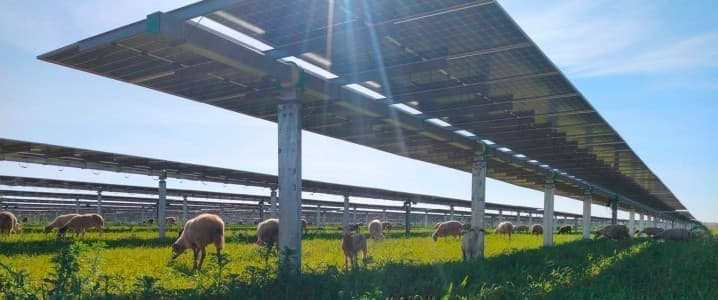
Saudi Arabia, the world’s preeminent crude oil exporter, is making a monumental investment in its renewable energy sector, as evidenced by the recent award of five new wind and solar projects valued at an estimated $2.4 billion. This significant commitment, part of the Kingdom’s ambitious National Renewable Energy Program under Vision 2030, is far more than an environmental initiative; it represents a shrewd, long-term economic strategy designed to fortify its position in the global energy landscape. For savvy investors, understanding the strategic rationale behind this shift is critical, especially when considering the implications for global crude supply, price dynamics, and the future of energy investments.
The Strategic Imperative: Maximizing Crude Exports in a Volatile Market
The allocation of $2.4 billion to develop five new renewable energy projects, encompassing one wind farm and four solar facilities with a combined capacity of 4.5 gigawatts, underscores a pivotal shift in Saudi Arabia’s domestic energy policy. These projects are integral to the Kingdom’s goal of achieving an optimal, efficient, and cost-effective energy mix for electricity production, targeting a 50% share for renewables by 2030. The core driver behind this transition is not merely diversification but a strategic maneuver to replace liquid fuels and direct crude burn in domestic power generation with cleaner alternatives. This move is projected to free up substantial volumes of crude oil, which can then be allocated for export, directly bolstering the nation’s primary revenue stream.
This strategy gains particular urgency when viewed against the backdrop of current market volatility. As of today, Brent Crude trades at $90.38 per barrel, marking a sharp 9.07% decline within the day and a significant 19.9% drop from $112.78 just two weeks ago. WTI Crude mirrors this trend, currently at $82.59, down 9.41%. Such pronounced swings highlight the inherent risks of over-reliance on a single commodity for national income. By increasing domestic renewable energy capacity, Saudi Arabia effectively ring-fences more crude for international markets, offering a valuable hedge against future demand fluctuations or price erosion. This proactive approach aims to stabilize and maximize export revenues, even as global energy markets navigate a complex transition.
Unpacking the Economics: Record-Breaking LCOE and Investment Efficiency
The economic viability of Saudi Arabia’s renewable push is strikingly evident in the project specifics. The Dawadmi Wind IPP Plant in Riyadh province, with a 1.5 GW capacity, secured a winning bid consortium that achieved an unprecedented Levelized Cost of Electricity (LCOE) of 1.33803 U.S. cents per kWh – a new world record for wind power generation. Similarly, the 1.4 GW Najran Solar Energy Project boasts an LCOE of 1.09682 U.S. cents per kWh, marking it as the second-lowest globally for solar electricity generation. These figures are not just impressive; they signal a profound competitive advantage for Saudi Arabia in large-scale renewable deployment.
The ability to secure such low LCOE values can be attributed to several factors: the Kingdom’s abundant solar irradiance and wind resources, vast available land for large-scale projects, economies of scale from national programs, and robust government backing that de-risks investments. For investors, these record-low costs translate directly into higher project profitability and a more sustainable path towards the 50% renewable energy target for electricity generation by 2030. With a projected total tendered renewable energy generation capacity reaching 64 GW by the end of 2025, Saudi Arabia is not merely dipping its toes into renewables; it is establishing itself as a global leader in cost-efficient green energy production, fundamentally reshaping its domestic energy consumption patterns and, by extension, its crude export potential.
Investor Questions and the Future of Saudi Hydrocarbons
Our proprietary reader intent data reveals a keen interest among investors regarding the future trajectory of oil prices and OPEC+ production policies. Questions such as “what do you predict the price of oil per barrel will be by end of 2026?” and “What are OPEC+ current production quotas?” underscore a broader concern about supply stability and market equilibrium. Saudi Arabia’s aggressive pivot to domestic renewables directly impacts these considerations. By freeing up more crude for export, the Kingdom inherently introduces the potential for additional supply into global markets.
This creates a fascinating dynamic: while Saudi Arabia is a key architect of OPEC+ production management, its long-term strategy involves increasing its capacity to export crude. The critical question for investors is how this additional export capacity will be integrated into global supply without disrupting market stability. Will the Kingdom leverage this freed-up crude within existing OPEC+ quotas, maintaining market discipline, or will it seek to expand its market share? The answer will profoundly influence crude price forecasts for 2026 and beyond. Investors should monitor how Saudi Aramco, the national oil company, aligns its upstream production targets with the nation’s renewable energy achievements, as this interplay will dictate the marginal supply available to the market.
Navigating Upcoming Market Catalysts and Saudi’s Dual Role
The strategic implications of Saudi Arabia’s renewable investments are inextricably linked to short-term market catalysts, particularly the upcoming OPEC+ meetings. With the OPEC+ Joint Ministerial Monitoring Committee (JMMC) meeting scheduled for April 19th and the full Ministerial Meeting on April 20th, the market is poised for critical decisions regarding production quotas. These meetings will set the immediate tone for global crude supply, impacting price stability and the revenue outlook for major producers.
Saudi Arabia’s dual role as both a leader in the energy transition and the world’s swing producer presents a complex challenge and opportunity. While the Kingdom is investing billions to free up crude, its commitment to OPEC+ agreements remains paramount for market stability. Investors need to consider how any adjustments to production quotas in these upcoming meetings might reflect a long-term strategy to accommodate potential increases in exportable crude. Furthermore, weekly data releases like the API and EIA Crude Inventory reports, alongside the Baker Hughes Rig Count, will continue to provide vital snapshots of market health and demand signals, helping investors gauge the immediate impact of supply adjustments against the backdrop of Saudi Arabia’s evolving energy mix. Understanding this interplay between strategic long-term diversification and tactical short-term market management is essential for navigating the complexities of the modern oil and gas investment landscape.


