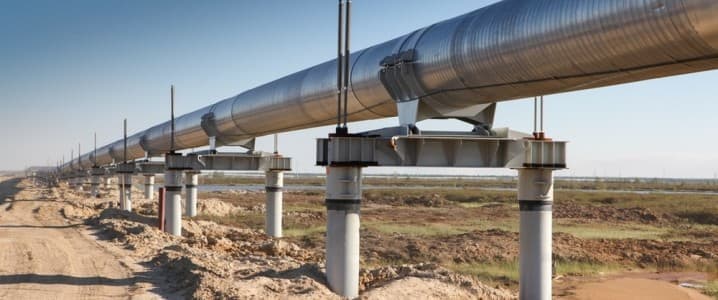
The recent decision by Croatian pipeline operator JANAF to significantly curtail non-Russian crude deliveries to Slovakia’s main refiner Slovnaft, part of Hungary’s MOL Group, signals a critical inflection point for Central Europe’s energy security strategy. This disruption, which follows a similar suspension to Serbian refiner NIS AD, exposes the inherent vulnerabilities in the region’s ambitious pivot away from Russian energy dependence. For investors, this incident underscores the complex interplay of logistics, geopolitics, and market dynamics that can quickly impact refining margins and supply chain resilience in a volatile global energy landscape.
Slovnaft’s Diversification Strategy Under Duress
Slovnaft has confirmed a substantial reduction in contracted Arab Light crude, amounting to approximately 90,000 tonnes intended for October and November deliveries. The refiner has explicitly labeled this a “breach of contract,” warning that the move “seriously jeopardizes the supply of non-Russian fuel to Central Europe.” This development directly challenges Slovnaft’s strategic objective to source half of its autumn throughput from non-Russian crude, a cornerstone of Central Europe’s broader energy diversification efforts. JANAF has attributed the reallocation of volumes to unspecified “technological reasons” and has yet to provide a timeline for resumption, leaving Slovnaft scrambling to secure replacement cargoes amidst logistical hurdles and storage limitations. This situation highlights how easily a single transit route, like the Adriatic pipeline system, can destabilize regional energy independence plans, especially given the limited spare capacity along this crucial corridor.
Global Market Swings Overshadow Regional Tensions
While the Slovnaft disruption represents a significant localized supply challenge, the broader crude market has been navigating its own turbulent waters. As of today, Brent crude trades at $90.38 per barrel, marking a sharp 9.07% decline within the day, with a range between $86.08 and $98.97. Similarly, WTI crude has fallen by 9.41% to $82.59, trading within a daily range of $78.97 to $90.34. This pronounced downturn follows a significant trend over the past two weeks, where Brent has shed $22.4, or nearly 19.9%, from its $112.78 level on March 30th. This global market correction, likely driven by broader macroeconomic concerns or shifts in perceived supply-demand balances, demonstrates that even severe regional supply stressors can be overshadowed by larger market forces. For investors, this divergence highlights the need to differentiate between localized supply premiums, which will certainly impact Slovnaft’s operational costs, and the macro-level factors driving global benchmarks.
Addressing Investor Concerns: Pricing Risk and Strategic Resilience
Our proprietary reader intent data reveals a keen focus among investors on future crude price trajectories and the underlying factors influencing them. Questions like “what do you predict the price of oil per barrel will be by end of 2026?” are frequently asked, underscoring a pervasive desire to quantify long-term market risks and opportunities. The JANAF-Slovnaft incident directly feeds into this uncertainty. While not necessarily a global price mover, such regional supply shocks introduce significant operational risk for exposed refiners like MOL Group. Investors are increasingly scrutinizing companies’ supply chain resilience, feedstock diversification strategies, and contractual safeguards. The ability of refiners to secure alternative crude sources quickly and efficiently, or the lack thereof, will be a key differentiator. Companies with robust contingency plans and diversified access points stand to perform better in an environment characterized by unpredictable geopolitical and logistical disruptions, influencing valuations for the coming year and beyond.
Navigating the Future: Upcoming Catalysts and Geopolitical Chess
The path forward for Central European energy security, and indeed for global crude markets, is paved with several critical upcoming events. Investors will be closely watching the OPEC+ Joint Ministerial Monitoring Committee (JMMC) Meeting on April 19th, followed by the full OPEC+ Ministerial Meeting on April 20th. Any adjustments to production quotas stemming from these discussions will have direct implications for global crude supply and pricing, ultimately influencing the availability and cost of replacement crude for refiners like Slovnaft. Furthermore, the regular cadence of market data, including API Weekly Crude Inventory reports (April 21st, April 28th) and EIA Weekly Petroleum Status Reports (April 22nd, April 29th), will provide vital insights into demand health and refining activity. The Baker Hughes Rig Count (April 24th, May 1st) will offer a glimpse into future production trends in the crucial North American market. These global data points, alongside ongoing geopolitical developments in Europe and the broader crude transit regions, will collectively shape the investment landscape and determine the ultimate cost of energy diversification for nations and refiners caught in the crosscurrents of supply chain vulnerabilities and strategic imperatives.


