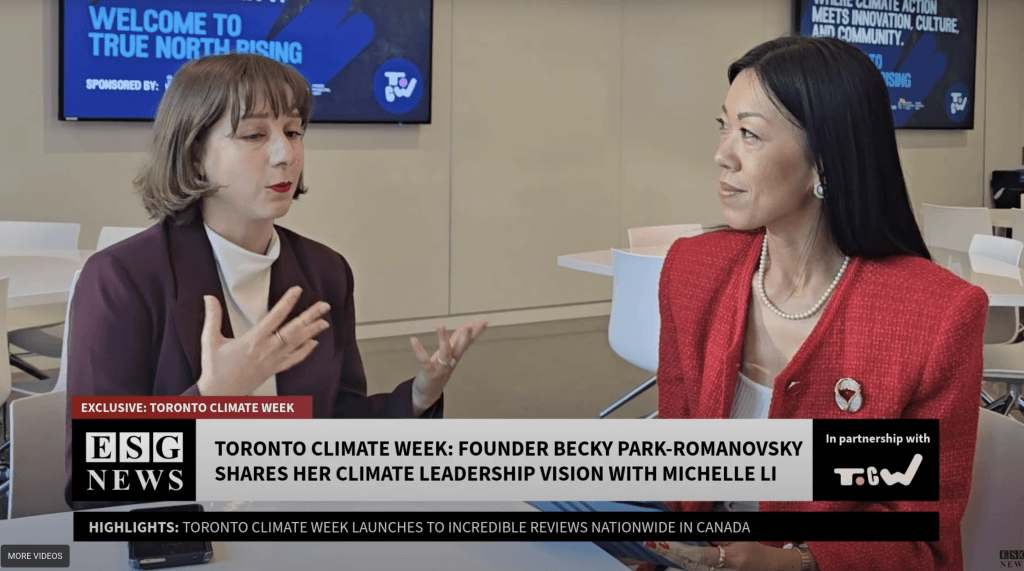
The launch of Toronto Climate Week in 2025 marks a significant moment for Canada’s energy landscape, extending beyond the immediate discourse on climate action to directly influence long-term investment strategies in oil and gas. While daily headlines often focus on crude price fluctuations, events like this signal deeper structural shifts in policy, capital allocation, and technological innovation. For discerning oil and gas investors, understanding the ambitions and initiatives highlighted by such forums is crucial for navigating an evolving market where environmental considerations are increasingly intertwined with financial performance.
Toronto’s Climate Innovation Hub Ambition and Capital Flows
Toronto’s concerted effort to position itself as a global hub for climate innovation, as evidenced by its inaugural Climate Week, is a bellwether for where future capital is likely to flow. The city, already a powerhouse in finance and technology, aims to bridge these sectors to accelerate climate solutions. This ambition, fueled by what organizers describe as “Canada-first momentum,” suggests a supportive domestic policy environment for green technologies and decarbonization efforts. For oil and gas companies, this translates into both challenges and opportunities. On one hand, it underscores the growing pressure to decarbonize operations and reduce emissions. On the other, it opens avenues for investment in carbon capture, hydrogen production, and other low-carbon solutions that could integrate with existing energy infrastructure, potentially attracting venture capital interest from the very pitch competitions and investor-startup connections fostered by such events.
Market Volatility Amidst Long-Term Transition Signals
The broader energy market currently reflects a complex interplay of immediate supply-demand dynamics and long-term transition pressures. As of today, Brent Crude trades at $90.38, reflecting a significant daily decline of 9.07%, with a day range between $86.08 and $98.97. Similarly, WTI Crude stands at $82.59, down 9.41% within a range of $78.97-$90.34. Gasoline prices have also seen a notable drop, now at $2.93, down 5.18% for the day. This recent volatility is not an isolated incident; Brent has trended down substantially from $112.78 on March 30th to its current level. Such short-term price movements often overshadow the strategic implications of climate initiatives. However, for investors with a longer horizon, the persistent push for climate innovation, even amidst market turbulence, reinforces the need to integrate energy transition risks and opportunities into their portfolio construction. High crude prices, though currently experiencing a downturn, historically incentivize both new fossil fuel production and accelerated investment in alternatives, creating a dynamic tension that investors must monitor closely.
Addressing Investor Concerns: Price Predictions and Strategic Shifts
Our proprietary market intelligence indicates that investors are grappling with significant uncertainties, as evidenced by their frequent queries. Top questions include “what do you predict the price of oil per barrel will be by end of 2026?” and “What are OPEC+ current production quotas?”. These questions highlight a primary focus on near-to-mid-term market fundamentals. However, the insights from events like Toronto Climate Week offer a crucial overlay to these immediate concerns. The stated commitment to “stable policy, economic support, and a culture that inherently values the environment” in Toronto provides a glimpse into the regulatory and social license landscape for future energy projects in Canada. For oil and gas firms, understanding this evolving environment is critical. Initiatives promoting local voices, Indigenous leadership panels, and BIPOC group engagement, as highlighted by Climate Week organizers, are not merely social initiatives; they directly influence project approval processes, community relations, and the overall social license to operate for any major energy development, including those aimed at decarbonization or new energy ventures.
Upcoming Catalysts and Long-Term Positioning
In the immediate term, the energy market’s focus will understandably turn to key supply-side catalysts. Investors will be closely watching the OPEC+ Joint Ministerial Monitoring Committee (JMMC) Meeting on April 19th, followed by the full OPEC+ Ministerial Meeting on April 20th. These gatherings often set the tone for global crude supply in the coming months, directly impacting price stability and production quotas. Further insights into inventory levels will come from the API Weekly Crude Inventory report on April 21st and the EIA Weekly Petroleum Status Report on April 22nd, with subsequent releases scheduled for April 28th and 29th, respectively. The Baker Hughes Rig Count reports on April 24th and May 1st will provide crucial data on North American drilling activity. While these events dictate short-term trading strategies, the strategic signals emanating from initiatives like Toronto Climate Week cannot be ignored. The long-term trajectory for oil and gas investment will increasingly be shaped by policy support for climate solutions, technological advancements in decarbonization, and the integration of diverse community stakeholders. Companies that strategically align with these broader objectives, even as they navigate day-to-day market volatility, are better positioned for sustainable value creation.
In conclusion, Toronto Climate Week, while seemingly distinct from the daily grind of crude trading, offers invaluable insights for oil and gas investors. It underscores a growing domestic impetus for climate innovation, signaling a future where policy stability and social inclusion will be paramount for energy projects. Balancing the immediate implications of OPEC+ decisions and inventory reports with the long-term strategic shifts highlighted by such events is the hallmark of informed energy investing in this dynamic era.


