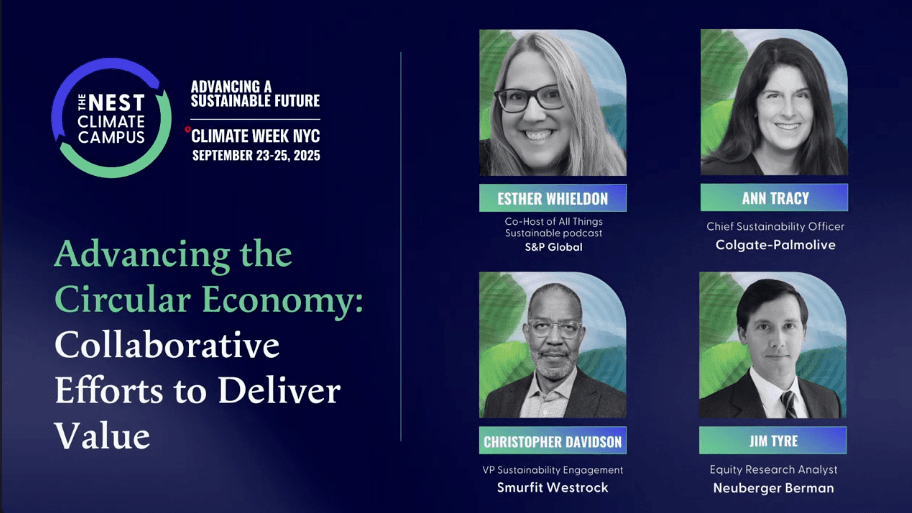
In a global energy landscape defined by rapid shifts and increasing scrutiny, the conversation around the circular economy is no longer a peripheral ESG topic but a core driver of future value for oil and gas investors. While traditional metrics like production volumes and commodity prices remain critical, a deeper dive reveals how cross-industry collaborative partnerships, especially those focusing on resource efficiency and waste reduction, are becoming essential for long-term resilience and profitability. For astute investors, understanding these evolving ecosystems provides a crucial edge, identifying companies poised to thrive amidst regulatory changes, evolving consumer demands, and the inherent volatility of energy markets.
Investor Scrutiny and the Evolving Definition of Value
The investor community is increasingly seeking financially material sustainability information, recognizing that environmental and social factors directly impact long-term risk and return. Our proprietary reader intent data shows investors are actively evaluating the future trajectory of established players, with questions like “How well do you think Repsol will end in April 2026?” reflecting a desire to understand company-specific resilience. This extends beyond immediate financial performance to strategic pivots. The challenge, as highlighted by leaders in consumer goods, lies in meeting consumer expectations for sustainable products without compromising on price, quality, or convenience. This “thread-the-needle” approach demands innovation that generates tangible benefits, such as significant carbon savings and reduced plastic use through product concentration, or even cost savings for end-users. For oil and gas companies, this translates to an imperative to explore how their products and processes can integrate into these downstream circular models, whether through advanced recycling of plastics derived from petrochemicals or by developing more sustainable energy solutions for industrial partners. Firms that proactively engage in these discussions are better positioned to attract and retain capital in an environment where ESG performance is becoming a non-negotiable component of investment theses.
Market Volatility Underscores Diversified Value Streams
Today’s market snapshot powerfully illustrates the imperative for diversified value creation. As of today, Brent Crude trades at $90.38, marking a significant -9.07% decline within the day’s range of $86.08-$98.97. WTI Crude shows a similar trend, sitting at $82.59, down -9.41% from a daily range of $78.97-$90.34. This sharp downturn is part of a broader trend, with Brent having fallen by $22.4, or -19.9%, from $112.78 just 14 days ago. Gasoline prices have also dipped to $2.93, a -5.18% decrease. This kind of rapid fluctuation in commodity prices makes the pursuit of stable, long-term value through circular economy initiatives not just an option, but a strategic necessity. While traditional revenue streams remain vital, the ability to derive value from waste, reduce input costs through efficiency, and foster long-term partnerships for resource recovery offers a buffer against market shocks. Oil and gas companies involved in petrochemicals, for instance, can mitigate price exposure by investing in advanced recycling technologies that create new feedstock streams, thus reducing reliance on virgin resources and strengthening their supply chain resilience. The pursuit of carbon savings and efficiency, often a byproduct of circular models, also translates directly into operational cost reductions, a critical advantage in a volatile price environment.
Strategic Partnerships as a Growth and De-Risking Engine
The power of collaboration in achieving difficult circularity targets cannot be overstated. Deep, long-term partnerships built on trust and a willingness to co-develop solutions are proving crucial. For oil and gas firms, this means moving beyond transactional relationships to strategic alliances with downstream industries, waste management companies, and technology providers. These partnerships can de-risk future operations by securing new markets for recycled materials, developing innovative low-carbon products, and navigating complex regulatory landscapes together. Imagine a petrochemical producer partnering with a consumer brand and a packaging supplier to create a closed-loop system for plastics, where the producer not only supplies the virgin polymer but also processes the end-of-life material back into feedstock. This type of “whole ecosystem” response to regulatory changes and consumer demands creates shared value, transforming potential liabilities into new revenue streams. By proactively engaging in such alliances, oil and gas companies can unlock new growth vectors, enhance their social license to operate, and future-proof their business models against an increasingly resource-constrained and sustainability-focused global economy.
Navigating the Future: Upcoming Events and Strategic Foresight
As we look ahead, the interplay between short-term market dynamics and long-term strategic shifts becomes ever clearer. Upcoming events, such as the OPEC+ JMMC and Ministerial Meetings on April 19th and 20th, or the regular EIA and API inventory reports and Baker Hughes Rig Count, will undoubtedly influence immediate supply-demand balances and crude prices. Our readers are keenly focused on these, asking “what do you predict the price of oil per barrel will be by end of 2026?” and “What are OPEC+ current production quotas?” While these events dictate the near-term operating environment, they also provide a backdrop against which oil and gas firms must make long-term investment decisions. A volatile or constrained traditional market, for example, might accelerate capital allocation towards circular economy initiatives, such as investments in chemical recycling plants or sustainable aviation fuel pathways, as companies seek more stable, less commodity-dependent revenue streams. The “evolution, not revolution” approach to circularity means that even as daily market data and weekly reports guide tactical decisions, the strategic imperative to embed circular principles is a constant, driving force. Forward-looking companies will use these market signals to fine-tune their circular strategies, ensuring they are positioned to capture value from both traditional and emerging opportunities.


