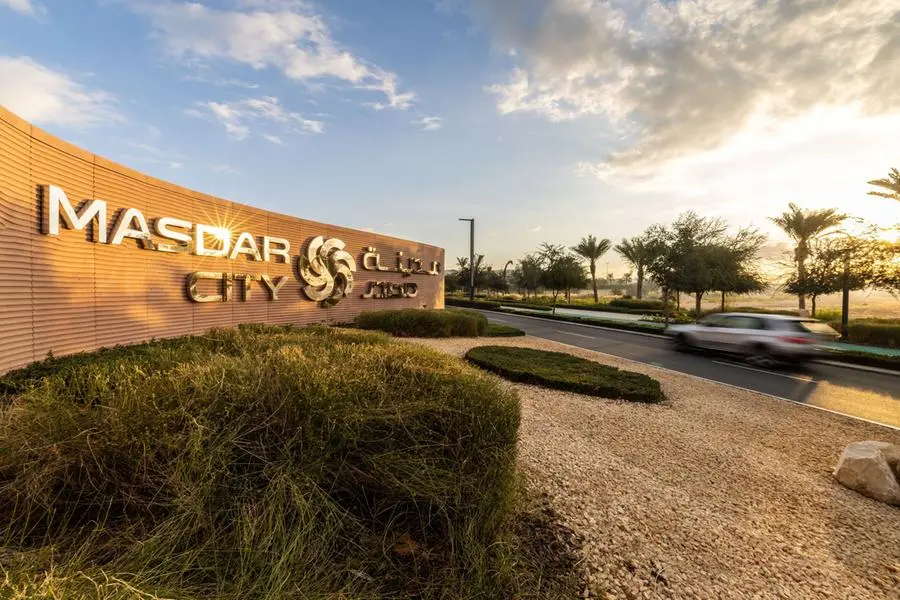
The global energy landscape is undergoing a profound transformation, and nowhere is this shift more evident than in the recent groundbreaking announcement from Masdar and the Emirates Water and Electricity Company (EWEC). Their joint $6 billion investment in a 1-gigawatt (GW) solar-plus-storage project in Abu Dhabi represents a pivotal moment, signaling a serious push towards round-the-clock renewable baseload power. This isn’t just another solar farm; it’s a strategic move to deliver continuous clean energy, directly challenging the traditional dominance of fossil fuels in grid stability. For oil and gas investors, this development is not merely a headline in the renewables sector; it’s a bellwether for the long-term structural changes impacting demand, supply, and capital allocation across the entire energy complex.
Disrupting Baseload: A New Paradigm for Renewable Energy Investment
The Masdar-EWEC project, described as the “world’s first gigascale round-the-clock renewable energy project,” is a significant stride in addressing the intermittency challenge that has historically limited the role of solar and wind power. By pairing a massive 5.2 GW solar photovoltaic (PV) plant with an unprecedented 19 GWh battery energy storage system (BESS), the facility is engineered to provide a consistent 1 GW of power output. With a capital investment exceeding $6 billion (AED 22 billion+), this venture aims to avoid approximately 5.7 million tonnes of CO₂ annually once fully operational in 2027. This scale and ambition signal a clear intent to transition renewables from supplementary power sources to core baseload providers, a domain traditionally held by natural gas, coal, and nuclear. Investors in conventional power generation assets must critically evaluate the long-term implications of such projects, as they introduce a new class of competition that offers both dispatchability and zero-carbon emissions.
Global Supply Chains and Capital Mobilization: A Blueprint for the Future
Beyond its technological prowess, the Masdar-EWEC initiative offers crucial insights into the evolving global supply chains and financing models for utility-scale clean energy projects. The selection of major international players like CATL for the BESS, Jinko and JA Solar for PV modules, and POWERCHINA and L&T for engineering, procurement, and construction (EPC) contracts underscores a strategy focused on leveraging global expertise and established manufacturing capabilities. This approach ensures durability and scale, vital for such an ambitious undertaking. From a financial perspective, the $6 billion investment highlights the significant capital being mobilized for the energy transition, likely combining equity from Masdar and EWEC with project finance debt structured around long-term power purchase agreements (PPAs). The involvement of a government-backed entity like Masdar, deeply aligned with the UAE’s net-zero ambitions, demonstrates how sovereign support and coherent industrial policy can de-risk and accelerate large-scale renewable infrastructure. This model provides a blueprint for other nations and private developers looking to deploy significant clean energy assets, influencing investment flows into the associated manufacturing and service sectors globally.
Market Volatility and Investor Sentiment: Addressing Crude’s Current Climate
The strategic long-term investments in projects like Masdar-EWEC unfold against a backdrop of dynamic and often volatile short-term commodity markets. As of today, Brent Crude trades at $90.38, reflecting a significant daily decline of 9.07%, with its day range stretching from $86.08 to $98.97. This sharp downturn is part of a broader trend, with Brent having shed $22.4, or 19.9%, over the past 14 days, falling from $112.78 on March 30th to its current level. Similarly, WTI Crude stands at $82.59, down 9.41% today, while gasoline prices have dipped to $2.93, a 5.18% decrease. This pronounced volatility naturally prompts critical questions from investors, with many asking about the future trajectory of crude prices. We observe significant reader intent around questions like “what do you predict the price of oil per barrel will be by end of 2026?” This reflects a market grappling with geopolitical uncertainties, evolving demand forecasts, and the increasing influence of long-term energy transition projects. For oil and gas investors, the Masdar-EWEC project, set to deliver baseload power by 2027, offers a stark contrast to the immediate market swings, highlighting the growing appeal of stable, long-term energy assets that are less exposed to daily crude price fluctuations and more aligned with global decarbonization goals. Investing in the energy transition, even for traditional oil and gas players, can offer a hedge against the inherent volatility of hydrocarbon markets.
Navigating Upcoming Catalysts: OPEC+ and Inventory Reports
While the Masdar-EWEC project represents a long-term strategic shift, immediate market attention remains fixed on a series of upcoming catalysts that will undoubtedly influence short-term crude prices and investor sentiment. The next 14 days are packed with critical events: the OPEC+ Joint Ministerial Monitoring Committee (JMMC) Meeting on April 19th, followed by the full OPEC+ Ministerial Meeting on April 20th. These gatherings are paramount for oil investors, as any adjustments to production quotas or forward guidance could trigger significant market reactions. Following these, the market will closely monitor the API Weekly Crude Inventory report on April 21st and the EIA Weekly Petroleum Status Report on April 22nd, with subsequent reports scheduled for April 28th and 29th, respectively. These inventory figures provide crucial insights into supply-demand balances in the world’s largest consumer market. Additionally, the Baker Hughes Rig Count on April 24th and May 1st will offer a snapshot of upstream activity. For investors, these events provide actionable data points for short-term trading strategies and portfolio adjustments. However, it is crucial to balance this immediate focus with the broader trend exemplified by the Masdar-EWEC project. While OPEC+ decisions and inventory data dictate the ebb and flow of crude markets, the accelerating investment in gigascale renewable baseload power signifies a fundamental, long-term reorientation of global energy infrastructure that will progressively reshape the investment landscape well beyond the current year.


