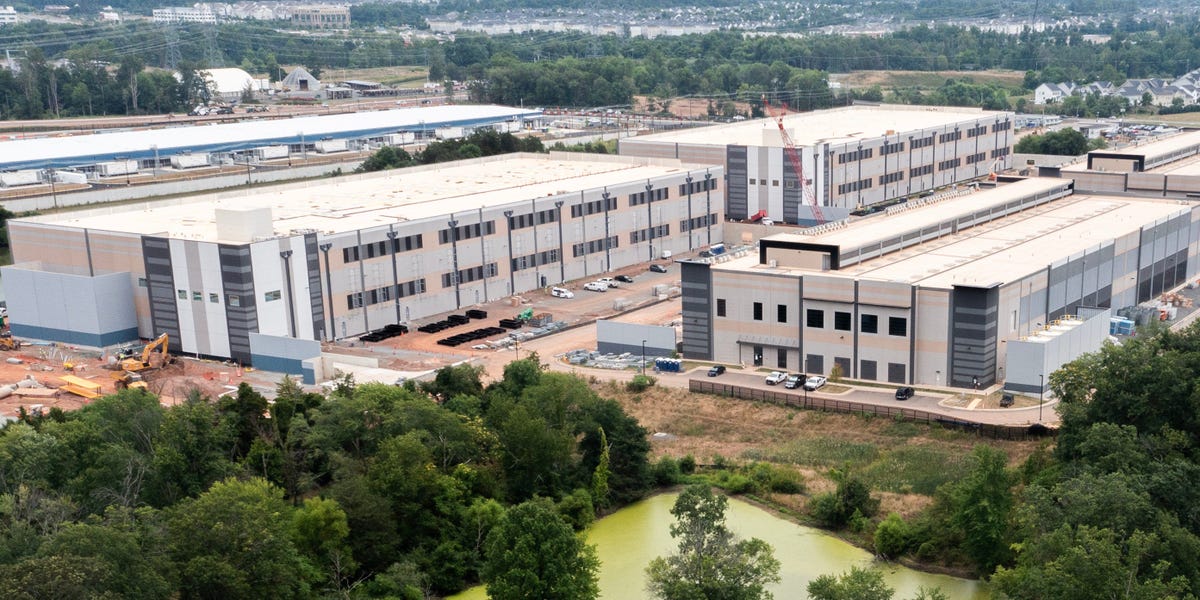
The relentless expansion of the digital economy, fueled by everything from cloud computing to generative AI, presents a profound paradox for energy investors. While public discourse often emphasizes renewable energy aspirations, the ground truth reveals a rapidly accelerating and increasingly profound reliance on conventional power sources, particularly fossil fuels, to underpin our digital lives. The recent surge in data center development, exemplified by communities witnessing a dramatic transformation from idyllic neighborhoods to industrial hubs bristling with server farms, underscores this critical dynamic. As local pushback intensifies against the noise, pollution, and visual blight of these facilities, the underlying demand for robust and reliable energy infrastructure only solidifies, presenting unique opportunities and challenges for the oil and gas sector.
The Unseen Energy Sink: Data Centers Fueling Baseload Demand
Data centers are not merely silent digital warehouses; they are voracious energy consumers, operating 24/7 to power our interconnected world. Each facility demands immense electricity for servers, sophisticated cooling systems, and critical backup power to ensure uninterrupted service. This power often comes from the grid, which in many regions still relies heavily on natural gas and coal. More critically for our sector, the ubiquitous diesel generators serving as backup power for these facilities represent a direct, substantial, and growing demand for refined products. The sheer computational load imposed by advanced AI models and the continuous expansion of cloud services means data centers are becoming increasingly power-dense, requiring megawatts, and soon gigawatts, of reliable electricity. Consider the scale: with some communities now hosting dozens of such centers within a small radius, the aggregated demand for diesel, even for emergency use, becomes significant. Moreover, the constant hum and occasional diesel smell described by residents are physical manifestations of this energy intensity, hinting at the sustained operational load that acts as a foundational floor for fossil fuel consumption, irrespective of broader energy transition narratives.
Market Realities: Brent Dips, But Underlying Demand Persists
While the long-term energy needs of the digital economy are undeniable, the short-term market can introduce volatility. As of today, Brent Crude trades at $90.38, marking a significant -9.07% decline within a day range of $86.08 to $98.97. Similarly, WTI Crude stands at $82.59, down -9.41%, with gasoline prices reflecting this downturn at $2.93, a -5.18% drop. This recent price action, following a nearly 20% decline in Brent over the past 14 days from $112.78, might suggest a softening in demand driven by broader macroeconomic concerns or geopolitical shifts. However, it’s crucial for investors to distinguish between cyclical market movements and structural demand drivers. The consistent, non-discretionary energy requirements of data centers, immune to temporary price fluctuations, act as a stabilizing factor. This underlying demand helps cushion the market against deeper troughs, particularly for refined products like diesel and the consistent natural gas feed for grid power generation. Investors must look beyond daily swings to the persistent, infrastructure-driven energy consumption that continues to underpin a substantial portion of the oil and gas market, providing a crucial element of demand resilience.
Local Pushback Intensifies: A Headwind for Digital Growth, a Tailwind for Energy Reliability
The narrative of communities pushing back against data center proliferation is not isolated; it’s a growing trend that introduces significant permitting and operational risks for developers. The complaints – constant noise, light pollution, perceived diesel odors, and the rapid transformation of green spaces into industrial landscapes – are potent drivers of local opposition. This “Not In My Backyard” (NIMBY) sentiment means that future data center expansion will likely face higher hurdles, longer approval times, and potentially more stringent environmental regulations. For the oil and gas sector, this signals a need for reliable, on-site energy solutions. If grid infrastructure is constrained or local opposition prevents large-scale utility connections, data centers may increasingly turn to distributed generation, potentially favoring natural gas-fired microgrids or more robust, permanent diesel backup systems. This shift could create new demand pockets for natural gas producers and companies involved in power generation equipment and services, as developers seek guaranteed uptime and energy independence in the face of local grid unreliability or public opposition to new power lines and substations. The rising cost and complexity of siting new facilities will prioritize energy resilience, benefiting reliable, dispatchable power sources.
Navigating Supply Dynamics: Investor Questions and Upcoming Events
Our proprietary reader intent data reveals a keen investor interest in future oil prices and OPEC+ strategies, with questions like “What do you predict the price of oil per barrel will be by end of 2026?” and “What are OPEC+ current production quotas?” echoing broader market uncertainty. These questions are critically relevant when considering the persistent energy demands of data centers. Upcoming events in the next fortnight, such as the OPEC+ Joint Ministerial Monitoring Committee (JMMC) Meeting on April 19th and the subsequent Ministerial Meeting on April 20th, will be pivotal. Any decisions on production quotas will directly impact global crude supply and, by extension, the cost of refined products essential for data center operations. Similarly, the EIA Weekly Petroleum Status Reports on April 22nd and 29th will provide vital insights into U.S. crude, gasoline, and distillate inventory levels, offering a proxy for North American supply-demand balances, particularly for diesel. Investors should monitor these events closely, understanding that while OPEC+ decisions primarily affect crude supply, the underlying, non-negotiable demand from the digital economy provides a consistent baseline, making the investment case for diversified energy portfolios robust. Companies like Repsol, which operate across the integrated energy value chain from exploration to refining and power generation, are particularly exposed to these dynamics, making their performance a key indicator of how well the sector adapts to both market volatility and structural demand shifts.
Investment Outlook: Opportunities in the Power Generation and Refined Products Space
For savvy oil and gas investors, the data center boom, coupled with increasing local resistance, presents distinct investment opportunities. Companies involved in the production and distribution of natural gas stand to benefit from the potential rise in demand for gas-fired power generation, especially for distributed energy solutions and microgrids that offer enhanced reliability and local acceptance. Similarly, refiners and distributors of diesel fuel will continue to see robust demand for backup power systems, which are non-negotiable for data center uptime, and increasingly for primary power where grid access is challenging. Furthermore, firms specializing in energy infrastructure development, grid hardening, and even those providing consulting services for energy-efficient data center design could see increased activity as the industry seeks to optimize its energy footprint. As the digital footprint expands globally, the imperative for reliable, cost-effective, and locally acceptable power solutions will only grow, cementing the role of traditional energy sources in powering the future. Investors should scrutinize companies with strong positions in these essential segments, recognizing that the digital revolution, paradoxically, is underpinning a significant and enduring demand for fossil fuels.


