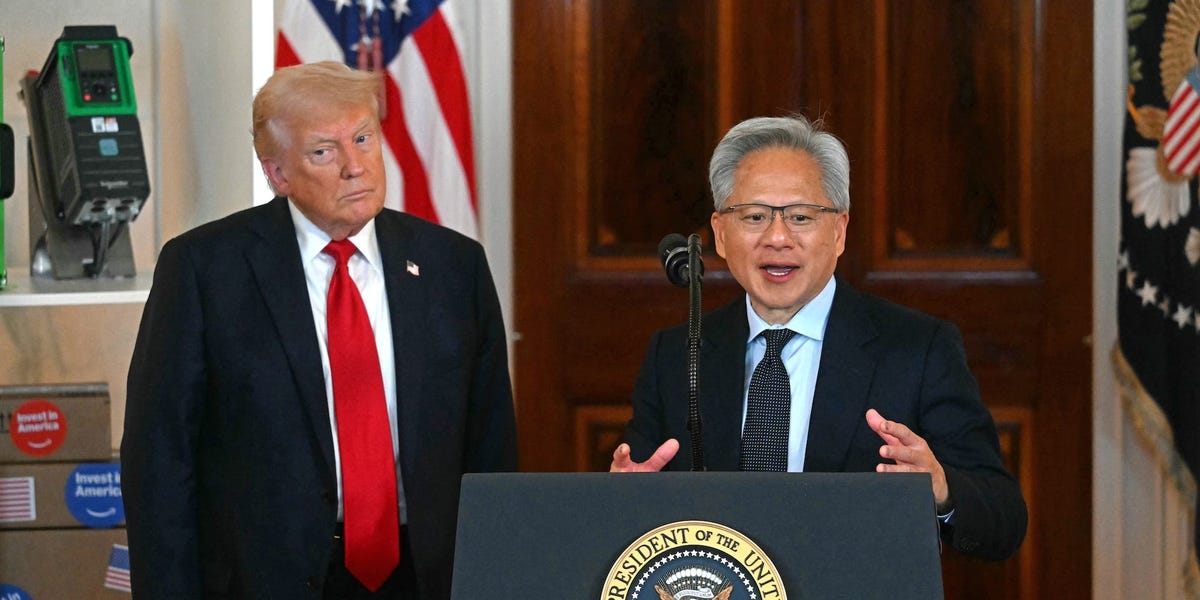
The recent decision by former President Donald Trump to halt the deployment of federal forces to San Francisco, reportedly influenced by prominent tech CEOs like Nvidia’s Jensen Huang and Salesforce’s Marc Benioff, sends a fascinating signal that energy investors should consider. While seemingly detached from the crude oil and natural gas markets, this pivot suggests a potential pragmatism and responsiveness to corporate stakeholders. In an investment landscape increasingly sensitive to political stability and regulatory predictability, such actions can subtly influence broader market sentiment, impacting everything from long-term capital expenditure decisions in the energy sector to the geopolitical risk premium embedded in commodity prices.
The Business-Friendly Signal: Implications for Investment Climate
Trump’s reversal on the San Francisco deployment, explicitly crediting the intervention of “friends of mine who live in the area” and “great people” like Huang and Benioff, offers a glimpse into a potentially more business-centric approach. For energy investors, this isn’t about Silicon Valley directly, but about the underlying message: a willingness to engage with corporate leadership and potentially adjust policy based on their input. This could be interpreted as a positive indicator for a more stable and predictable operating environment, should he return to office. A government perceived as responsive to business concerns, even in non-energy sectors, generally bodes well for capital-intensive industries like oil and gas, where long-term planning and significant upfront investments are the norm. Reduced political volatility and a more pragmatic regulatory outlook could incentivize domestic energy production and infrastructure development, which are critical components of global supply and pricing dynamics. San Francisco Mayor Daniel Lurie’s statement, welcoming federal partnerships but urging against militarized enforcement, also highlights a desire for collaborative solutions, further reinforcing the potential for a less confrontational approach to governance.
Current Market Dynamics Amidst Shifting Political Signals
This subtle political signal arrives at a time of significant volatility in the energy markets. As of today, Brent Crude trades at $90.38 per barrel, marking a notable 9.07% decline within the day, with prices fluctuating between $86.08 and $98.97. Similarly, WTI Crude stands at $82.59, down 9.41%, having traded in a range of $78.97 to $90.34. The broader trend for Brent has been distinctly downward, dropping from $112.78 on March 30th to its current level, a significant $22.4 or 19.9% reduction over approximately two weeks. Gasoline prices have also seen a dip, currently at $2.93, down 5.18%. Against this backdrop of significant price pressure, any signal that could foster greater economic stability or reduce uncertainty, however indirect, is noteworthy. While the SF reversal won’t directly impact daily crude flows, a perception of increased political stability or a more predictable administration could contribute to investor confidence, potentially helping to stabilize prices or support demand in the medium term by reducing the geopolitical risk premium that often inflates energy costs.
Addressing Investor Concerns: Long-Term Outlook and OPEC+ Influence
Our proprietary reader intent data reveals a consistent theme among investors this week: a deep focus on future price trajectories and the impact of global supply dynamics. Questions like “What do you predict the price of oil per barrel will be by end of 2026?” underscore the ongoing quest for clarity in a complex market. Investors are also keenly asking about “OPEC+ current production quotas,” highlighting the cartel’s enduring influence. While a political decision in San Francisco might seem distant, a perceived shift towards a more business-friendly or pragmatic political environment in a major global economy like the United States can indirectly influence these long-term outlooks. Should a future administration be seen as fostering economic growth and stability, it could lead to higher domestic energy demand and potentially more predictable regulatory frameworks for producers, factors that feed into analysts’ long-term price models. However, the immediate and most potent drivers for crude prices remain the supply-demand balance, heavily shaped by OPEC+ decisions and global economic performance, which investors are rightly prioritizing.
Upcoming Catalysts and the Broader Investment Landscape
Looking ahead, the energy market calendar is packed with events that will directly influence prices, offering investors key decision points. The upcoming OPEC+ Joint Ministerial Monitoring Committee (JMMC) Meeting on April 19th, followed by the full OPEC+ Ministerial Meeting on April 20th, are paramount. These gatherings will determine the collective production strategy, directly impacting global supply. Any signals of a more collaborative or less confrontational US political approach, as perhaps hinted by the SF reversal, could subtly influence the broader geopolitical context in which these decisions are made. Furthermore, the weekly API and EIA Crude Inventory reports on April 21st, 22nd, 28th, and 29th will provide crucial insights into US supply and demand. The Baker Hughes Rig Count reports on April 24th and May 1st will indicate domestic drilling activity and future production potential. While these events are driven by fundamental market forces, a consistent signal of a pro-business stance from the US could encourage domestic E&P companies to increase capital expenditure, potentially impacting rig counts and future production volumes. Investors should monitor these upcoming data releases closely, evaluating them not just on their individual merit but also within the evolving context of domestic political and economic signals.


