The energy investment landscape is undergoing a profound transformation, extending far beyond the traditional hydrocarbon plays that have long dominated portfolios. A recent $350 million funding round for Redwood Materials, a battery recycling and energy storage innovator, led by Eclipse with significant participation from Nvidia’s venture capital arm, NVentures, underscores this shift. This infusion of capital pushes Redwood’s valuation past $6 billion and highlights a crucial new frontier for investors: the intersection of artificial intelligence and sustainable energy infrastructure. As AI data centers proliferate and strain existing power grids, the demand for robust, flexible, and efficient energy solutions is skyrocketing, creating compelling opportunities for strategic capital deployment in companies addressing this critical bottleneck.
The AI Power Imperative: Redwood’s Strategic Pivot
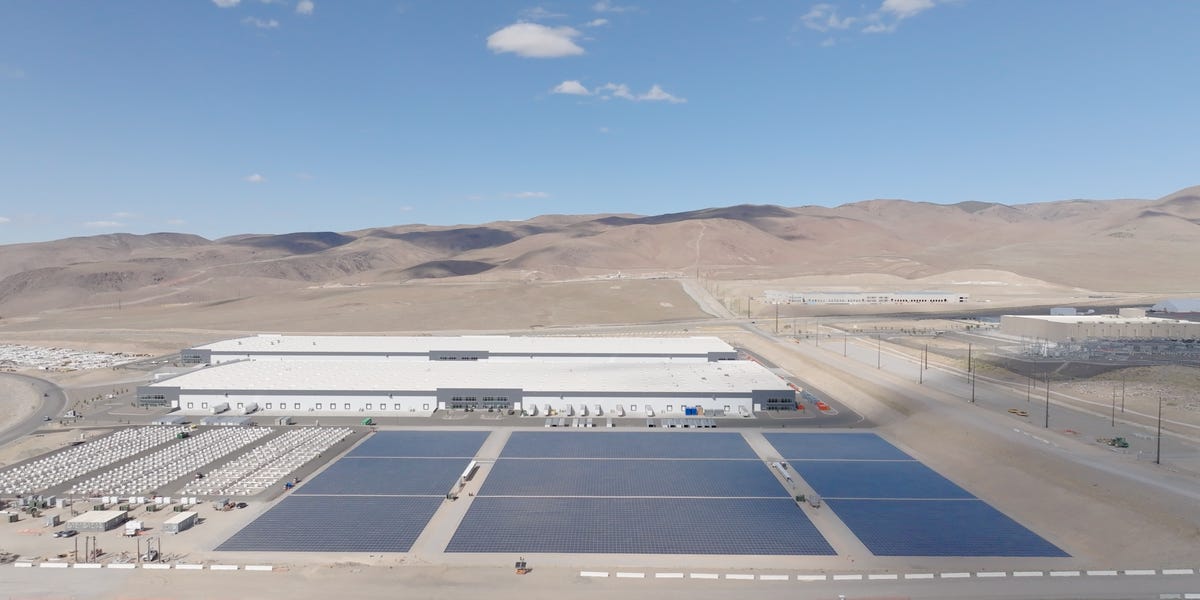
The generative AI boom, characterized by its insatiable demand for computational power, has inadvertently created a defining challenge for energy grids. Large language models and GPU clusters require immense, reliable electricity, and the rapid expansion of data centers across the US is pushing energy infrastructure to its limits. Redwood Materials, founded by Tesla cofounder JB Straubel, initially gained prominence for its advanced battery recycling capabilities, reclaiming essential metals like cobalt, nickel, and lithium. However, the company’s recent strategic pivot into grid energy storage, through its Redwood Energy division launched in June, positions it directly at the heart of the AI power problem. By repurposing used batteries into large-scale energy storage systems, Redwood offers a dynamic solution: storing electricity during low-demand periods and discharging it to stabilize the grid and power energy-hungry data centers during peak times. This rapid time-to-market, demonstrated by its live operation with AI data center provider Crusoe less than a year after initial pitches, showcases a significant operational advantage.
Navigating Volatility: Traditional Oil vs. New Energy Paradigms
While the market celebrates innovative energy solutions, investors in the traditional oil and gas sector are currently grappling with significant volatility. As of today, Brent crude trades at $90.38, marking a sharp 9.07% decline from yesterday’s close and representing a challenging day range between $86.08 and $98.97. Similarly, WTI crude has fallen to $82.59, down 9.41%, with gasoline prices also seeing a 5.18% drop to $2.93. This recent downturn extends a broader trend, with Brent having shed $22.4, or nearly 20%, over the past 14 days, from $112.78 on March 30th to its current level. This pronounced fluctuation in commodity prices underscores the inherent risks and cyclical nature of hydrocarbon investments. In contrast, the growth trajectory of companies like Redwood Materials, focused on critical infrastructure for the burgeoning AI economy, presents a compelling diversification strategy. Their revenue generation is tied more to the deployment and operation of energy storage solutions rather than the daily swings of crude oil prices, offering a potentially more stable and predictable growth profile in an otherwise turbulent energy market.
Beyond the Barrel: Addressing Evolving Investor Questions
Our proprietary reader intent data reveals a clear focus among investors on traditional energy metrics and future oil price trajectories. Questions like “What do you predict the price of oil per barrel will be by end of 2026?” and inquiries about specific E&P companies, such as “How well do you think Repsol will end in April 2026?”, dominate current investor queries. While these questions are vital for short-term and mid-term portfolio positioning within the hydrocarbon sector, they highlight a potential blind spot concerning the broader energy transition. The investment from Nvidia, a company at the forefront of the AI revolution, into Redwood Materials signals a fundamental shift in where capital is being allocated for future energy needs. Investors need to consider how the underlying energy demand drivers are evolving. The core infrastructure powering AI, digital transformation, and electrification—regardless of crude oil’s daily price—represents a distinct and growing investment thesis that warrants attention alongside traditional energy plays.
Forward Momentum: Upcoming Events and Strategic Diversification
The immediate future for traditional oil and gas markets will be heavily influenced by several key events in the coming weeks. The OPEC+ Joint Ministerial Monitoring Committee (JMMC) meeting on April 19th, followed by the full Ministerial Meeting on April 20th, will provide critical insights into production quotas and collective market strategy. Subsequently, the API Weekly Crude Inventory report on April 21st and the EIA Weekly Petroleum Status Report on April 22nd will offer a snapshot of US supply-demand dynamics, with the Baker Hughes Rig Count on April 24th shedding light on upstream activity. These events are undeniably crucial for investors focused on commodity prices and traditional E&P equities. However, for those seeking to capitalize on long-term structural shifts, the strategic investment in companies like Redwood Materials offers a compelling alternative. By providing essential energy storage solutions that can leverage diverse power generation sources—solar, wind, industrial gas turbines, and even nuclear—Redwood is building the resilient infrastructure necessary for the AI era. This approach allows investors to participate in a growth story driven by technological advancement and fundamental energy demand, largely independent of the often-unpredictable outcomes of OPEC+ decisions or weekly inventory reports, thereby offering a robust path for strategic diversification within the broader energy sector.


