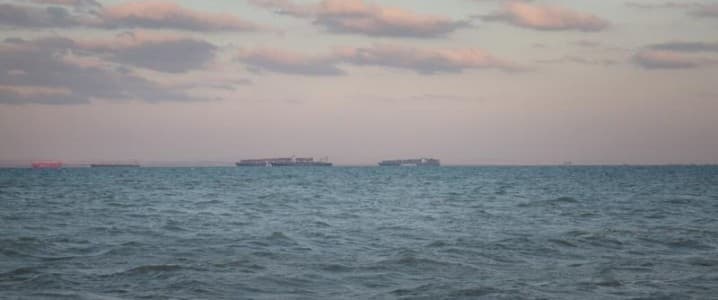
The recent incident involving the MV Falcon LPG tanker off Yemen’s coast has reignited critical discussions around energy shipping security in the volatile Red Sea corridor. While initial reports suggest an accidental explosion, the event underscores the persistent and elevated risks for maritime trade in a region vital for global energy flows. For oil and gas investors, this isn’t merely a localized shipping incident; it’s a stark reminder of the geopolitical complexities that can swiftly impact supply chains, freight costs, and the broader market stability of refined products and liquefied petroleum gas. Our proprietary data pipelines show a significant market reaction, and we delve into how this event, regardless of its cause, is recalibrating risk assessments and influencing future investment strategies.
The MV Falcon Incident and Immediate Market Volatility
Over the past weekend, the Cameroon-flagged LPG tanker MV Falcon, carrying a full load of LPG from Oman’s Sohar port to Djibouti, experienced an onboard explosion approximately 113 nautical miles southeast of Aden. While 24 of the 26 crew members were rescued, the vessel continues to burn and drift, prompting an ongoing salvage operation by European naval forces and private contractors. The tragic event, initially speculated to be a projectile strike, has since been categorized by EUNAVFOR Aspides as “accidental in nature,” though investigations are ongoing. Regardless of the definitive cause, the incident inevitably heightens the perceived risk of transiting the Bab el-Mandeb strait and the Gulf of Aden.
As of today, Brent crude trades at $90.38, reflecting a significant daily decline of 9.07%, with a day range between $86.08 and $98.97. Similarly, WTI crude has fallen to $82.59, down 9.41%, trading between $78.97 and $90.34. Gasoline prices have also dipped to $2.93, a 5.18% decrease. This broad market downturn, which has seen Brent drop by nearly 20% from $112.78 on March 30th to today’s $90.38, suggests that while the Red Sea incident adds a localized risk premium to specific refined products and LPG, the wider crude market is currently facing powerful bearish macroeconomic headwinds that are overriding these immediate supply chain concerns. Investors should note this divergence: specific shipping routes and product markets are tightening, even as overall crude benchmarks retreat.
Red Sea Chokepoint: Reassessing Risk and Investor Questions
The Gulf of Aden and the Bab el-Mandeb strait represent a critical artery for global energy trade, particularly for LPG and refined product shipments destined for Asia and the Middle East. Any disruption, perceived or real, in this corridor forces operators to consider costly and time-consuming rerouting options around the Cape of Good Hope. This inevitably inflates freight costs and extends voyage durations, directly impacting profit margins for energy traders and shipping companies.
Our proprietary reader intent data reveals a keen investor focus on future price stability, with queries like “What do you predict the price of oil per barrel will be by end of 2026?” dominating discussions. Incidents like the MV Falcon blast introduce significant uncertainty into these long-term forecasts. While the blast’s cause is still being investigated, the fact that the Falcon previously called at Iran’s Assaluyeh terminal before loading in Sohar raises complex questions around insurance compliance and sanctions frameworks. This adds another layer of geopolitical risk for insurers, who have already begun reassessing premiums for tankers transiting this volatile region. Investors are right to ask about market data sources powering our analysis, as robust, real-time insights are paramount in navigating such rapidly evolving risk landscapes.
Geopolitical Undercurrents and Upcoming Market Signals
The persistent risk in the Red Sea is not just about isolated incidents; it’s about the broader geopolitical currents that define the region. The questions surrounding the MV Falcon’s routing and insurance compliance highlight the intricate interplay between maritime security, international sanctions, and the operational decisions of energy shippers. Operators are now actively reviewing whether to delay or divert upcoming energy cargoes, a decision that will have ripple effects across global supply chains for LPG and other refined products.
Looking ahead, several key events on the energy calendar could provide further insights into how these risks are being managed. The upcoming OPEC+ JMMC Meeting on April 19th and the subsequent OPEC+ Ministerial Meeting on April 20th will be crucial. While OPEC+ primarily focuses on crude production quotas—a common investor query—the broader geopolitical context, including Red Sea security, undoubtedly influences their market assessments and rhetoric. Any shift in their collective stance or outlook could impact overall market sentiment. Furthermore, investors will be closely monitoring the EIA Weekly Petroleum Status Reports on April 22nd and April 29th, and the API Weekly Crude Inventory reports on April 21st and April 28th. While immediate impacts from the Falcon incident may not be evident in these near-term inventory data points, any future rerouting decisions by a significant number of vessels could eventually manifest as shifts in regional inventory levels, signaling deeper supply chain stress.
Investment Implications: Navigating Enhanced Maritime Risk
For investors, the MV Falcon incident is a potent reminder that maritime security risk in key chokepoints remains a non-trivial factor in energy market dynamics. This situation could lead to sustained higher freight costs and insurance premiums for Red Sea transits, favoring shipping companies with diversified routes or those specializing in land-based logistics. Companies heavily reliant on Red Sea passage for their LPG and refined product supply chains may face increased operational costs and potential delivery delays.
Monitoring shipping rates, insurance market adjustments, and the strategic decisions of major energy traders and naval forces will be paramount. While the broader crude market is experiencing a significant downturn, the localized and specific risks in vital shipping lanes for refined products and LPG suggest a potential decoupling of performance for certain segments of the energy market. Investors should consider the implications for companies exposed to these specific trade routes and the ongoing geopolitical tensions that define them, preparing for continued volatility and the potential for supply chain disruptions to influence commodity prices in targeted markets.


