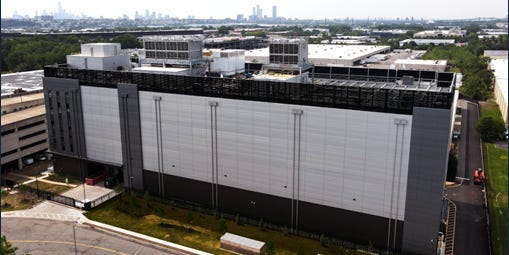
The US energy landscape is undergoing a profound transformation, driven by an unlikely, yet powerful, catalyst: the insatiable demand from data centers. As artificial intelligence and digital infrastructure expand at an exponential rate, the electricity required to power these facilities is poised to redefine America’s energy mix and investment opportunities. Our proprietary data pipelines confirm what industry reports are now highlighting: a structural shift in power consumption that has significant implications for natural gas and the broader energy market. Investors must move beyond traditional demand models and recognize this emerging megatrend, which promises sustained demand growth for dispatchable power generation.
The Unprecedented Surge in US Power Demand
The sheer scale of projected power demand from data centers in the US is staggering. While global data center power consumption is expected to grow by an average of 17% annually between 2022 and 2030, the United States is set to outpace this, with an average growth rate jumping to an astounding 25%. By the end of the decade, these digital fortresses could account for more than 14% of the nation’s total electricity demand, a threefold increase from 2023 levels. Utilities across the country, from the Mid-Atlantic to the Southwest, are grappling with projections indicating that data centers alone will add approximately 60 gigawatts of new power demand through 2030. This figure is equivalent to powering dozens of mid-sized cities simultaneously, underscoring the urgent need for substantial new generation capacity and grid infrastructure. The race to build massive new data center campuses by technology giants continues unabated, creating a sustained demand shock that will echo through energy markets for years to come.
Natural Gas: The Indispensable Fuel for Digital Growth
In this environment of explosive power demand, natural gas emerges as an indispensable cornerstone for ensuring grid reliability and meeting aggressive timelines for new capacity. While renewable energy sources continue to expand, their intermittency and the lengthy permitting processes for large-scale projects mean that natural gas-fired power plants are often the quickest and most reliable solution to bridge the gap. Major public utilities are actively seeking regulatory approvals for new power plants and transmission lines, projects often costing billions. Given the need for dispatchable, baseload power that can be brought online relatively quickly, natural gas is perfectly positioned to capture a significant share of this new generation build-out. Our internal analysis, informed by reader intent data, reveals that investors are keenly focused on future commodity price trajectories, with questions like “What do you predict the price of oil per barrel will be by end of 2026?” signaling a broader concern about long-term energy fundamentals. For natural gas, this structural demand from data centers provides a powerful bullish undercurrent that could lead to sustained price support, differentiating it from the more volatile crude oil market.
Navigating Market Volatility Amidst Structural Shifts
Even as long-term power demand trends solidify, the broader energy market remains subject to short-term volatility. As of today, Brent crude trades at $90.38, reflecting a significant daily decline of 9.07%, with a day range between $86.08 and $98.97. Similarly, WTI crude has seen a sharp dip, trading at $82.59, down 9.41% within a day range of $78.97 to $90.34. This recent price action follows a 14-day Brent trend that saw prices fall from $112.78 on March 30th to today’s level, a substantial 19.9% correction. Gasoline prices have also softened, currently at $2.93, down 5.18%. This illustrates that while the long-term outlook for natural gas demand is strengthening due to data centers, investors must remain vigilant to broader market sentiment and geopolitical factors impacting crude and refined products. Upcoming events, such as the OPEC+ JMMC Meeting on April 19th and the subsequent Ministerial Meeting on April 20th, will be critical for crude supply guidance. Meanwhile, the consistent drumbeat of EIA and API weekly inventory reports, along with the Baker Hughes Rig Count on April 24th and May 1st, will offer real-time insights into supply-side responses across the energy complex, including natural gas production trends.
Investment Implications and Strategic Positioning for the Digital Age
For discerning investors, the surge in data center demand presents compelling opportunities and necessitates a re-evaluation of energy portfolios. Companies with significant natural gas production assets, those involved in natural gas transportation and storage infrastructure, and utilities with substantial natural gas-fired generation capacity are particularly well-positioned. The need for new transmission lines to connect remote power sources to data center hubs also opens doors for infrastructure developers. Investors are also asking about the performance of integrated energy companies, signaling interest in how diversified portfolios will navigate these shifts. However, the path isn’t without challenges. The immense capital expenditure required for new power plants and grid upgrades raises questions about cost recovery and ratepayer impact, introducing a layer of regulatory risk. Companies able to demonstrate efficient project execution and navigate complex permitting processes will stand out. As we look ahead, the interplay between technological innovation, energy policy, and commodity markets will define the next decade for energy investors, with natural gas firmly at the center of the digital economy’s power grid.


