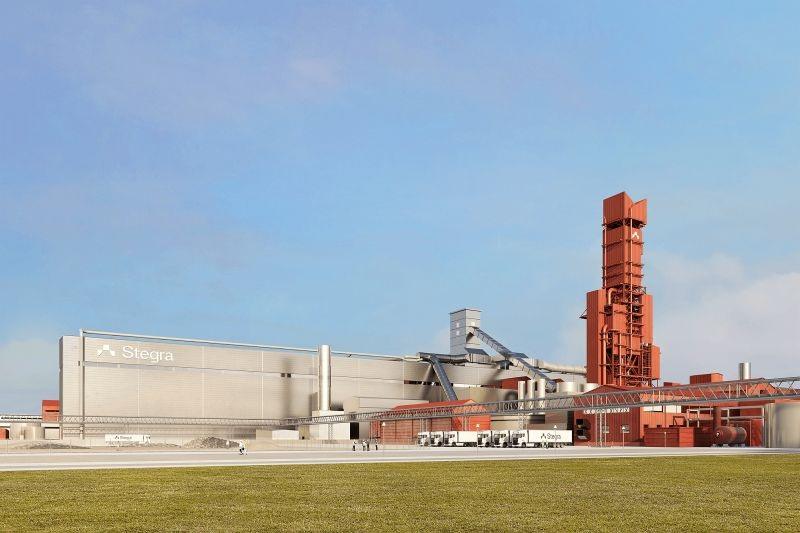
Stegra’s Green Steel Ambition: A Bellwether for Energy Transition Investment
The global energy landscape is undergoing a profound transformation, with industrial decarbonization emerging as a critical frontier for investors. At the forefront of this shift is Stegra, a Swedish pioneer in green iron and steel production, which recently initiated a new financing round to propel its ambitious project in Boden, Sweden. This development is not merely a corporate funding announcement; it represents a significant milestone in the quest for sustainable industrial processes and offers crucial insights for oil and gas investors navigating the evolving energy matrix. Stegra’s commitment to utilizing hydrogen produced from green power and operating on 100% renewable electricity sets a benchmark for the future of heavy industry, signaling a potent shift in capital allocation towards solutions that drastically reduce carbon emissions.
Decarbonizing Heavy Industry: Stegra’s Technological Edge and Market Opportunity
Stegra’s innovative approach to steel production is a direct response to the urgent need for decarbonization in one of the world’s most energy-intensive sectors. Founded in 2020, the company employs a process that leverages hydrogen to remove oxygen from iron oxide, effectively bypassing the substantial CO2 emissions typically associated with traditional blast furnace methods. Furthermore, all energy requirements for its manufacturing processes are met through 100% renewable sources, establishing a truly near-zero emission footprint. Construction of the Boden plant commenced in 2022, with operations slated to begin in 2026. By 2030, Stegra aims to achieve an impressive annual production capacity of five million tons of green steel, solidifying its position as a leader in this nascent but rapidly expanding market. The strategic importance of such ventures is underscored by advanced partnerships, including the September 2025 agreements with Microsoft to integrate near-zero emission steel into the tech giant’s data center infrastructure. For investors, this demonstrates a clear and growing demand signal from major corporations committed to their own decarbonization targets, highlighting a robust market for sustainable industrial materials that will inevitably impact traditional commodity markets.
Funding the Future Amidst Market Volatility: Investor Sentiment and Project Economics
The latest financing round is structured to secure approximately 15% of Stegra’s total project funding through a blend of new equity, debt instruments, strategic outsourcing, and partnerships. Henrik Henriksson, Stegra’s CEO, expressed strong confidence, noting the project is over 60% complete, boasts a robust order book, and maintains a competitive cost position. While a three-month extension to the timeline has been factored in to accommodate additional scope, the detailed execution plan provides clear visibility towards completion. For investors, particularly those traditionally focused on oil and gas, Stegra’s funding journey presents a compelling case study in the evolving risk-reward calculus of energy transition assets. This comes at a time when the broader energy market exhibits considerable flux. As of today, Brent Crude trades at $90.38 per barrel, marking a significant 9.07% decline, while WTI Crude stands at $82.59, down 9.41% within a volatile day range. The 14-day Brent trend shows a substantial drop of nearly 20% from $112.78 on March 30th to today’s price. Such sharp movements in traditional fossil fuel prices naturally influence the broader investment climate, prompting questions from our readers about the long-term trajectory of oil prices, with many asking what the price of oil per barrel will be by the end of 2026. While lower crude prices might temporarily ease pressure on some conventional industries, they simultaneously highlight the long-term strategic value of projects like Stegra, which offer insulation from fossil fuel price volatility and align with increasingly stringent ESG mandates and carbon pricing mechanisms.
Navigating the Calendar: Macro Events Shaping the Energy Investment Landscape
The success of large-scale green industrial projects like Stegra’s is not isolated from the macro energy environment, which remains heavily influenced by traditional oil and gas dynamics. Investors must keep a keen eye on upcoming calendar events that dictate market sentiment and commodity prices. In the immediate future, the OPEC+ Joint Ministerial Monitoring Committee (JMMC) Meeting on April 19th and the subsequent OPEC+ Ministerial Meeting on April 20th will be critical. Decisions from these gatherings on production quotas directly impact global crude supply and price stability, influencing everything from transportation costs for materials to the overall economic confidence that underpins capital-intensive industrial developments. Our proprietary data indicates that readers are actively seeking information on OPEC+’s current production quotas, underscoring the market’s sensitivity to these announcements. Furthermore, the API Weekly Crude Inventory reports on April 21st and 28th, alongside the EIA Weekly Petroleum Status Reports on April 22nd and 29th, will provide vital snapshots of demand and supply fundamentals in the world’s largest consumer market. Finally, the Baker Hughes Rig Count on April 24th and May 1st offers a gauge of upstream activity. While Stegra’s operational timeline extends to 2026, the cumulative effect of these near-term events shapes the investment thesis for the entire energy sector, informing capital allocation decisions between conventional fossil fuel assets and nascent green technologies. For investors, understanding these macro drivers provides crucial context for evaluating the long-term viability and competitive positioning of decarbonization projects.
Strategic Implications for Oil & Gas Investors
Stegra’s progress in securing funding for its green steel plant offers a tangible example of the capital shift occurring within the broader energy ecosystem. For traditional oil and gas investors, this represents both a challenge and an opportunity. The long-term success of projects like Stegra implies a gradual erosion of demand for carbon-intensive inputs, particularly coking coal and potentially natural gas used in some steelmaking processes. However, it also highlights new avenues for investment in the infrastructure and technologies that support this transition, such as hydrogen production, renewable energy, and carbon capture solutions. Stegra’s proven ability to attract significant backing, even with a three-month project extension, signals investor confidence in the green premium and the long-term economic viability of sustainable industrial practices. As the world accelerates its decarbonization efforts, companies capable of delivering large-scale, low-carbon solutions will increasingly command investor attention and capital. The strategic imperative for oil and gas portfolios is clear: adapt, diversify, and engage with the opportunities presented by the energy transition, recognizing that the future of industrial production is inextricably linked to sustainable innovation.


