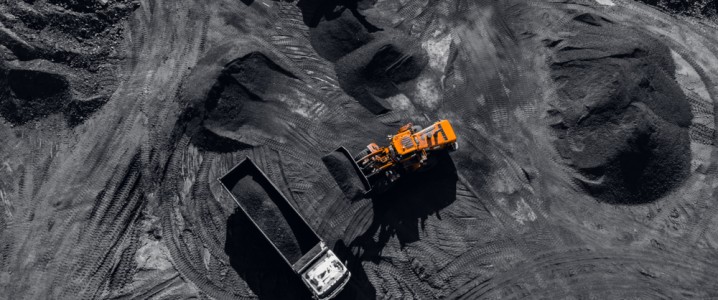
The Australian state of Queensland, a powerhouse in global coal production, has delivered a significant pivot in its energy strategy, abolishing a prior commitment to shutter all coal-fired power plants by 2035. This reversal, spearheaded by the new state government, signals a pragmatic shift prioritizing energy reliability and economic stability over an ideology-driven timeline. For oil and gas investors, this move is more than just a local policy change; it’s a potent symbol of the complex, often contradictory, forces shaping the global energy transition, reinforcing the enduring role of traditional fossil fuels amidst ambitious climate targets.
Queensland’s Pragmatic Pivot: Economics Over Ideology
Queensland’s new Energy Roadmap, unveiled by Treasurer and Minister for Energy David Janetzki, explicitly abandons the “ideological decision” to close coal units by a fixed date. Instead, the state, which currently relies on coal for over half its electricity, intends to keep its relatively young coal-fired fleet operational “for as long as they are needed in the system and supported by the market.” This stance is deeply rooted in the state’s economic realities. Queensland is Australia’s top coal producer, yielding 224 million tons from 59 active mines in the 12 months leading up to May 2025. Furthermore, its exports of thermal and metallurgical coal commanded a value of US$30 billion (AUS$45.8 billion) over the same period, representing one-eighth of all the world’s coal exports. This makes coal a critical economic driver, and the new policy ensures that this foundational resource continues to underpin both energy security and economic prosperity while simultaneously fostering private sector investment in renewables and “firming” projects, including a US$6.6 million (AUS$10 million) allocation for community-level battery storage.
Market Volatility Underscores Reliability Imperatives
The timing of Queensland’s policy shift resonates strongly with the current volatile dynamics in global energy markets. As of today, Brent crude trades at $90.38, reflecting a notable 9.07% decline from yesterday’s close and a substantial 19.9% drop from its $112.78 peak on March 30th. Similarly, WTI crude stands at $82.59, down 9.41% over the past 24 hours. Gasoline prices have also seen a dip, currently at $2.93, a 5.18% decrease. This significant, albeit short-term, market correction underscores the sensitivity of energy prices to a multitude of factors, from supply concerns to demand outlooks and geopolitical events. For investors, this volatility highlights the critical importance of energy reliability and affordability – precisely the rationale cited by Queensland. The state’s decision to maintain its coal capacity offers a buffer against potential price shocks or supply disruptions in other energy sources, a strategic move that could be seen as prudent in an era where energy security is paramount.
Navigating Federal Climate Targets and Investor Sentiment
Queensland’s reversal inevitably creates a tension with Australia’s federal climate targets, which aim for a 62–70% reduction in emissions below 2005 levels by 2035, an interim step towards net-zero by 2050. This dichotomy presents a complex landscape for investors, many of whom are actively seeking clarity on the long-term trajectory of fossil fuel demand. Our proprietary data indicates that investors are keenly asking, “What do you predict the price of oil per barrel will be by end of 2026?” and “What are OPEC+ current production quotas?” Queensland’s decision, while localized, contributes to a global narrative that suggests the transition away from fossil fuels may be more protracted and nuanced than initially anticipated, potentially impacting future oil and gas price forecasts. For investors, this signals both risk and opportunity: risks associated with regulatory uncertainty and potential stranded assets in the long term, but also opportunities in the continued operational life of existing, reliable energy infrastructure and strategic investments in gas as a bridging fuel. The state’s concurrent investment in battery storage also indicates a hybrid approach, acknowledging the need for diversification alongside conventional power sources.
Upcoming Events and the Future Energy Landscape
The Queensland policy shift doesn’t exist in a vacuum; it will be weighed against ongoing global energy developments. The upcoming OPEC+ Joint Ministerial Monitoring Committee (JMMC) meeting on April 19th, followed by the full Ministerial Meeting on April 20th, will be crucial. Decisions regarding production quotas from these meetings will directly influence global supply and, consequently, price stability, which in turn impacts the economic viability of all energy sources, including coal and gas. Furthermore, the weekly API and EIA Crude Inventory reports on April 21st and 22nd (and again on April 28th and 29th), alongside the Baker Hughes Rig Count on April 24th and May 1st, will provide granular insights into immediate supply-demand dynamics in the North American market. These short-term indicators, when viewed through the lens of long-term policy adjustments like Queensland’s, paint a picture of an energy market grappling with competing priorities. Investors must consider how these global supply management strategies and inventory fluctuations will interact with regional energy policies that increasingly emphasize reliability and economic pragmatism, influencing the overall investment thesis for the oil and gas sector well into the future.


