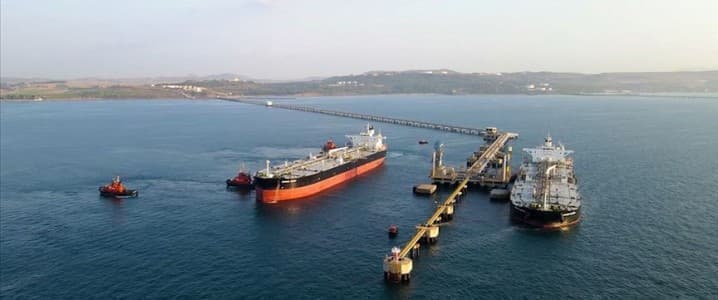
Turkish refiners find themselves in an increasingly complex and strategically vital position, consistently favoring Russian Urals crude despite persistent geopolitical pressure and diplomatic efforts aimed at diversification. This entrenched reliance, driven by a confluence of refinery design, economic advantage, and a challenging global supply landscape, presents both stability for Ankara’s energy security and a nuanced investment thesis for those tracking the Eastern Mediterranean energy corridor. As global oil markets navigate significant price volatility and an evolving geopolitical map, understanding the fundamental drivers behind Turkey’s crude procurement strategy is paramount for investors assessing regional energy plays and broader crude market dynamics.
The Structural Imperative: Why Urals Dominates Turkish Refineries
The continued dominance of Russian Urals crude in Turkey’s refining sector is not merely a matter of convenience; it’s deeply rooted in the operational realities of the country’s key facilities. Since early summer 2025, Russian crude imports into Turkey have averaged approximately 410,000 barrels per day, marking a substantial 20% year-on-year increase. This robust flow, evidenced by September import data showing volumes consistently above monthly averages, underscores a pattern that shows little sign of abatement. Refineries like the state-controlled Tüpraş and Azerbaijan’s Socar-owned Star Rafineri A.Ş. were engineered to process heavier, sour crude grades, characteristics that align perfectly with Russia’s Urals, which typically boasts an API gravity of 29-30 degrees and higher sulfur content. While other sour crudes are available in the Mediterranean, finding alternatives that match both the quality specifications and the competitive pricing of Urals has proven challenging. This challenge has been exacerbated by recent events, including Ukrainian drone strikes that disrupted Russian refinery operations, consequently redirecting more Urals crude onto export markets. This influx has seen Russia’s seaborne exports surge to 3.4 million b/d, a level not seen since spring 2024, with Turkey emerging as a key recipient, absorbing significant volumes as five Russian tankers discharged cargoes at Turkish terminals in the first week of October alone.
Navigating Volatility: Price as the Ultimate Arbiter
In the current volatile market environment, the economic imperative driving Turkey’s crude choices becomes even clearer. As of today, Brent Crude trades at $90.38 per barrel, marking a significant 9.07% decline within the day, with its range fluctuating between $86.08 and $98.97. Similarly, WTI Crude stands at $82.59, down 9.41%. This sharp correction follows a pronounced trend over the past fortnight, where Brent has shed $22.4, or nearly 19.9%, from its $112.78 high on March 30. Such market movements amplify the focus on cost efficiency for refiners globally. For Turkish operators, securing competitively priced feedstock is paramount, especially when facing downward pressure on refined product margins. The “commercial decision” defense articulated by Turkey’s energy minister underscores this reality: procurement is fundamentally about economic viability. Urals crude, often traded at a discount relative to global benchmarks, offers a compelling value proposition that few alternatives can consistently match, particularly for refineries designed to process its specific characteristics. In a market where gasoline prices have also seen a notable dip to $2.93, a 5.18% drop, the pressure to maintain low input costs for profitability is intense.
The Limited Allure of Alternatives: Kirkuk’s Uphill Battle
While diplomatic efforts have pushed for diversification, viable alternatives to Russian Urals for Turkish refiners face significant hurdles. Iraq’s Kirkuk crude represents one theoretically promising substitute, given its heavy grade and regional proximity. The restart of northern Iraqi exports to Turkey via the Kirkuk–Ceyhan pipeline, which historically carried 400,000–450,000 b/d before its 2023 shutdown, offers a glimmer of hope. Current plans project a more modest flow, with only 190,000 b/d allocated for export via Ceyhan by Iraq’s state marketer SOMO, alongside an additional 50,000 b/d for domestic Kurdish use. However, Kirkuk’s comeback is not without its challenges. SOMO’s intention to sell Kirkuk at official selling prices, specifically at a premium of $1.25 per barrel to Brent, presents a considerable obstacle. This pricing strategy, particularly in a market where refiners are seeking discounted feedstock, makes Kirkuk significantly less attractive compared to the often-discounted Urals barrels. For Turkish refiners, the blend of quality compatibility, established logistics, and favorable economics offered by Russian crude remains difficult to displace, reinforcing their current procurement patterns despite renewed regional supply options.
Investor Insights and Forward-Looking Catalysts
For investors keenly tracking the global energy landscape, Turkey’s steadfast reliance on Russian crude offers a unique lens through which to view market dynamics and geopolitical risk. A recurring question from our readers, “What do you predict the price of oil per barrel will be by end of 2026?”, highlights the pervasive uncertainty. While forecasting exact prices is complex, understanding underlying supply and demand drivers, particularly those influenced by major producers, is critical. The upcoming OPEC+ Joint Ministerial Monitoring Committee (JMMC) Meeting on April 19, followed by the full OPEC+ Ministerial Meeting on April 20, will be pivotal events. Any decisions regarding production quotas could significantly impact global supply, potentially influencing the availability and pricing of crudes like Urals, and by extension, the economic calculus for Turkish refiners. Should OPEC+ maintain or even deepen cuts, it could support higher benchmark prices, potentially narrowing the discount on Urals or making premium crudes even less palatable. Conversely, an increase in quotas could further soften prices, further entrenching the preference for discounted barrels.
Beyond OPEC+, investors should closely monitor weekly data releases from the U.S. These include the API Weekly Crude Inventory (April 21, April 28) and the EIA Weekly Petroleum Status Reports (April 22, April 29), alongside the Baker Hughes Rig Count (April 24, May 1). These reports offer vital insights into global demand health, inventory levels, and drilling activity, all of which contribute to the broader market sentiment and influence crude pricing. For those invested in refining giants like Tüpraş or companies with exposure to the Eastern Mediterranean, understanding these macro drivers and their interplay with regional procurement strategies is essential for navigating potential headwinds and identifying opportunities in a sector increasingly shaped by both economics and geopolitics.