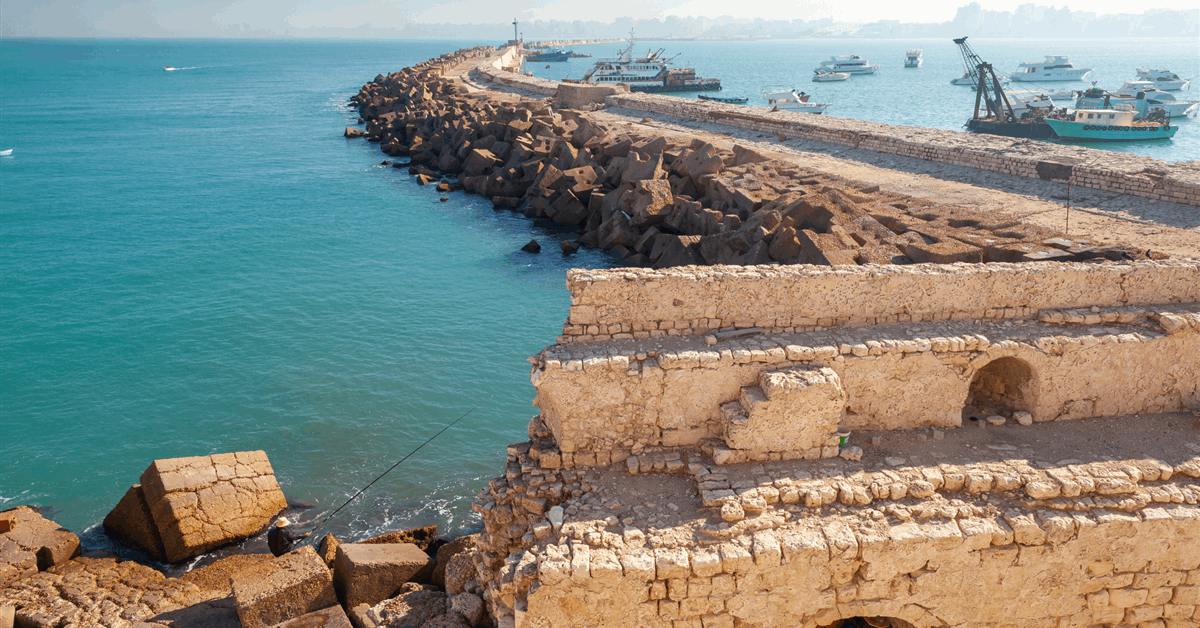
The recent definitive agreement between Shell PLC and state-owned QatarEnergy for the North Cleopatra exploration block in Egypt’s Mediterranean Sea marks a significant strategic maneuver for both energy giants. While Shell divests a 27% interest, retaining a 36% operating stake, QatarEnergy’s acquisition underscores its aggressive expansion into the promising Egyptian offshore gas frontier. This deal is not an isolated event but rather the latest in a series of calculated moves shaping the future of gas supply in the region, set against a backdrop of considerable market volatility. Investors are keenly watching how such portfolio adjustments align with long-term energy strategies, especially as global crude prices experience significant swings.
Shell’s Portfolio Optimization Amidst QatarEnergy’s Mediterranean Gambit
Shell’s decision to reduce its exposure in the North Cleopatra block, a frontier exploration asset spanning 3,400 square kilometers with water depths up to 2,600 meters, reflects a broader industry trend towards portfolio optimization and disciplined capital allocation. By divesting a 27% interest while retaining operatorship and a significant 36% stake, Shell effectively de-risks its position in a high-potential but capital-intensive deepwater project. This allows the British major to share exploration costs and risks with a strong financial partner like QatarEnergy, while still benefiting from potential future discoveries.
For QatarEnergy, this acquisition is another bold step in solidifying its footprint across Egypt’s hydrocarbon-rich waters. The state-owned entity is rapidly assembling a formidable portfolio, leveraging existing partnerships and forging new ones. This includes securing a 23% stake in the adjacent North El-Dabaa block from Chevron on November 11, 2024, an area just 10 kilometers offshore with depths ranging from 100 to 3,000 meters. Additionally, QatarEnergy acquired 40% stakes in the Cairo and Masry exploration blocks from ExxonMobil on May 12, 2024, covering a vast 11,400 square kilometers. Earlier moves include a 40% stake in North Marakia from ExxonMobil on March 29, 2022, and 17% stakes in Red Sea Blocks 3 and 4 from Shell on December 13, 2021. Most recently, in 2023, QatarEnergy joined Eni and BP in the East Port Said block (EGY-MED-E8), holding a 33% interest. These cumulative investments highlight a clear, long-term strategy to become a major player in one of the world’s most promising gas basins, ensuring future supply for global LNG markets.
Egypt’s Offshore: A Strategic Hub for Future Gas Supply
The Mediterranean Sea, particularly Egypt’s side, has emerged as a globally significant natural gas province, anchored by major discoveries like Zohr and others in the Herodotus Basin. The North Cleopatra block’s location within this frontier basin, adjacent to the northern portion of the North El-Dabaa block, positions it strategically for potential synergies and infrastructure development. The deepwater characteristics of these blocks, with depths up to 2,600 meters, signal substantial exploration upside but also underscore the technical challenges and significant capital commitment required.
QatarEnergy’s multi-block strategy in Egypt is designed to capitalize on the region’s geological prospectivity and Egypt’s growing role as an energy transit and export hub. By partnering with established operators like Shell, Chevron, and ExxonMobil, QatarEnergy gains access to deepwater expertise and diversifies its risk. The repeated emphasis from QatarEnergy’s CEO on delivering “exploration objectives” and anticipating “successful and promising outcomes” for first exploration wells, such as in North El-Dabaa, reinforces the high expectations surrounding these ventures. For investors, Egypt’s Mediterranean offshore represents a compelling growth story, driven by robust regional demand and an increasing global appetite for natural gas as a transition fuel.
Navigating Market Volatility: Investor Outlook and Upcoming Catalysts
As of today, Brent crude trades at $90.38, reflecting a sharp 9.07% decline, while WTI follows suit at $82.59, down 9.41%. This significant daily drop extends a broader trend, with Brent having fallen by nearly 20% from $112.78 just 14 days ago. Such pronounced volatility naturally prompts questions from investors, with many asking, “What do you predict the price of oil per barrel will be by end of 2026?” and “What are OPEC+ current production quotas?”.
The immediate market sentiment is heavily influenced by the upcoming OPEC+ Ministerial Meeting scheduled for April 19. This full ministerial gathering will be critical in assessing the bloc’s stance on production levels amidst softening demand signals and rising geopolitical uncertainties. Any indication of changes to current quotas could either stabilize or further destabilize prices. Following this, the market will closely monitor the API and EIA Weekly Petroleum Status Reports on April 21 and 22, respectively, which provide crucial insights into U.S. crude inventories and demand. These short-term data points, combined with the weekly Baker Hughes Rig Count on April 24, will offer a clearer picture of supply-demand dynamics and their potential impact on crude prices.
While short-term price movements are a constant focus, the long-term investment thesis for natural gas, particularly in prolific basins like the Egyptian Mediterranean, remains robust. Companies like Shell and QatarEnergy are making strategic investments that span decades, recognizing the enduring demand for gas as a cleaner alternative to other fossil fuels. Investors should view these divestments and acquisitions not as reactions to daily price swings, but as calculated moves to position portfolios for sustainable growth in the evolving global energy landscape, balancing immediate market pressures with long-term strategic objectives.


