The Hydrogen Horizon: Addressing the Core Component Challenge
As the global energy landscape continues its dynamic shift, investors are keenly evaluating opportunities beyond traditional hydrocarbons. A significant area of interest lies within the burgeoning hydrogen economy, particularly its foundational technologies. Membrane Electrode Assemblies, or MEAs, stand as the electrochemical heart of both polymer electrolyte membrane (PEM) fuel cells and electrolyzers. Their efficient and cost-effective production is paramount for the widespread adoption of hydrogen as a clean energy carrier. While the promise of hydrogen is clear, the ability to scale manufacturing has remained a critical hurdle. Recent advancements, however, are beginning to dismantle this barrier, offering a clearer path for investment into this transformative sector.
Unlocking Scalability: Fraunhofer’s Production Platform for MEAs
A major bottleneck for the hydrogen economy has been the ability to produce MEAs at the volume and cost required for mass market penetration. Current manufacturing processes simply cannot meet the projected demand. Consider the scale: powering just 20,000 heavy-duty trucks annually would necessitate 1.2 million square meters of active MEA area. For the ramp-up of electrolysis capacity, an additional gigawatt requires between 25,000 and 35,000 square meters of catalyst-coated membrane. These figures highlight a glaring gap between present capabilities and future requirements.
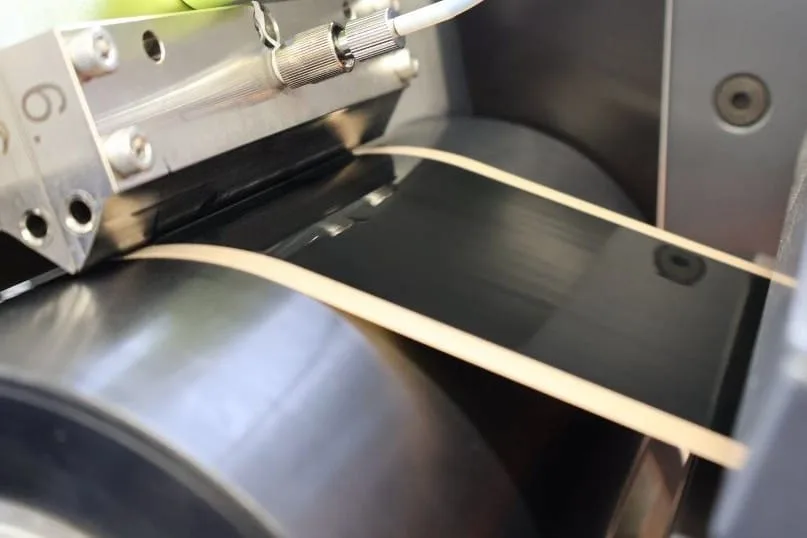
This is precisely where innovative production research becomes invaluable. The development of a flexible platform designed to accelerate MEA manufacturing is a game-changer. This facility focuses on continuous, high-throughput processes, integrating the entire value chain from initial catalyst powder treatment to the final 7-layer MEA assembly, including critical quality control. Scientists are meticulously investigating every step: refining mixing processes for catalyst inks, optimizing membrane coating, and enhancing the drying of catalyst layers and reinforcement frames. Key process steps like the production of catalyst layers, whether printed on transfer foils or directly onto membranes, are being advanced through both proven slot die methods and newer rotary or indirect gravure printing techniques. By making this platform available to manufacturers and machine builders, the industry gains a crucial hub for process optimization, directly addressing the scalability challenge that has long constrained the hydrogen sector’s growth.
Navigating Market Dynamics: Traditional Volatility vs. Emerging Opportunities
Against a backdrop of persistent volatility in traditional energy markets, investors are increasingly seeking diversified exposure and long-term growth narratives. As of today, April 17th, 2026, Brent crude trades at $91.65 per barrel, marking a 2.05% decline, with WTI crude following a similar trend at $88.90, down 2.49%. This daily movement is part of a broader trend; Brent has seen a notable drop of over 12% in the last 14 days alone, falling from $112.57 on March 27th to $98.57 yesterday. Such fluctuations underscore the inherent sensitivities within the established oil and gas complex, driven by geopolitical factors, supply-demand balances, and macroeconomic shifts.
Our proprietary reader intent data reveals a dual focus among investors. While many are actively tracking immediate market drivers like OPEC+ quotas and daily Brent prices, there is a clear and growing curiosity about how technological advancements are shaping the future energy landscape. Questions about the underlying data sources for market intelligence and the utility of advanced AI tools to parse energy trends indicate a desire for deeper, more comprehensive insights into *all* energy sectors. Investors are not just asking “What is the current Brent crude price?” but also implicitly “Where are the next big opportunities beyond traditional oil?” The work on scalable MEA production directly addresses this latter query, pointing to the foundational investments needed to realize the potential of the hydrogen economy. It represents a tangible step towards de-risking the hydrogen value chain, offering a compelling long-term investment theme amidst the short-term gyrations of crude markets.
Forward Outlook: Catalysts and the Path to Commercialization
The coming days will offer several immediate catalysts for the traditional oil and gas markets. The OPEC+ Joint Ministerial Monitoring Committee (JMMC) meets today, April 17th, followed by the full Ministerial Meeting tomorrow, April 18th. These gatherings often lead to significant policy announcements regarding production quotas, directly impacting crude prices. Additionally, the regular cadence of API Weekly Crude Inventory reports (April 21st, April 28th), EIA Weekly Petroleum Status Reports (April 22nd, April 29th), and Baker Hughes Rig Count updates (April 24th, May 1st) will provide crucial insights into supply, demand, and drilling activity. These events will undoubtedly command short-term investor attention.
However, while these factors drive immediate market sentiment for conventional energy, the long-term structural shifts are being shaped by advancements like the scalable MEA production platform. The availability of this facility to manufacturers and plant builders suggests an accelerating pace of industrial collaboration and optimization. This paves the way for future announcements from these companies regarding successful process integration, new product lines, or expanded production capacities—events that will serve as powerful catalysts for the hydrogen and fuel cell sectors. For investors, this signifies a crucial phase where scientific breakthroughs transition into industrial application, promising to unlock new revenue streams and establish the infrastructure for a hydrogen-powered future. The ability to efficiently produce MEAs at scale is not merely a technical achievement; it is a critical enabler for the commercial viability and widespread adoption of fuel cell vehicles and green hydrogen production, fundamentally reshaping the energy investment landscape in the years to come.


