Navigating Political Headwinds: How Net-Zero Rifts Signal Tangible Policy Risk for Energy Investors
In the high-stakes world of oil and gas investing, policy stability is often as critical as supply-demand fundamentals. Recent internal divisions within a prominent political party regarding its commitment to net-zero targets serve as a potent reminder of this truth, signaling a significant and growing layer of policy risk for the global energy sector. While the immediate focus may be on political maneuvering, savvy investors must recognize these rifts as leading indicators of potential shifts in regulatory frameworks, project viability, and ultimately, investment returns. As markets grapple with considerable volatility, understanding how political uncertainty translates into tangible economic impact is paramount for strategically positioning capital.
Market Volatility Underlines Policy Uncertainty’s Impact on Crude Prices
The current market snapshot provides a stark backdrop against which to assess these policy signals. As of today, Brent Crude trades at $90.38 per barrel, representing a notable decline of 9.07% within the day, with its range fluctuating between $86.08 and $98.97. Similarly, WTI Crude has seen a sharp drop to $82.59, down 9.41% for the day. This daily slide is not an isolated event; Brent has witnessed a significant downturn over the past two weeks, falling by $22.40, or 19.9%, from $112.78 on March 30th to its current level. This pronounced bearish trend, coupled with a 5.18% drop in gasoline prices to $2.93, reflects a market increasingly sensitive to a confluence of factors, including global economic outlooks, demand forecasts, and crucially, the perceived stability of long-term energy policy. When political parties publicly fracture over foundational energy commitments like net-zero, it introduces an additional layer of uncertainty that can exacerbate market reactions. Investors seeking clarity on future capital allocation in oil and gas infrastructure, exploration, and production will find themselves operating in an increasingly opaque environment when policy direction appears fluid.
Investor Focus: Deciphering Long-Term Price Trajectories Amidst Political Noise
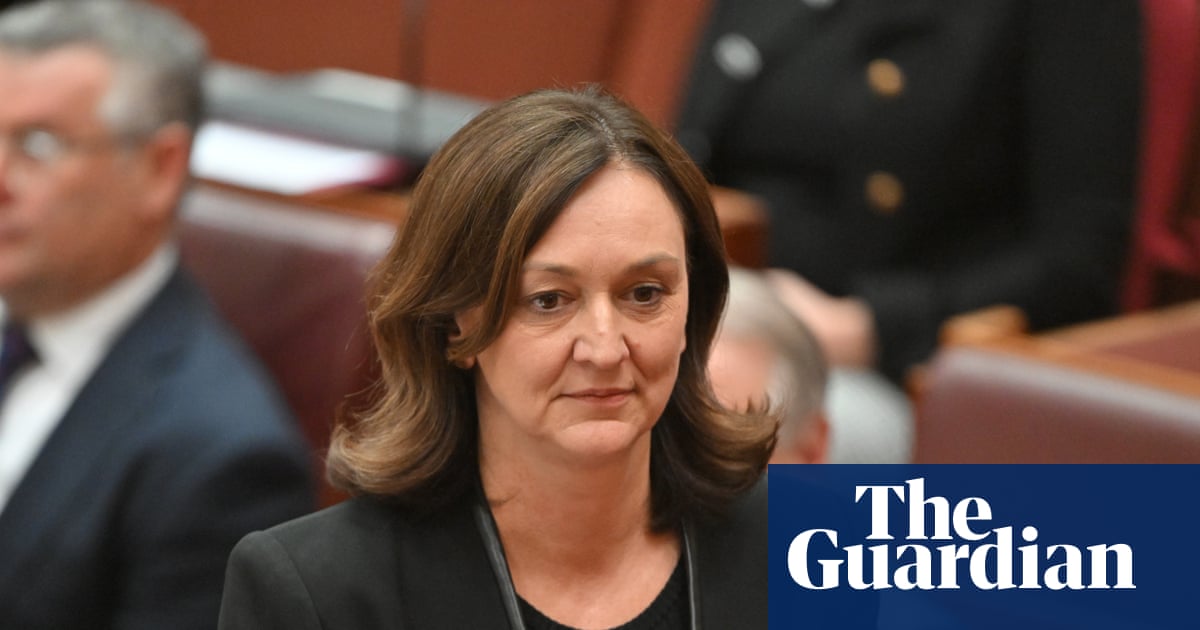
Our proprietary data indicates that a primary concern for investors this week revolves around the future trajectory of oil prices, with many asking, “What do you predict the price of oil per barrel will be by end of 2026?” This question underscores a broader need to understand the fundamental drivers shaping market outlooks, extending beyond immediate supply and demand figures. The internal political debate around net-zero targets directly complicates such long-term forecasting. For instance, the argument that abandoning net-zero commitments could alienate key demographics like women and young people, as highlighted by prominent political figures, implies that the political cost of backtracking on climate action is substantial. This pressure for climate action, even within parties traditionally seen as pro-fossil fuel, means that the regulatory landscape for oil and gas investments remains subject to significant political influence. Investors are not just looking at production quotas, as evidenced by queries like “What are OPEC+ current production quotas?”, but also at how domestic policy shifts in major economies could impact demand growth, carbon pricing, and the social license to operate for energy projects. The push and pull between economic pragmatism and climate ambition, now openly debated within political parties, creates a dynamic environment where long-term investment decisions must factor in this evolving policy risk.
Upcoming Catalysts: OPEC+ Decisions and Inventory Data in a Shifting Policy Climate
The immediate future holds several critical events that will test market sentiment against this backdrop of policy uncertainty. Tomorrow, April 19th, the OPEC+ Ministerial Meeting is scheduled, an event of paramount importance for global crude supply. Investors will be closely watching for any announcements regarding production quotas, which could significantly impact short-to-medium term price stability. Any signs of discord or unexpected adjustments from this influential group will be amplified by the current market volatility and underlying policy concerns. Furthermore, the upcoming API Weekly Crude Inventory reports on April 21st and 28th, followed by the EIA Weekly Petroleum Status Reports on April 22nd and 29th, will provide crucial insights into U.S. supply and demand dynamics. These reports, alongside the Baker Hughes Rig Count on April 24th and May 1st, offer a granular view of operational activity and inventory levels. While these are routine market events, their impact can be magnified when the broader policy environment is perceived as unstable. A political party’s wavering on net-zero, even if seemingly distant from OPEC+ decisions or U.S. inventory builds, contributes to an overarching narrative of uncertainty that influences long-term investment horizons for the entire energy sector, making market participants more reactive to incoming data.
Long-Term Investment Strategy Amidst Political Policy Volatility
The internal political struggles over net-zero commitments underscore a critical challenge for long-term oil and gas investors: predicting policy longevity. When a party’s stance on a fundamental issue like climate action becomes a source of internal contention, it signals potential instability in the regulatory environment. For companies operating or planning investments in such jurisdictions, this translates to increased uncertainty around carbon taxes, emissions standards, project approvals, and even the future availability of financing. While some conservative voices advocate for abandoning net-zero, others, including high-profile women within the party, argue that climate action is essential for electoral viability and aligns with public sentiment. This deep divide reflects a broader global tension between energy security, economic growth, and environmental imperatives. For investors, this means that capital allocation decisions must increasingly factor in political risk assessments. Projects with longer timelines become more exposed to potential policy reversals or shifts, favoring investments that offer greater flexibility or are situated in jurisdictions with clearer, more stable policy frameworks. Monitoring these political undercurrents is no longer a peripheral activity for oil and gas investors; it is central to mitigating risk and identifying resilient investment opportunities in a rapidly evolving energy landscape.


