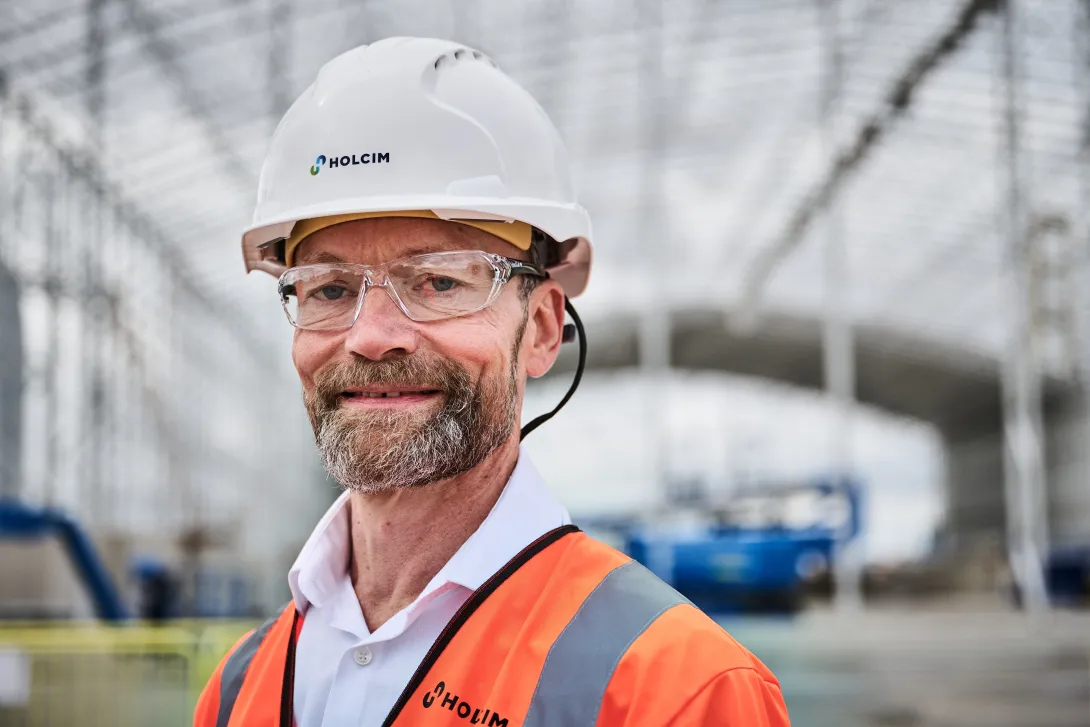
In an energy landscape increasingly defined by both persistent volatility in traditional markets and the accelerating shift towards decarbonization, the strategic deployment of seasoned expertise becomes paramount. The recent appointment of Jan-Willem to spearhead Holcim UK’s Cauldon Carbon Capture and Storage (CCS) project, part of the wider Peak Cluster initiative, offers a crucial lens for investors. With over three decades of international experience in managing complex gas developments across diverse geographies like Norway, Iraq, the UAE, and Russia, his transition to lead a critical decarbonization project signals a significant de-risking of future-focused industrial investments. This move underscores a broader trend: the oil and gas sector’s deep bench of talent is increasingly vital for delivering on the ambitious net-zero targets of industrial giants and, by extension, for generating new value streams for investors looking beyond conventional energy plays.
Leveraging Decades of Expertise in the Decarbonization Push
The successful execution of large-scale infrastructure projects, especially those involving novel technologies like CCS, hinges critically on experienced leadership. Jan-Willem’s extensive background in orchestrating major gas developments provides a blueprint for navigating the complexities inherent in the Cauldon CCS project. Investors understand that the jump from conceptual design to operational reality is fraught with challenges, from regulatory hurdles and stakeholder management to intricate engineering and supply chain logistics. His proven track record in planning and delivering projects with global scope offers a tangible advantage, mitigating execution risk that often plagues pioneering ventures. For Holcim, a company committed to becoming net-zero by 2050 and aiming for substantial carbon reductions through initiatives like the Peak Cluster’s goal of cutting three million tonnes of annual CO2 emissions from 2032, such an appointment isn’t merely a hire; it’s a strategic investment in project certainty and, ultimately, in long-term shareholder value.
Navigating Volatility: CCS as a Strategic Hedge
The current state of the global energy market starkly illustrates the need for diversified investment strategies. As of today, Brent Crude trades at $90.38, reflecting a significant 9.07% drop within a single trading session, with its range spanning $86.08 to $98.97. Similarly, WTI Crude has fallen by 9.41% to $82.59, moving between $78.97 and $90.34. This daily decline follows a broader trend where Brent has shed $20.91, or 18.5%, from $112.78 on March 30th to $91.87 just yesterday. Such pronounced volatility in core commodity prices highlights the inherent cyclical risks in traditional oil and gas investments. In this context, strategic investments in decarbonization technologies like CCS—backed by strong regulatory tailwinds and long-term industrial demand—offer a compelling hedge. While the immediate focus for many investors remains on the daily price swings and their impact on Q2 earnings, the commitment to projects like Cauldon CCS represents a long-term play, insulated to some extent from the immediate gyrations of the crude market. It speaks to a different kind of value creation, one tied to sustainability targets and regulatory compliance rather than purely commodity price arbitrage.
Upcoming Events and the Long-Term Investment Horizon
As investors grapple with questions about the future trajectory of oil prices and the performance of major energy players, the strategic importance of energy transition projects grows. Many in our audience are asking about the predicted price of oil per barrel by the end of 2026, and how companies like Repsol will navigate the evolving market. While upcoming events such as the OPEC+ JMMC and Full Ministerial meetings this weekend (April 18th-19th) will undoubtedly dictate near-term supply dynamics and could influence price stability, or further volatility, the investment thesis for CCS projects operates on a different timeline. Weekly API and EIA inventory reports (scheduled for April 21st/22nd and April 28th/29th) will offer snapshots of demand, and the bi-weekly Baker Hughes Rig Count provides insights into production activity. These are critical for traditional energy trading. However, for a project like Cauldon CCS, with its 2032 emissions reduction target, the focus shifts to policy stability, technological advancements, and the consistent execution of long-term strategic plans. Investing in companies actively pursuing such projects demonstrates a commitment to future-proofing their business model, a key consideration for investors looking beyond the next quarterly report or the immediate impact of an OPEC+ decision. It’s about building resilience against future carbon costs and securing a competitive edge in a decarbonized economy, addressing the underlying concerns about long-term company performance.
De-risking Decarbonization: A Clear Investment Signal
For investors, the energy transition often presents a perceived tension between ambitious sustainability goals and tangible, de-risked returns. Concerns about project viability, technological hurdles, and the sheer scale of investment required frequently arise. However, the appointment of a seasoned professional like Jan-Willem to a major CCS project, alongside the collaborative nature of the Peak Cluster initiative, sends a powerful signal. It demonstrates that industrial leaders are not approaching decarbonization as a mere compliance exercise, but as a critical strategic imperative backed by robust project management. His experience in complex gas developments translates directly into competence in managing large-scale infrastructure, navigating permitting processes, and ensuring operational efficiency – all factors that directly impact project costs and timelines. This emphasis on proven leadership and collaborative industry efforts significantly de-risks the investment profile of such ventures. It assures investors that capital allocated to these initiatives is being managed by individuals with a deep understanding of energy infrastructure, enhancing the probability of successful project delivery and ultimately, contributing positively to a company’s financial performance and ESG profile. This level of expertise is precisely what addresses investor questions about how companies can effectively translate decarbonization ambitions into concrete, profitable outcomes.