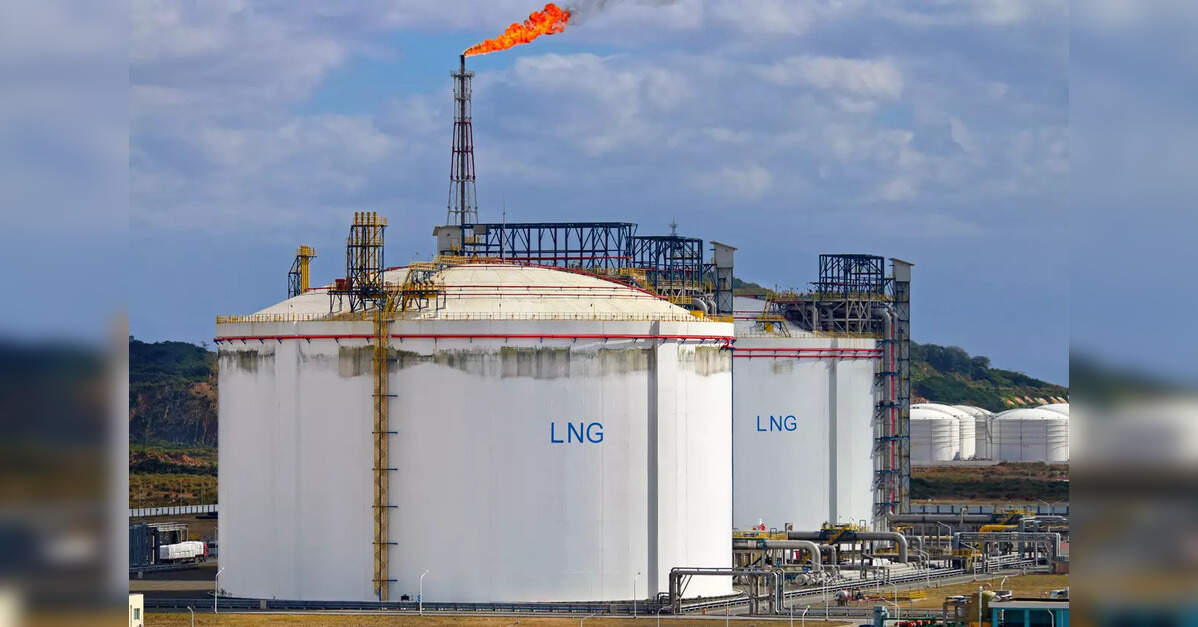
The global natural gas landscape is undergoing a significant realignment, driven by geopolitical tensions and shifting energy alliances. At the heart of this transformation is China’s continued engagement with Russia’s Arctic LNG 2 project, a facility under international sanctions. The recent delivery of a sixth cargo to China’s Beihai LNG terminal on September 22nd by the 174,000-cubic-meter Arctic Mulan carrier has cast a spotlight on the effectiveness of existing sanctions and the strategic calculus of major energy consumers. This evolving dynamic presents both risks and opportunities for investors navigating the complex currents of natural gas supply, demand, and pricing.
Geopolitical Flex: China’s Arctic LNG Gambit and Sanctions Enforcement
China’s consistent import of liquefied natural gas from the sanctioned Arctic LNG 2 project represents a critical test of geopolitical will and a direct challenge to Western-led sanctions regimes. With the sixth cargo now confirmed, the absence of punitive measures from the United States raises fundamental questions about the future of energy sanctions and their enforceability against major economic powers. This project, designed with two trains each boasting a capacity of 6.6 million tonnes per annum (mtpa), holds the potential to significantly alter global LNG supply if it achieves full operational status without impediment. For energy investors, the lack of a clear response creates an environment of regulatory uncertainty, where the true cost of doing business with sanctioned entities remains undefined. This ambiguity is precisely what China appears to be leveraging, pushing the boundaries of international energy trade.
Global Gas Prices: A Nuanced Retreat Amidst Supply Speculation
The broader natural gas market has exhibited a softening trend across key benchmarks, even as new supply dynamics emerge from Russia. In Asia, November delivery prices for LNG registered $11.35 per MMBtu on September 23rd, a slight dip from $11.45 the preceding week. European hubs mirrored this sentiment, with the Dutch TTF benchmark settling at $10.98 per MMBtu on September 24th, down from $11.29. Across the Atlantic, US Henry Hub prices also eased to $2.88 per MMBtu on September 24th, compared to $3.10 a week prior. This general cooling in gas prices reflects a combination of factors, including robust European storage levels, which stood at 82.1% or 93.2 billion cubic meters on September 22nd, comfortably ahead of last year’s figures and on track for the 90% winter target, bolstered by resurgent Norwegian pipeline flows and stable Turkstream supplies. As of today, the broader energy market continues to recalibrate; Brent Crude trades at $98.81, showing a modest intraday decline of 0.58%, yet representing a more significant 14-day drop of over 12% from its $112.57 perch on March 27th to $98.57 on April 16th. Similarly, WTI Crude is at $90.1, down 1.17%. This widespread softening across crude and gas benchmarks, including gasoline at $3.08, suggests investors are weighing global economic growth prospects against persistent supply risks, even as specific LNG trade routes carve out new realities.
Investor Outlook: Navigating Supply Management and Forward Risks
Investors are increasingly focused on the interplay between established supply management strategies and the emergence of non-traditional supply routes. Our internal data indicates a strong investor interest in understanding global supply stability, with frequent queries surrounding OPEC+ production quotas and the methodologies underpinning benchmark crude pricing. The ongoing situation with Arctic LNG 2 adds a fresh layer of complexity to these core concerns. While the project’s two trains offer substantial potential output, its current production remains constrained by technical challenges and, critically, the limited availability of specialized Arctic-class carriers, a bottleneck that intensifies with the onset of winter. The key forward-looking risk for investors centers on the possibility of an escalated US response should these Russian LNG shipments grow in volume or diversify to other destinations beyond China. Such an event would undoubtedly introduce significant market volatility and re-evaluate the risk premium associated with energy investments. Looking ahead, the upcoming OPEC+ Joint Ministerial Monitoring Committee (JMMC) meeting on April 17th, followed by the Full Ministerial meeting on April 18th, will be crucial. While primarily focused on crude oil, decisions from these gatherings often set the tone for broader energy market sentiment and could indirectly influence gas investment strategies by signaling the stability of global energy supply and demand balances. Furthermore, the regular cadence of weekly inventory reports, including the API Crude Inventory on April 21st and 28th, and the EIA Weekly Petroleum Status Report on April 22nd and 29th, will provide vital demand-side signals that could either absorb or exacerbate the impact of new supply streams.
Regional Demand Dynamics and the Approaching Winter
Regional demand patterns continue to paint a complex picture for global LNG markets. In Asia, recent disruptions like Typhoon Ragasa temporarily limited LNG intake at South China ports, yet underlying demand drivers are shifting. Japan, for instance, faces a 70% probability of above-normal temperatures stretching until mid-October, though forecasts point towards colder conditions by December. Japanese utility LNG inventories reflect this, rising to 1.88 million tonnes as of September 21st, up from 1.75 million tonnes a week earlier, but still below August levels. Muted spot buying indicates a reliance on existing contracts and coal-fired power generation. Conversely, South Korea’s outlook has pivoted to lower-than-expected temperatures in early October, suggesting a short-term uptick in heating demand. In Europe, the continent’s strategic stockpiling efforts have proven effective, with storage levels comfortably positioned ahead of the winter season. The recovery of Norwegian pipeline flows to 284 million cubic meters per day and steady supplies from Russia’s Turkstream have further contributed to market stability. These regional demand variations, coupled with the potential for increased Arctic LNG 2 shipments, will play a pivotal role in determining the true impact of this new supply on global price discovery and investor returns as the Northern Hemisphere winter unfolds.
The continued flow of Russian LNG to China, despite sanctions, is fundamentally reshaping the investment landscape for natural gas. It underscores a growing multipolar energy order where geopolitical alignment increasingly dictates trade routes and supply security. For investors, this environment demands a nuanced understanding of not only traditional supply-demand fundamentals but also the evolving dynamics of international relations and sanctions enforcement. The interplay between new, potentially disruptive supply sources like Arctic LNG 2, the strategic responses of major consuming nations, and the broader crude market signals will define profitability and risk in the coming quarters. Vigilance over geopolitical developments, coupled with a keen eye on inventory data and upcoming policy decisions from key energy blocs, will be paramount for successful navigation of these turbulent waters.


