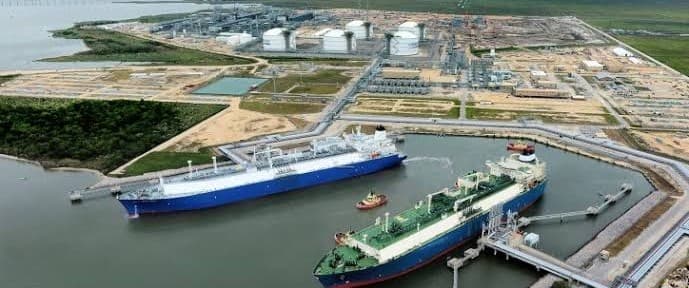
Turkey’s state energy company, BOTAS, has strategically moved to secure its energy future and reshape regional gas flows, signing a significant two-decade supply agreement for U.S. liquefied natural gas (LNG) with Mercuria. This landmark deal, committing to approximately 4 billion cubic meters per annum from 2026 and accumulating to roughly 70 bcm over its duration, is a clear signal of Ankara’s intent to diversify its energy portfolio away from traditional pipeline reliance. Complementing this, a separate nine-year preliminary accord was also struck with Australia’s Woodside, projecting some 5.8 bcm of deliveries starting in 2030, largely from its Louisiana-based LNG operations. These long-term commitments underscore a pivotal shift in Turkey’s energy strategy, aiming to solidify its role as a regional energy trading nexus and offering compelling implications for global energy investors monitoring supply security, geopolitical realignments, and infrastructure plays.
Turkey’s Bold Pivot: A New Era for Regional Gas Dynamics
The core of Turkey’s ambitious energy agenda lies in these newly inked long-term LNG contracts. The Mercuria agreement, commencing in 2026, provides a substantial and flexible supply base, allowing cargoes to be delivered at U.S. loading terminals or directly to regasification points across Turkey, Europe, and North Africa. This inherent flexibility is a critical component for risk mitigation and market arbitrage. Turkish authorities view these arrangements as crucial insurance against future pipeline supply vulnerabilities and a foundational element for a gas trading hub poised to serve Southeast Europe and the Balkans. To support this vision, Turkey has already made substantial infrastructure investments, including floating storage regasification units (FSRUs) at Dörtyol and Saros, alongside expanded underground storage facilities at Silivri and Tuz Gölü. These assets provide the necessary capacity to absorb increased LNG inflows and position Turkey to optimally manage supply and demand dynamics between diverse global producers and European buyers, enhancing its strategic value in the broader energy landscape.
Market Volatility and the Long-Term View: Why LNG Security Matters Now
In a market characterized by recent fluctuations, Turkey’s long-term LNG strategy appears particularly prescient. As of today, Brent Crude trades at $90.38, marking a notable 9.07% decline within the day, with WTI Crude similarly down 9.41% to $82.59. This recent downturn follows a broader trend, with Brent having shed over 18.5% from its $112.78 perch just two weeks ago. Such significant short-term price volatility in the crude market often spills over into natural gas, amplifying the importance of supply security for major energy consumers. For investors, this environment underscores the value of long-duration, diversified energy contracts. Turkey’s move to lock in LNG supply through 2045 provides a hedge against future price spikes and geopolitical disruptions that could otherwise leave its economy vulnerable. These agreements offer a measure of predictability in an otherwise turbulent market, shifting a portion of Turkey’s energy risk from spot market exposure to structured, long-term supply relationships, a strategy that could yield considerable competitive advantages.
Geopolitical Chessboard: Russia’s Shifting Role and Turkey’s Ambitions
The implications of Turkey’s pivot extend far beyond its borders, significantly impacting the geopolitical energy map, particularly concerning Russia. For years, Russia leveraged its position as a primary energy supplier and a crucial transit state for gas flowing through TurkStream into southern Europe, with Turkey serving as a key customer and gateway. These new, extensive U.S. and Australian LNG contracts directly challenge that established dynamic. The erosion of Turkey’s dependence on Russian pipeline gas not only threatens Gazprom’s market share but also diminishes Russia’s strategic leverage in the region, especially as European demand for pipeline gas continues its contraction. Turkey’s enhanced LNG import and regasification capabilities, coupled with its ambitious storage expansion, allow it to act as a genuine arbitrageur, balancing supplies from various global sources. This strategic repositioning solidifies Turkey’s ambition to become an independent and influential energy hub for Southeast Europe and the Balkans, potentially redirecting significant gas flows and reshaping regional pricing dynamics.
Navigating Future Supply: Investor Focus on Upcoming Market Signals
Investors are keenly observing how global energy markets will evolve, with many asking “what do you predict the price of oil per barrel will be by end of 2026?” and inquiring about “OPEC+ current production quotas.” These questions highlight a collective focus on the fundamental drivers of energy pricing and supply. Turkey’s long-term LNG agreements, set to commence in 2026, are directly impacted by these broader market sentiments. Upcoming events on the energy calendar will provide critical insights. The OPEC+ Joint Ministerial Monitoring Committee (JMMC) and Full Ministerial meetings, scheduled for April 18th and 19th respectively, are crucial for understanding future crude production policies and their ripple effects across the energy complex. Additionally, the regular API Weekly Crude Inventory and EIA Weekly Petroleum Status Reports, slated for April 21st/22nd and April 28th/29th, will offer granular data on U.S. supply-demand balances. These data points, alongside the Baker Hughes Rig Count on April 24th and May 1st, will shape near-term price expectations and influence the economic viability and strategic value of long-term energy infrastructure investments. Savvy investors will be closely monitoring these signals to inform their strategies around energy majors, infrastructure developers, and LNG players poised to benefit from evolving global supply chains.


