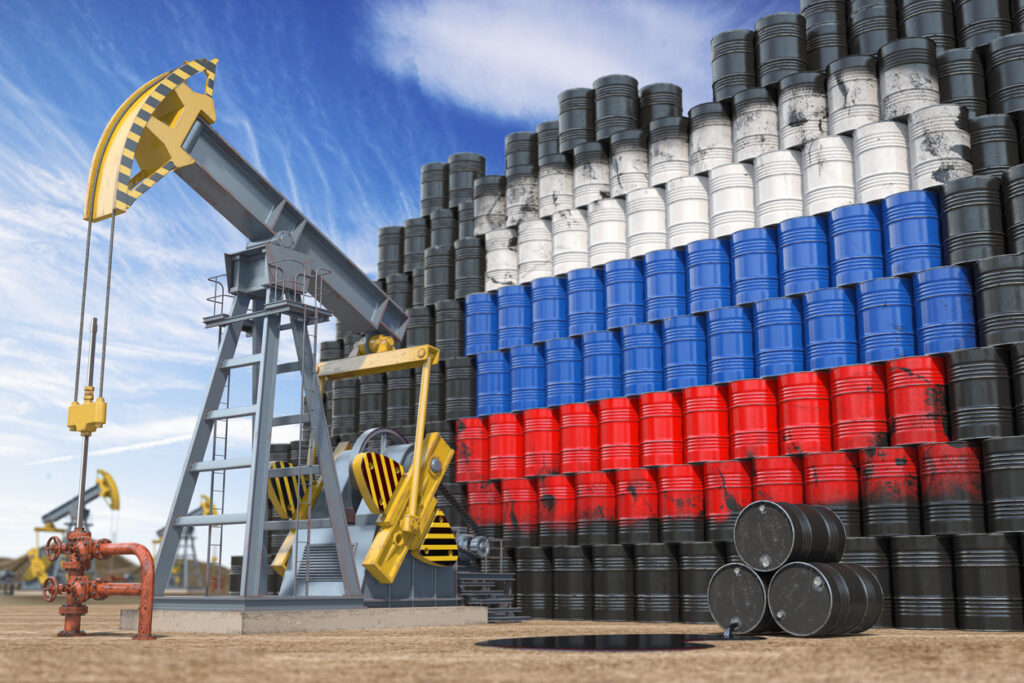
Geopolitical Headwinds Batter Oil Markets as Trump Targets Russian Energy Buyers
The global oil and gas investment landscape is once again grappling with heightened geopolitical uncertainty, following former President Donald Trump’s pointed remarks at the United Nations General Assembly. Trump lambasted countries continuing to purchase Russian energy, asserting that such actions are tantamount to “funding the war against themselves.” This latest round of political pressure, singling out major buyers like China and India alongside several NATO members, injects a fresh layer of risk premium – or, in the current market context, a bearish sentiment – into already volatile crude markets. For investors navigating these choppy waters, understanding the potential for escalating trade tensions and supply chain disruptions is paramount.
Market Reacts: Crude Prices Plummet Amidst Geopolitical Jitters
The immediate market reaction underscores the fragility of investor confidence in the face of rising geopolitical friction. As of today, Brent crude trades at $90.38 per barrel, marking a sharp 9.07% decline within the day, with its range spanning $86.08 to $98.97. Similarly, WTI crude has fallen to $82.59, down 9.41% from its open, trading between $78.97 and $90.34. This daily slump builds on a broader bearish trend, with Brent having shed $20.91, or 18.5%, since March 30th. Even gasoline prices have not been immune, settling at $2.93, a 5.18% decrease today. While multiple factors contribute to daily price movements, the renewed focus on potential sanctions or tariffs against Russian energy consumption, particularly by major demand centers, undoubtedly adds to the downward pressure. Investors are clearly weighing the implications of a potentially more aggressive U.S. stance on energy trade, which could disrupt established flows and introduce new market inefficiencies.
The Tariff Threat: Europe’s Uncomfortable Position and LNG Implications
Trump’s threat of a “very strong round of powerful tariffs” on Russia, contingent on European participation, highlights a significant fault line in global energy policy. While European pipeline oil imports from Russia have largely collapsed since 2022, several nations, including Hungary and Slovakia, maintain their pipeline purchases. Crucially, Trump expanded his criticism to include LNG, directly targeting countries like France, Belgium, and Spain, which continue to import Russian liquefied natural gas under long-term contracts. This focus on LNG is a critical development, as it challenges a key component of Europe’s post-2022 energy diversification strategy. The feasibility of Europe “stepping it up” as demanded by Trump remains a major question mark for investors. Such a move would necessitate a rapid and costly realignment of energy procurement for these nations, potentially driving up European gas prices and impacting the profitability of energy companies deeply entrenched in these contracts. Investors with exposure to European energy majors or LNG infrastructure should closely monitor the diplomatic discussions expected this week between Trump and EU leaders in New York.
Navigating Uncertainty: OPEC+ Decisions and Investor Outlook for 2026
Our proprietary reader intent data reveals that investors are keenly focused on the future, frequently asking about oil price predictions for the end of 2026 and the current status of OPEC+ production quotas. Trump’s latest geopolitical gambit adds an unpredictable element to these forecasts. The prospect of tariffs or further restrictions on Russian energy, even if partially implemented, could tighten global supply, potentially counteracting demand-side concerns and pushing prices higher in the medium term. Conversely, if major buyers like China and India seek alternative, non-Russian supplies, it could trigger a reshuffling of global trade routes and impact tanker rates and regional price differentials. This week offers critical insights, with the OPEC+ Joint Ministerial Monitoring Committee (JMMC) meeting scheduled for April 18th, followed by the Full Ministerial meeting on April 19th. These meetings are pivotal for investors seeking clarity on production quotas. Will OPEC+ maintain current cuts to stabilize prices in the face of ongoing geopolitical rhetoric and the recent market downturn? Their decisions will be heavily scrutinized for signals on supply management. Further insights into market fundamentals will come from the API Weekly Crude Inventory reports on April 21st and 28th, and the EIA Weekly Petroleum Status Reports on April 22nd and 29th, which will provide crucial data on U.S. crude and product inventories amidst this evolving political backdrop. For European energy companies like Repsol, which is often a focus of investor queries, the direct and indirect impacts of any new European restrictions on Russian energy would be significant, potentially affecting their long-term supply agreements and operational costs.
Strategic Realignments and Investment Implications
The complex diplomatic dance, where the U.S. simultaneously criticizes India’s Russian oil purchases while its Secretary of State, Marco Rubio, suggests adjusting duties on Indian crude due to India’s “critical” role in U.S. strategy, underscores the intricate balance of geopolitical and economic interests. This strategic tightrope walk suggests that blanket sanctions are unlikely, but targeted pressures and shifting alliances will remain a feature of energy markets. For oil and gas investors, this environment necessitates a portfolio strategy that accounts for increased supply chain risk, the potential for regional price divergences, and the long-term implications of energy policy as a geopolitical tool. Companies with diversified asset bases, strong hedging strategies, and robust relationships across multiple supply corridors may be better positioned to weather these storms. Furthermore, investment in domestic energy security and alternative energy sources could see renewed emphasis as nations increasingly prioritize resilience over pure cost efficiency.