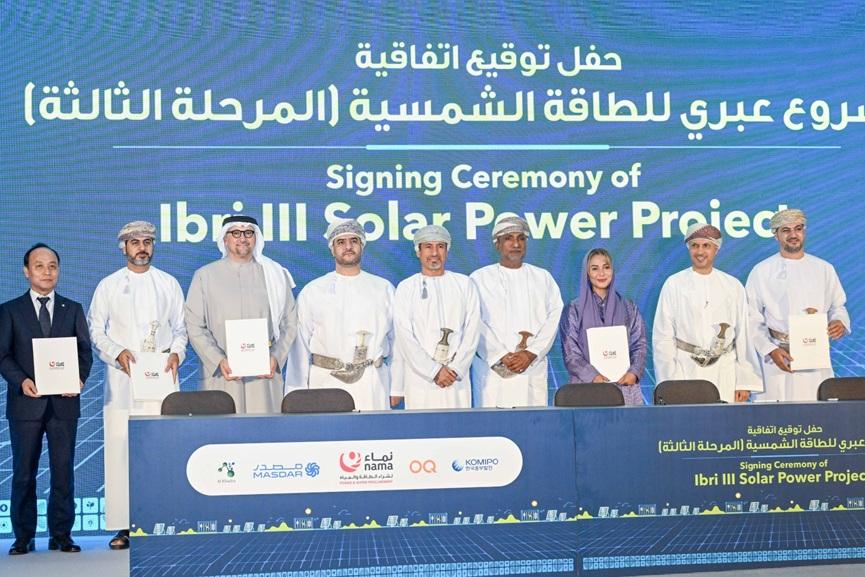
Oman’s recent commitment to the Ibri III Solar Independent Power Project, marked by a substantial $299 million investment, signals a profound strategic pivot by an established hydrocarbon producer. This landmark agreement, spearheaded by Nama Power and Water Procurement (PWP) and a consortium led by Masdar, is not merely another renewable energy development; it represents a significant re-allocation of capital and a clear message about the future of energy in the Middle East. For oil and gas investors, this move underscores the accelerating energy transition and the evolving investment landscape, demanding a nuanced understanding of both traditional market dynamics and emerging opportunities.
Oman’s Strategic Diversification Amidst Market Volatility
The Ibri III project, featuring a 500-megawatt (MW) photovoltaic plant coupled with a 100-megawatt-hour (MWh) battery energy storage system (BESS), is Oman’s first utility-scale solar and storage facility. This initiative aligns directly with the Sultanate’s stated goals of energy diversification, enhanced security, and greater economic competitiveness. Investing nearly $300 million into renewable infrastructure firmly positions Oman as a proactive participant in the global clean energy transition, rather than solely a beneficiary of hydrocarbon revenues. This strategic foresight is particularly pertinent when considering the recent volatility in crude markets. Over the last fortnight, Brent crude has shed over 12% of its value, dropping from $112.57 on March 27th to $98.57 on April 16th. Such significant price swings highlight the inherent revenue vulnerability for oil-dependent economies, making strategic investments in stable, diversified energy sources like solar power an increasingly attractive proposition for long-term economic resilience.
Traditional Energy Giants Leading the Charge into Renewables
The consortium behind Ibri III offers a telling glimpse into the future of energy leadership. Masdar, a global clean energy leader and an entity of Abu Dhabi Future Energy Company, spearheads the project. Crucially, the consortium also includes OQ Alternative Energy (OQAE), a subsidiary of Oman’s state-owned OQ Group. This involvement of national oil companies (NOCs) and state-backed energy giants in major renewable projects demonstrates a fundamental shift in their core mandates. These entities, historically synonymous with oil and gas extraction, are now actively driving the energy transition from within. For investors, this signifies that significant capital and expertise from the traditional energy sector are increasingly flowing into clean energy infrastructure. It suggests that future growth in the broader energy market will increasingly involve these established players expanding their portfolios beyond fossil fuels, creating new avenues for investment in hybrid energy models and integrated power solutions.
Navigating Short-Term Market Dynamics and Upcoming Catalysts
While long-term strategic shifts like Oman’s Ibri III project are pivotal, investors must simultaneously contend with immediate market realities. As of today, Brent crude trades at $98.14, marking a 1.26% decline, with an intraday range of $97.92-$98.67. WTI crude also saw a dip, trading at $89.55, down 1.78%. This ongoing volatility keeps investor focus sharply on supply-demand fundamentals. Many of our readers are keenly asking about OPEC+ current production quotas, highlighting the critical role these decisions play in short-term price movements. Investors are keenly watching the upcoming OPEC+ Joint Ministerial Monitoring Committee (JMMC) meeting on April 17th, followed by the full Ministerial meeting on April 18th. The outcomes of these gatherings will directly influence global supply strategies and crude prices. Furthermore, the API Weekly Crude Inventory reports on April 21st and 28th, alongside the EIA Weekly Petroleum Status Reports on April 22nd and 29th, will provide crucial insights into immediate inventory levels and demand trends. These short-term indicators remain vital for portfolio management, even as the long-term energy transition accelerates, exemplified by Oman’s solar ambitions.
Investor Insights: The Dual Mandate and Capital Allocation
The current landscape presents a dual mandate for energy investors: understanding the persistent influence of traditional oil and gas markets while recognizing the rapid ascent of renewable energy. Our reader intent data reveals a strong interest not only in the current Brent crude price but also in how data sources power market responses, indicating a desire for deep, integrated insights into the energy complex. The Ibri III project provides a tangible example of an oil-producing nation actively balancing its hydrocarbon legacy with a forward-looking renewable strategy. This suggests that capital allocation strategies must evolve. Investors should consider opportunities in companies like Masdar and its partners, who are actively building the renewable infrastructure of tomorrow, often with state-backing. Simultaneously, traditional oil and gas companies that are demonstrably investing in diversification and emissions reduction, like Oman’s OQAE, may present more resilient long-term value. The overarching message from Oman’s $299 million solar deal is clear: the energy transition is not just a western phenomenon; it’s a global imperative being embraced by core oil producers, fundamentally reshaping the investment thesis for the entire energy sector.


