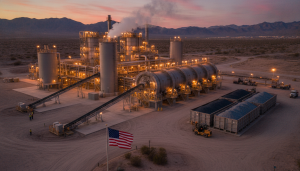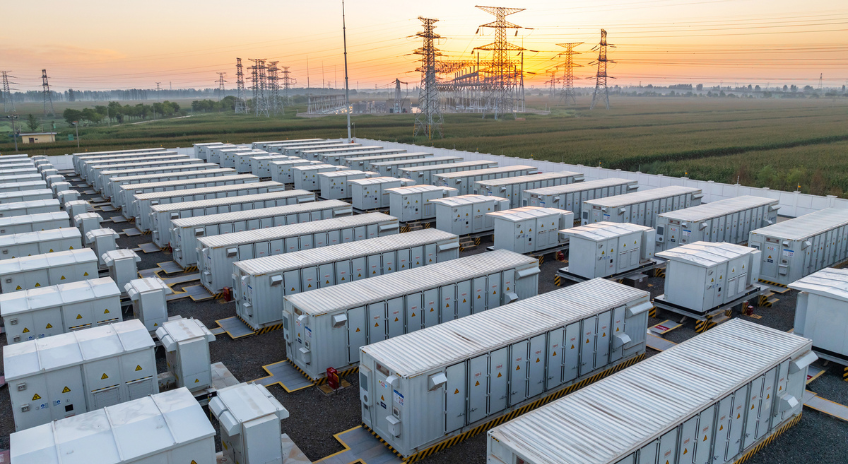
The energy investment landscape continues its dynamic evolution, and a recent development from OCI Energy underscores a significant pivot towards grid-scale battery energy storage systems (BESS). The successful finalization of construction financing for Project Alamo City, a substantial 120 MW / 4-hour duration BESS in Bexar County, Texas, is more than just a project update; it’s a bellwether for how sophisticated capital is increasingly being deployed in the broader energy sector. For oil and gas investors, this move by OCI Energy, backed by a robust financial package from ING and a long-term agreement with CPS Energy, signals a growing opportunity in infrastructure-backed, de-risked assets that offer stability amidst commodity price fluctuations.
The Strategic Imperative of Battery Storage in Texas
Project Alamo City represents a critical step in fortifying Texas’s energy infrastructure. With a planned capacity of 120 MW and a 4-hour duration, this standalone battery storage installation is poised to significantly enhance grid reliability within the ERCOT market. The Texas grid, known for its unique challenges including extreme weather events and the integration of substantial renewable generation, demands robust solutions for energy dispatch and stability. OCI Energy’s commitment as a developer-owner-operator, coupled with the 20-year Storage Capacity Agreement with CPS Energy – the nation’s largest municipally-owned utility – provides a strong foundation. This long-term contract ensures predictable revenue streams, a highly attractive feature for investors typically accustomed to the volatility of upstream oil and gas projects. The selection of LG Energy Solution Vertech for advanced battery technology and Elgin Power Solutions as EPC contractor further de-risks the project, bringing proven expertise to the fore.
Navigating Volatility: Diversification Beyond the Barrel
For investors primarily focused on traditional oil and gas, the funding of Project Alamo City offers a compelling case for portfolio diversification. As of today, Brent crude trades at $98.14, reflecting a -1.26% dip, and notably, it has seen a substantial 12.4% decline over the past two weeks from $112.57. WTI crude similarly sits at $89.55, down -1.78% today. This recent volatility in crude markets, following a more pronounced multi-week downturn, highlights the inherent commodity price risk associated with upstream investments. Our readers, frequently querying current Brent prices and OPEC+ quotas, are keenly aware of these market dynamics. In contrast, BESS projects like Alamo City offer an asset class less directly exposed to the daily swings of crude benchmarks or gasoline prices, which currently stand at $3.07. Instead, their value is tied to long-term capacity agreements and the critical service they provide to the grid, presenting a different risk-reward profile focused on infrastructure-like returns rather than commodity speculation.
Project Financing as a Blueprint for Energy Transition Capital
The financing structure orchestrated by ING for Project Alamo City is particularly noteworthy for its blend of traditional and green finance mechanisms. The package includes a construction-to-term loan, a tax equity bridge loan, and letters of credit, with ING serving as sole coordinating lead arranger, bookrunner, and crucially, sole green loan coordinator. This multi-faceted approach demonstrates the increasing sophistication in funding large-scale energy transition projects. The “green loan” designation is significant, as it taps into a growing pool of capital specifically earmarked for sustainable investments, often at more favorable terms. This successful close, with an expected commercial operation in Q3 2027, provides a clear blueprint for how developers can attract capital for utility-scale storage, ensuring these projects move from concept to reality. While the immediate focus for many investors remains on upcoming events like the OPEC+ Joint Ministerial Monitoring Committee (JMMC) meeting on April 17th and the full Ministerial meeting on April 18th, which could significantly influence short-term crude trajectories, smart capital is also looking at these long-term infrastructure plays. These BESS projects offer a different kind of market predictability, less tied to the immediate outcomes of API or EIA weekly reports, and more to contracted capacity and grid stability, providing a valuable counterpoint to the traditional energy sector’s event-driven volatility.
Investor Takeaways: De-risked Returns in Critical Infrastructure
For investment analysts and portfolio managers, Project Alamo City’s successful funding should be viewed as a strong indicator of maturing opportunities in the energy transition. The combination of a substantial project (120 MW / 4-hour), a long-term contract with a major utility (CPS Energy), and a robust financing structure from a leading institution like ING, signifies a de-risked investment profile. This project is not merely an environmental initiative; it is a critical piece of infrastructure designed to deliver essential grid services. As the broader energy sector continues to evolve, with an ongoing need for reliable power and solutions to integrate intermittent renewables, investments in BESS projects offer attractive, long-duration cash flows. While the Baker Hughes Rig Count reports on April 24th and May 1st will continue to inform drilling activity in the upstream sector, the strategic deployment of capital into projects like Alamo City highlights a parallel, increasingly robust investment pathway focused on the stability and security of the energy grid itself. This diversification into essential energy infrastructure provides a hedge against the cyclical nature of commodity markets, offering a compelling long-term value proposition for discerning investors.