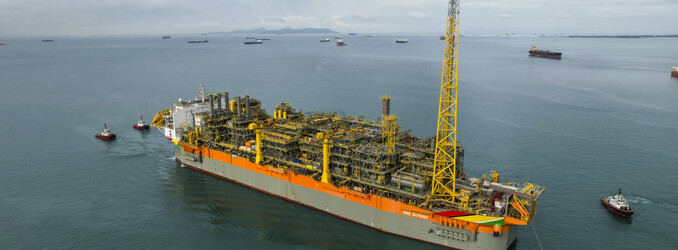
ExxonMobil’s latest Final Investment Decision (FID) for the Hammerhead development offshore Guyana marks another significant stride in unlocking the prolific Stabroek block’s vast potential. This $6.8 billion project, the seventh sanctioned on the block, promises to add another 150,000 barrels of oil per day (bopd) to Guyana’s burgeoning output starting in 2029. Such commitments underscore the long-term strategic vision of major players like ExxonMobil, even as the global energy market navigates near-term volatility. For astute oil and gas investors, Hammerhead represents a critical piece in ExxonMobil’s growth puzzle and a testament to Guyana’s ascendance as a global energy powerhouse. This analysis will delve into the project’s implications for ExxonMobil, the broader market, and what investors should be tracking.
Guyana’s Unstoppable Ascent Amidst Market Volatility
The Hammerhead project, featuring a new Floating Production, Storage, and Offloading (FPSO) vessel and 18 wells, will elevate the total installed capacity on the Stabroek block to an impressive 1.5 million bopd once all sanctioned projects are online. This massive expansion is particularly noteworthy given the current market dynamics. As of today, Brent crude trades at $93.93, reflecting a 1.62% dip, with WTI crude similarly down 1.9% at $85.76. This short-term bearish sentiment follows a notable trend, with Brent having shed nearly 20% over the past two weeks, dropping from $118.35 on March 31st to $94.86 by April 20th. This significant price correction could lead some to question the timing of such large-scale FIDs.
However, ExxonMobil’s commitment to Hammerhead, a project slated for first oil in 2029, demonstrates a strategic focus that transcends immediate price fluctuations. Guyana’s offshore developments are characterized by low breakeven costs and high-quality crude, making them exceptionally resilient to price downturns. For investors seeking durable returns, these projects offer a long-term hedge against the inherent volatility of the commodities market. The sustained investment in Guyana solidifies its position as one of the fastest-growing offshore oil producers globally, a narrative that remains compelling despite the daily swings in headline crude prices.
ExxonMobil’s De-Risked Growth Strategy and Investor Confidence
The Hammerhead FID is more than just another project; it’s a clear signal from ExxonMobil regarding its long-term growth trajectory and capital allocation strategy. Many investors are currently grappling with fundamental questions, such as “Is WTI going up or down?” in the near term, and more broadly, “What do you predict the price of oil per barrel will be by end of 2026?” ExxonMobil’s actions in Guyana offer a powerful answer: by investing in high-return, low-cost resources, the company aims to deliver consistent value regardless of short-term price debates.
With over $60 billion committed across seven sanctioned projects on the Stabroek block, ExxonMobil is building a robust, resilient production base. The company and its partners are already producing around 650,000 bopd, with the recent startup of the ONE GUYANA FPSO expected to push output above 900,000 bopd by year-end. This consistent ramp-up, alongside the substantial $7.8 billion already contributed to Guyana’s Natural Resource Fund since 2019, demonstrates a successful model of shared prosperity and operational efficiency. For investors, this translates into predictable future cash flows and a de-risked asset base, mitigating concerns about future oil price volatility by locking in attractive economics today.
Navigating Near-Term Signals: Upcoming Events and Future Supply Dynamics
While Hammerhead’s 2029 production start seems distant, the project’s sanctioning provides a clear long-term supply outlook. Closer on the horizon are the Uaru project (expected in 2026) and Whiptail (2027), which will continue to drive ExxonMobil’s production growth in Guyana. These sequential developments ensure a steady pipeline of new output coming online, contributing to the overall 1.5 million bopd capacity. This sustained growth from a single, highly prospective basin is a significant differentiator for ExxonMobil in the global upstream landscape.
However, investors must also remain attuned to the near-term catalysts that shape market sentiment. The upcoming energy calendar is packed with events that could influence price direction and investment decisions. For instance, the OPEC+ Joint Ministerial Monitoring Committee (JMMC) Meeting, scheduled for April 21st, will offer crucial insights into potential supply adjustments. Following that, the EIA Weekly Petroleum Status Reports on April 22nd and April 29th, alongside the API Weekly Crude Inventory reports on April 28th and May 5th, will provide critical data on U.S. crude and product inventories. The Baker Hughes Rig Count on April 24th and May 1st will signal drilling activity trends, while the EIA Short-Term Energy Outlook on May 2nd will offer a fresh perspective on demand and supply forecasts. These immediate signals will invariably color the market’s perception, even as companies like ExxonMobil execute on ambitious long-term plans in Guyana.
The Partnership Advantage and Guyana’s Broader Economic Impact
ExxonMobil’s strategy in Guyana is also bolstered by robust partnerships, sharing the Stabroek block with Hess Guyana Exploration (30%) and CNOOC Petroleum Guyana (25%). This collaborative model not only de-risks capital expenditure but also pools expertise, accelerating development and maximizing operational efficiency. For investors, the strength of this consortium provides an added layer of confidence in the execution and long-term viability of these multi-billion-dollar projects.
Beyond the direct financial returns, Hammerhead and its predecessors are profoundly impacting Guyana’s economic landscape. ExxonMobil highlights sustained investment, local workforce expansion, and increased supplier opportunities as the basin matures. This commitment to local content and economic development fosters a stable operating environment, which is a key consideration for long-term investors. A thriving local industry and a committed host government reduce geopolitical risks and ensure the longevity of these mega-projects. As Guyana continues its transformation, the strategic value of its partnerships and the broader economic benefits will only grow, cementing its appeal as a premier investment destination in the global energy sector.