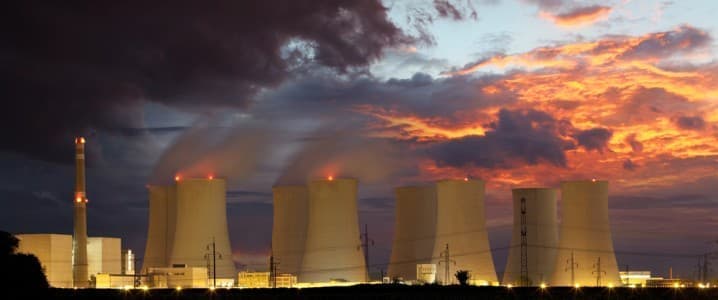
The global energy landscape is constantly shifting, but recent intelligence suggests a significant disruption brewing in the nuclear power sector. After a robust 2024, global nuclear generation is now projected to decline due to a confluence of factors: insufficient investment, an aging fleet of power plants, and fierce competition from rapidly expanding renewable technologies. This anticipated slowdown in a crucial baseload energy source presents a compelling, albeit complex, bullish signal for traditional fossil fuels, particularly oil and natural gas, as the world scrambles to bridge potential supply gaps in the coming years.
The Looming Nuclear Investment Deficit
The ambition to maintain 2024’s nuclear generation momentum is significant, requiring the construction of 44 new nuclear power plants over the next five years, in addition to already announced projects. However, the likelihood of achieving this scale of expansion appears increasingly questionable. A detailed assessment reveals a critical investment deficit, not just in new construction but also in the essential maintenance of existing infrastructure. Compounding these challenges are persistent cost overruns inherent to large-scale nuclear projects, making them less attractive compared to their agile renewable counterparts.
Indeed, the investment disparity is stark. Last year, capital deployed into wind, solar, and battery technologies was an astonishing 21 times higher than investments in new nuclear capacity. This translated into capacity additions for renewables that were 100 times greater than net nuclear additions. While renewables offer a compelling economic proposition, their inherent intermittency and the need for significant storage solutions (which remain costly despite falling prices) mean they cannot yet fully replace the dispatchable, round-the-clock power supplied by nuclear or fossil fuel plants. This fundamental gap in reliable baseload power generation is precisely where oil and natural gas stand to benefit as nuclear capacity wanes.
Current Market Response Amidst Energy Transition Headwinds
The implications of a nuclear slowdown arrive at a time when crude markets are exhibiting sensitivity to broader supply-demand narratives. As of today, Brent crude trades at $98.22 per barrel, reflecting a slight dip of 1.18%, with its daily range oscillating between $97.92 and $98.67. Similarly, WTI crude is priced at $89.69, down 1.62%, trading within a $89.5 to $90.26 range. This recent price action follows a notable downtrend for Brent, which has shed $14, or 12.4%, from its peak of $112.57 on March 27th to $98.57 just yesterday. The gasoline market also remains under pressure, with prices at $3.08, down 0.32%.
This period of price volatility underscores the market’s continuous search for equilibrium. Against this backdrop, the prospect of a diminishing nuclear contribution to the global energy mix introduces a powerful new variable into the supply-demand equation for traditional fuels. While current market movements may reflect immediate sentiment around supply, the long-term structural changes implied by nuclear’s struggles suggest a sustained floor, and potential upside, for crude prices as alternative baseload power sources become even more critical.
Investor Focus: Bridging the Energy Reliability Gap
Our proprietary investor intent data highlights a consistent focus among market participants on the foundational elements driving energy prices. Queries around “What are OPEC+ current production quotas?” and “What is the current Brent crude price?” frequently top the list, signaling a deep engagement with supply-side fundamentals and real-time market valuations. This focus is acutely relevant in light of the nuclear sector’s challenges. Investors understand that reliable, dispatchable power is non-negotiable for economic stability and growth.
The current energy transition narrative often emphasizes the rapid growth of renewables. However, the World Nuclear Industry Status Report’s findings underscore the reality that while renewables are growing, they do not yet fully address the need for continuous power. This “reliability gap” is where investors see the enduring value of oil and natural gas. As nuclear power faces hurdles in investment and new construction, and renewables continue to mature, conventional fuels are positioned to fill the void, providing the consistent energy supply that grids and industries demand. This makes understanding global energy mix shifts, like the nuclear slowdown, paramount for informed oil and gas investment decisions.
Forward-Looking Analysis: Impact on Upcoming Energy Events
The anticipated nuclear slowdown injects a new layer of urgency and scrutiny into upcoming energy market events. The imminent OPEC+ Joint Ministerial Monitoring Committee (JMMC) meeting on April 17th, followed by the Full Ministerial Meeting on April 18th, will be critical. Against the backdrop of a potential nuclear deficit, OPEC+’s production policy decisions could have an amplified impact on global crude prices. Any indication of tighter supply, or even maintaining current quotas, could trigger significant upward price pressure as the market re-evaluates future demand projections.
Beyond OPEC+, the weekly rhythm of inventory and supply data will gain even greater significance. The API Weekly Crude Inventory reports on April 21st and 28th, alongside the EIA Weekly Petroleum Status Reports on April 22nd and 29th, will offer crucial insights into immediate supply-demand balances. Should these reports indicate tighter inventories, particularly with the nuclear generation outlook in mind, it could reinforce the bullish sentiment for oil. Furthermore, the Baker Hughes Rig Count on April 24th and May 1st will provide a snapshot of North American drilling activity. A subdued rig count, coupled with the global nuclear challenges, would suggest a slower response to potential demand increases, further supporting the long-term investment case for oil and gas.


