Sweden’s Nuclear Renaissance: A Long-Term Shift for Energy Investors
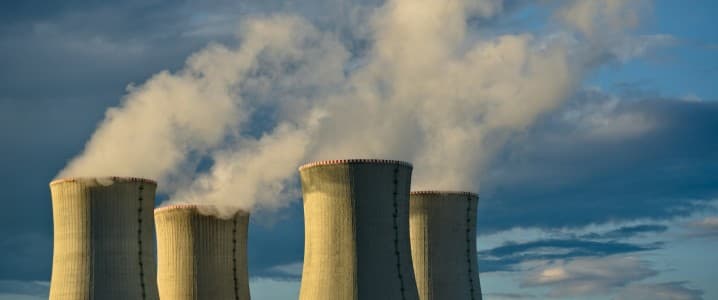
Sweden’s recent commitment to a massive $23.4 billion loan framework for new nuclear reactor construction signals a profound shift in European energy policy and presents a long-term demand risk that oil and gas investors cannot ignore. The Scandinavian nation, once a proponent of phasing out nuclear power, is now aggressively pursuing a “100% fossil-free” electricity target, planning for two new reactors by 2035 and an ambitious ten by 2045. This strategic pivot, driven by energy security concerns and climate goals, underscores a growing trend across Europe to diversify away from fossil fuels, particularly in the power generation sector, where natural gas has traditionally played a significant role. The focus on Small Modular Reactors (SMRs), with state-owned Vattenfall already shortlisting suppliers like GE Vernova and Rolls-Royce SMR, highlights a practical and scalable approach to achieving 2.5 gigawatts of new nuclear capacity, setting a precedent that other nations could follow and incrementally eroding future fossil fuel demand.
Immediate Market Volatility Amidst Structural Shifts
While Sweden lays the groundwork for decades of nuclear power, the immediate oil and gas market presents its own set of challenges, demanding agile investor strategies. As of today, Brent Crude trades at $90.38 per barrel, a significant 9.07% decline from its opening, while WTI Crude is at $82.59, down 9.41%. This sharp daily downturn follows a broader bearish trend, with Brent having fallen by $20.91, or 18.5%, over the past 14 days from $112.78 to $91.87. Gasoline prices have also seen a corresponding drop, currently at $2.93 per gallon, down 5.18%. This current market snapshot of falling prices reflects a complex interplay of factors, including macroeconomic concerns, demand uncertainties, and geopolitical developments. For oil and gas investors, this volatility underscores the dual challenge of navigating short-term price swings while simultaneously factoring in the long-term structural demand erosion driven by initiatives like Sweden’s substantial investment in nuclear energy. The market is clearly repricing risk, and the long-term impact of alternative energy sources, though not an immediate price driver, adds to the underlying bearish sentiment for future demand trajectories.
Investor Focus: Balancing Short-Term Price Action and Future Demand Erosion
Our proprietary reader intent data reveals a clear focus among OilMarketCap.com investors on both immediate price movements and forward-looking projections. Questions such as “what do you predict the price of oil per barrel will be by end of 2026?” and inquiries about specific company performance like “How well do you think Repsol will end in April 2026?” highlight the urgent need for clarity on near-term market direction. This immediate focus on price and equity performance exists against a backdrop of increasing structural shifts in the energy landscape. While the daily fluctuations of crude prices grab headlines, Sweden’s $23.4 billion bet on nuclear power serves as a concrete example of how governments are actively working to displace fossil fuels from their energy mix. Investors must therefore contend with a market where short-term supply-demand imbalances dictate daily movements, but long-term governmental and technological shifts, like the widespread adoption of SMRs for 24/7 fossil-free power, are systematically chipping away at future demand for oil and, particularly, natural gas. The challenge is to identify opportunities in a sector facing both cyclical volatility and secular transformation.
Upcoming Events: OPEC+ Decisions and Supply-Side Dynamics
The immediate outlook for oil and gas prices will be heavily influenced by critical upcoming events, providing investors with key signals for short-term positioning. The market’s attention is squarely on the OPEC+ Joint Ministerial Monitoring Committee (JMMC) meeting scheduled for April 18th, followed by the full OPEC+ Ministerial Meeting on April 19th. These gatherings are crucial as our readers are actively asking about “OPEC+ current production quotas,” indicating a strong investor interest in how the cartel plans to manage supply amidst current market volatility and weakening prices. Any decisions regarding production levels will have an immediate impact on crude benchmarks, potentially countering or exacerbating the recent downward trend. Beyond OPEC+, weekly data releases such as the API Crude Inventory on April 21st and 28th, and the EIA Weekly Petroleum Status Report on April 22nd and 29th, will provide crucial insights into U.S. supply and demand fundamentals. Similarly, the Baker Hughes Rig Count on April 24th and May 1st will offer a snapshot of drilling activity. While these events dictate the near-term supply narrative, investors must concurrently evaluate how long-term demand erosion from projects like Sweden’s nuclear expansion will increasingly impact the effectiveness and necessity of such supply-side interventions in the years to come.


