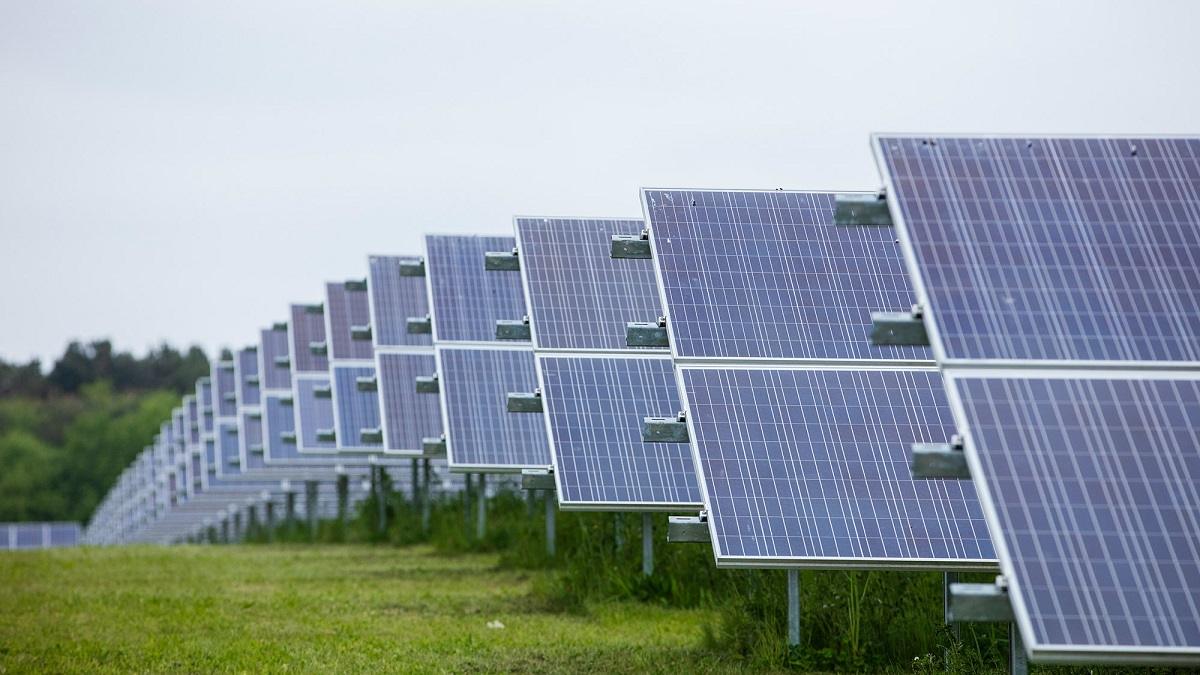
A significant development in the energy investment landscape has emerged with the launch of a new Credit and Capital Solutions strategy, anchored by a substantial $1.3 billion investment program. This initiative, spearheaded by a global asset manager focused on decarbonization, signals a robust commitment from institutional capital towards the energy transition. Targeting critical sectors such as electrification, efficiency, manufacturing, and resilience across the U.S., Canada, and Europe, this fund is poised to provide flexible financing solutions, including structured credit, preferred equity, and opportunistic capital. For astute oil and gas investors, this move underscores the accelerating shift in capital allocation, presenting both new opportunities and a potential re-evaluation of traditional energy portfolios.
The Shifting Capital Landscape: Bridging the Energy Transition Gap
The $1.3 billion anchor program represents a powerful vote of confidence in the burgeoning energy transition value chain. This strategy targets a wide spectrum of projects, from large-scale utility renewables and storage infrastructure to fleet electrification, advanced materials manufacturing, and critical energy efficiency upgrades. The leadership team behind this endeavor brings decades of high-level experience from institutions like Goldman Sachs, the U.S. Department of Energy, GE Energy Financial Services, and Riverstone. This deep bench of expertise in both traditional finance and energy policy positions the fund to navigate complex and often underserved segments of the energy ecosystem, promising what its leaders describe as “compelling risk-adjusted returns.” The emphasis on “what’s getting built on the ground” highlights a pragmatic approach, focusing on tangible assets and projects that drive real-world decarbonization.
Navigating Volatility: A Contrast to Traditional Hydrocarbon Markets
This substantial capital injection into the energy transition arrives amidst a period of notable volatility in traditional hydrocarbon markets. As of today, Brent crude trades at $90.38 per barrel, reflecting a significant -9.07% drop within the day’s range of $86.08-$98.97. Similarly, WTI crude stands at $82.59, down -9.41% over the same period, with an intraday range of $78.97-$90.34. This sharp daily decline follows a broader trend, with Brent having fallen from $112.78 on March 30th to $91.87 just yesterday, a notable -18.5% erosion over a fortnight. Gasoline prices have also seen a dip, currently at $2.93, down -5.18% today. This stark contrast between the long-term, structural growth sought by energy transition funds and the often-turbulent short-term dynamics of oil markets prompts a re-evaluation for investors. While traditional oil and gas can offer high-beta exposure, the increasing institutional appetite for private credit in decarbonization suggests a search for more stable, predictable returns, even amid acknowledged policy uncertainties.
Forward Outlook: Key Events Shaping Energy Investment Decisions
The immediate future holds several pivotal events that will undoubtedly influence both traditional oil and gas markets and, by extension, the broader energy investment landscape. The upcoming OPEC+ Joint Ministerial Monitoring Committee (JMMC) meeting on April 18th, followed by the Full Ministerial meeting on April 19th, will be critical. Investors are keenly awaiting signals regarding production quotas, which directly impact global supply and price stability. Further market insights will arrive with the API and EIA weekly inventory reports on April 21st/22nd and April 28th/29th, alongside the Baker Hughes Rig Count on April 24th and May 1st. These reports provide crucial data on U.S. supply, demand, and drilling activity, shaping short-term trading strategies. While these events create inherent volatility and trading opportunities in traditional oil and gas, the long-term strategic investments in energy transition, such as the $1.3 billion credit fund, offer a distinct proposition: a focus on foundational infrastructure and technological advancements less susceptible to weekly commodity price swings or geopolitical shifts.
Investor Appetite: Seeking Stability and Growth in Decarbonization
Our proprietary reader intent data reveals a strong undercurrent of investor interest in future energy market direction and stability. Many of our readers are actively seeking predictions for the price of crude per barrel by the end of 2026, highlighting a desire for long-term outlooks amidst current market fluctuations. There is also significant interest in OPEC+ current production quotas and the performance trajectories of major integrated oil companies, with specific queries about entities like Repsol’s potential performance in April 2026. This indicates that while traditional oil and gas remain central to many portfolios, investors are actively looking for clarity and strategic positioning. The launch of a substantial credit fund specifically for energy transition resonates with this evolving investor mindset. It provides an avenue for diversification, offering exposure to the energy sector’s structural growth without direct, unhedged commodity price risk. The focus on structured credit and preferred equity means investors can target attractive yields and potentially more stable cash flows, appealing to those looking to balance high-beta upstream plays with less volatile, yet still growth-oriented, opportunities within the energy complex. This trend aligns with broader institutional sentiment, where private credit is increasingly favored for its perceived risk-adjusted returns in a complex economic environment.


