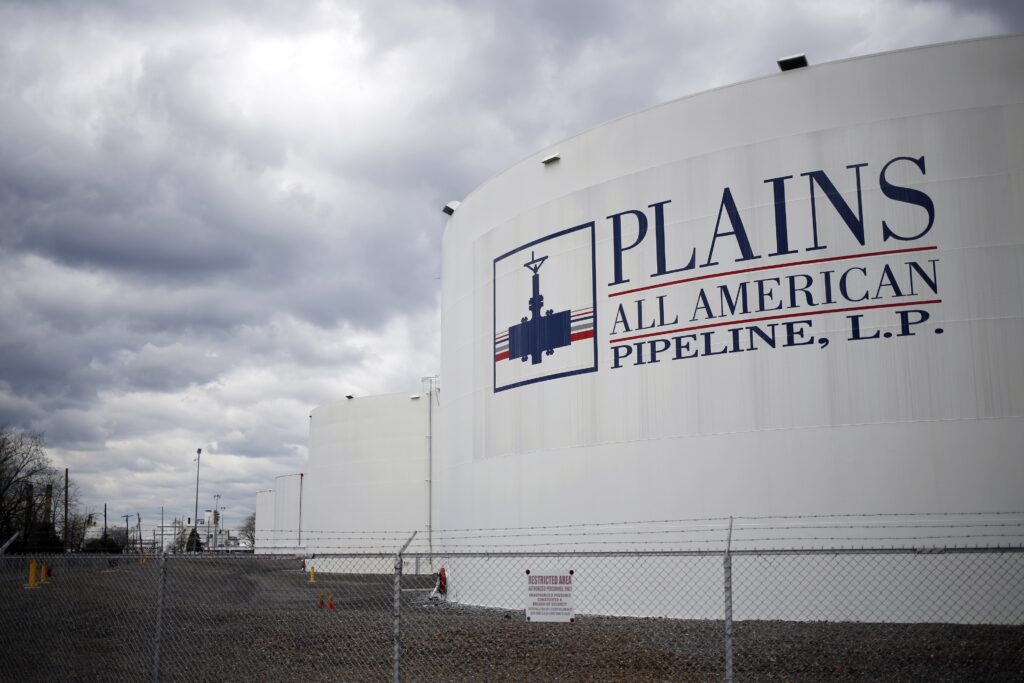
The intricate network of pipelines moving crude oil from the prolific Permian Basin to Gulf Coast export hubs is the lifeblood of U.S. energy markets. Any disruption within this critical midstream infrastructure sends immediate ripples through the supply chain, impacting producers, refiners, and ultimately, global crude prices. A new operational challenge has emerged for Plains All American, a key player in this logistical dance, as its pipelines linking the Permian to Corpus Christi are reportedly grappling with significant crude oil quality issues. Specifically, elevated levels of mercaptans, naturally-occurring sulfur compounds, are threatening to complicate flows and introduce new costs, raising pertinent questions for investors monitoring the efficiency and reliability of U.S. crude oil supply.
Permian Quality Concerns Drive New Costs for Plains All American
The core of the current issue revolves around unacceptable concentrations of mercaptans within crude streams traversing Plains All American’s pipelines from the Permian Basin to the vital Corpus Christi export hub. These sulfur compounds are problematic for refiners as they can corrode equipment and require additional processing to meet fuel specifications. In response to this deteriorating quality, Plains is set to implement a half-dollar per barrel fee starting October 1st for any crude that fails to meet stringent mercaptan specifications on certain Gulf Coast pipelines. This directly impacts shippers utilizing Plains’ network and introduces a new variable cost into the Permian-to-coast logistics equation. Plains All American holds interests in a vast pipeline network capable of moving approximately 2.1 million barrels per day (bpd) of crude oil out of the Permian Basin, not only to Corpus Christi but also to the Cushing, Oklahoma storage hub. The scale of this operation underscores the potential financial implications of a widespread quality control problem and the significant effort required to identify and mitigate the contamination source.
Market Response and Investor Outlook Amidst Price Volatility
This operational snag emerges at a time when the broader crude oil market is experiencing notable volatility. As of today, Brent crude trades at $98.38 per barrel, reflecting a 1.02% decline within the day’s range of $97.92 to $98.67. Similarly, WTI crude has seen a decrease of 1.23% to $90.05 per barrel, with its daily range spanning $89.57 to $90.26. Gasoline prices also reflect a slight dip, currently at $3.08, down 0.32%. Looking at the past two weeks, Brent crude has experienced a more substantial retreat, dropping from $112.57 on March 27th to $98.57 on April 16th – a significant 12.4% correction. Against this backdrop of broader market softening, any localized supply quality issue, even if initially confined, adds a layer of uncertainty. For investors, the immediate concern is how this might impact differentials for Midland crude and the profitability of refiners reliant on these specific pipeline flows. The potential for disruptions, even small ones, can be amplified in a market already sensitive to supply-demand shifts and geopolitical events, making careful monitoring of these quality issues crucial.
Forward-Looking Analysis: Operational Glitches and Upcoming Market Signals
The mercaptan issue on Plains’ Permian pipelines presents a new operational challenge for the U.S. crude supply chain, and its resolution timeline remains unclear. This uncertainty will undoubtedly be a background factor as market participants look to a series of critical upcoming events. For instance, the Baker Hughes Rig Count, scheduled for April 17th and April 24th, will offer insights into upstream activity, but even robust drilling won’t alleviate quality problems if midstream infrastructure is compromised. More significantly, the OPEC+ Joint Ministerial Monitoring Committee (JMMC) meeting on April 18th, followed by the full Ministerial Meeting on April 20th, will command global attention. While these meetings primarily focus on production quotas and overall supply strategy, any significant, unmitigated disruption in a major non-OPEC producing region like the Permian could indirectly influence their market assessments or reinforce a cautious approach to supply increases. Furthermore, the weekly API and EIA crude inventory reports on April 21st/22nd and April 28th/29th will be scrutinized for any signs that these quality issues are leading to inventory builds at the source or draws at the destination as refiners seek alternative barrels. Investors should watch these reports closely for initial indicators of market dislocation.
Addressing Investor Concerns: Supply Reliability and Strategic Shifts
Our proprietary reader intent data consistently highlights investor interest in fundamental market drivers, with frequent inquiries about OPEC+ current production quotas and the real-time Brent crude price. These questions underscore a primary concern: the reliability of global crude supply and its impact on pricing. The situation with Plains All American’s Permian pipelines directly touches upon this by introducing an element of unreliability into a crucial regional supply stream. Gulf Coast refiners, particularly those in the Corpus Christi region which exports over 2 million bpd of crude, may be forced to seek alternative sources for Midland crude or adjust their processing strategies. This could lead to a localized tightening of specific crude grades or a widening of crude differentials. For investors, the key questions now pivot to: How quickly can Plains identify and resolve the contamination? Will this issue force a re-evaluation of Permian crude quality perceptions? And what are the long-term implications for midstream investment and competition in the region? A prolonged issue could incentivize refiners to secure more diverse supply agreements or even accelerate investments in their own infrastructure to handle varying crude qualities, fundamentally reshaping regional crude flows and adding further complexity to the investment landscape.