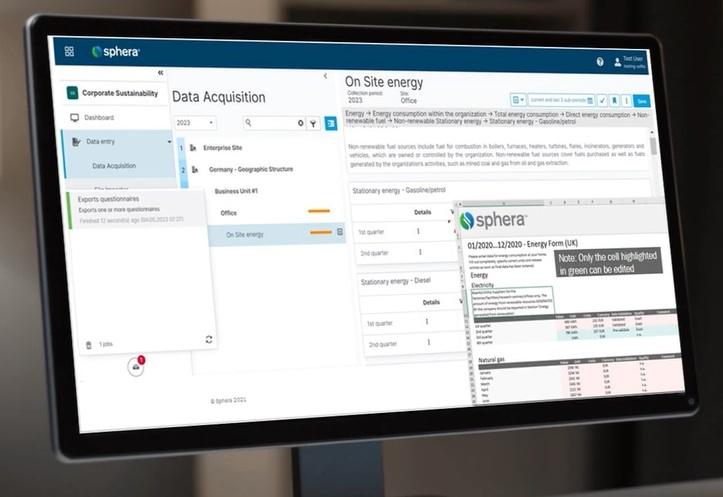
The energy investment landscape is undergoing a profound transformation, with smart capital increasingly flowing into technological solutions that underpin the sector’s future. A recent significant move highlights this shift: Neuberger Berman Capital Solutions has made a growth investment in Sphera, a leading sustainability and operational risk management software firm. This strategic backing, alongside existing majority owner Blackstone, signals a clear institutional conviction in the essential role of ESG data, life-cycle assessment, and supply chain transparency tools for modern enterprises.
Institutional Capital Doubles Down on ESG Software
The decision by Neuberger Berman to invest in Sphera, with Blackstone’s private equity funds maintaining their majority control, underscores a powerful trend: the monetization of sustainability. Sphera, founded in 2016 and acquired by Blackstone in 2021 for $1.4 billion, has established itself as a critical platform for integrating environmental, health, safety, and sustainability (EHS&S) into enterprise operations. With over 8,500 customers and one million users across 100 countries, Sphera’s growth reflects the escalating demand from corporations facing pressure from regulators, investors, and supply chain partners for verifiable risk and sustainability disclosures.
This investment is not merely about a software company; it’s about solidifying the infrastructure for the energy transition and broader industrial sustainability. Sphera’s offerings, spanning process safety management, product stewardship, and comprehensive supply chain transparency, provide the backbone for companies to navigate increasingly complex regulatory environments and meet stakeholder expectations. As Sphera CEO Paul Marushka notes, the capital injection will accelerate innovation and expand global reach, enabling organizations to drive sustainable performance amidst rising complexity. This move demonstrates how private capital is strategically positioning itself within scalable ESG infrastructure, recognizing that robust data quality and risk transparency are no longer optional but central to corporate governance and long-term value creation.
ESG Momentum Amidst Volulating Crude Markets
While institutional investors are pouring capital into ESG software, the traditional energy markets present a contrasting picture of volatility. As of today, Brent crude trades at $93.93, reflecting a 1.62% decline within a day range of $93.87 to $95.69. Similarly, WTI crude sits at $85.76, down 1.9% within its daily range of $85.5 to $86.78. This recent downward pressure is part of a broader trend; over the past two weeks, Brent has seen a significant depreciation, falling from $118.35 on March 31st to $94.86 yesterday, marking a nearly 20% drop. Gasoline prices have also seen a modest decline, currently at $3.01 per gallon, down 0.99%.
This divergence highlights a critical investment theme for oil and gas investors. While short-term commodity price movements continue to dominate daily headlines and trader sentiment – as evidenced by the sharp drop in crude prices – long-term, strategic capital is increasingly allocated to areas that offer durable growth irrespective of daily price swings. The Sphera investment underscores a belief that robust ESG management and operational risk mitigation are becoming non-negotiable components for energy companies to attract and retain capital, manage reputational risk, and optimize efficiency. It’s a testament to the idea that even in a volatile energy market, the underlying need for sophisticated tools to manage environmental and social impact remains a consistent growth driver.
What Investors are Asking: Beyond Price, Towards Value
Our proprietary reader intent data reveals a diverse set of concerns among investors this week. While some inquiries are direct, such as “nigga is wti going up or down” or “what do you predict the price of oil per barrel will be by end of 2026?”, these immediate price-driven questions exist alongside more sophisticated explorations into long-term value and operational efficiency. The investment in Sphera directly addresses the latter, demonstrating how smart capital is answering the implicit question of “How do energy companies build resilient value in a transforming market?”
For investors asking about the performance of specific players, such as “How well do you think Repsol will end in April 2026,” the context provided by Sphera’s growth becomes highly relevant. Companies like Repsol, operating in a global and increasingly scrutinized energy sector, rely heavily on precise ESG reporting, life-cycle assessments, and robust operational risk management to meet investor expectations and regulatory demands. Software platforms like Sphera provide the critical infrastructure for these companies to not only report effectively but to genuinely improve their sustainability performance, mitigate risks, and ultimately enhance long-term shareholder value. This move by Neuberger Berman and Blackstone indicates a belief that the future winners in energy will be those who master both operational excellence and verifiable sustainability.
Navigating the Future: Regulatory Pressures and Upcoming Catalysts
The strategic importance of platforms like Sphera will only intensify as regulatory landscapes evolve and market transparency demands grow. Investors must consider upcoming events that will shape the operational environment for energy companies. For instance, the OPEC+ JMMC Meeting scheduled for April 21st, 2026, will provide crucial insights into supply-side dynamics. Following this, the EIA Weekly Petroleum Status Reports on April 22nd and April 29th, 2026, along with the Baker Hughes Rig Count on April 24th and May 1st, 2026, will offer snapshots of U.S. production and inventory levels. These events directly impact commodity prices and production strategies.
However, beneath the surface of these traditional market catalysts, there’s a rising tide of environmental and social scrutiny. As companies adjust to production quotas or expand drilling operations, the need for transparent, verifiable reporting on their environmental footprint and safety protocols becomes paramount. The EIA Short-Term Energy Outlook on May 2nd, 2026, will further inform macro-level energy forecasts, against which companies must evaluate their long-term operational and sustainability commitments. This is where Sphera’s tools become indispensable, enabling companies to not just react to market shifts but to proactively manage their EHS&S performance and regulatory compliance, ensuring they remain attractive to an increasingly ESG-conscious investor base, regardless of short-term market fluctuations.


