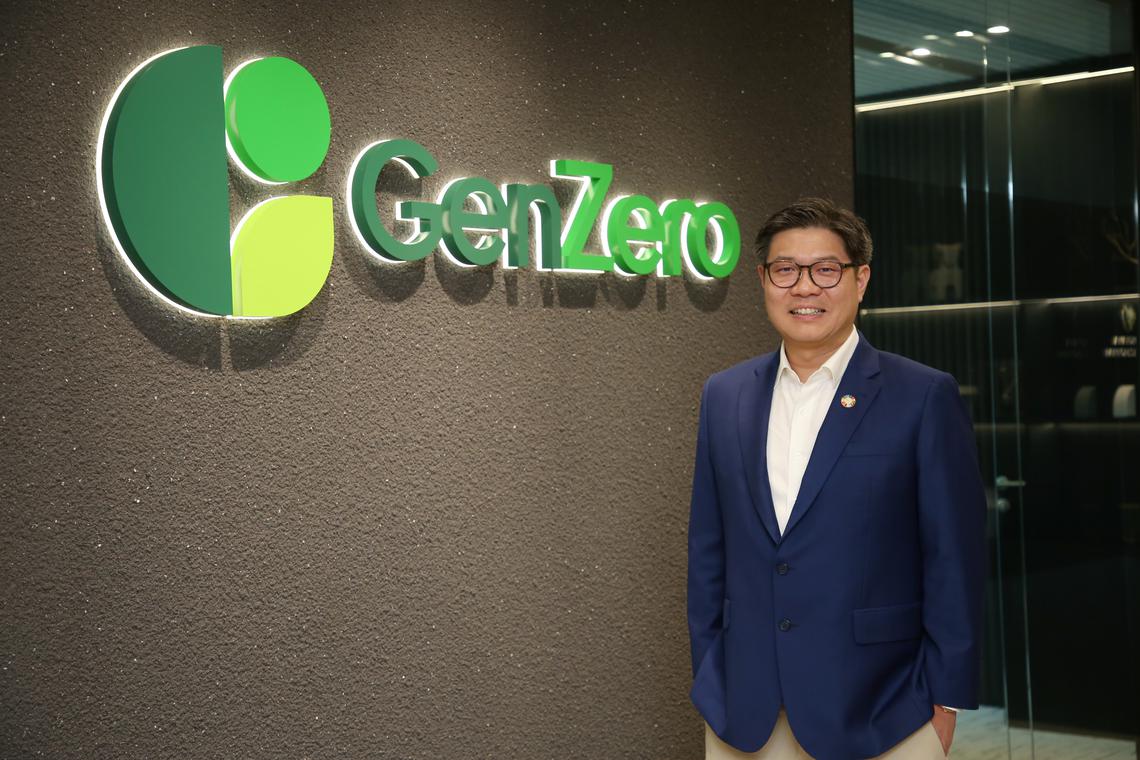
In a landscape often characterized by broad, long-term environmental pledges, the Temasek-owned investment platform, GenZero, has set a refreshingly specific and near-term climate impact target. The firm aims to achieve 7 million tonnes of carbon dioxide equivalent (MtCO₂e) in cumulative direct realised climate impact by March 2028, measured on a stake-adjusted basis. This commitment, outlined in its inaugural sustainability report, marks a significant move towards greater accountability in climate investing and offers a critical benchmark for stakeholders assessing the tangible progress of energy transition initiatives. For investors navigating the complex interplay between traditional fossil fuels and emerging green technologies, GenZero’s strategy provides a fascinating case study in how capital is being deployed to drive measurable emissions reductions within a defined timeframe.
GenZero’s Concrete Targets: A New Standard for Climate Accountability
GenZero’s declaration of a 7 MtCO₂e cumulative direct realised climate impact target by March 2028 stands out for its precision and relatively short-term horizon. This figure represents emissions reduced or removed directly by the solutions in which GenZero has invested, adjusted for its ownership stake. By end-2024, the platform had already delivered 3 MtCO₂e in direct realised impact, indicating a substantial acceleration will be required to meet its 2028 goal. This deliberate focus on verifiable, short-term outcomes contrasts sharply with the often-criticized distant aspirational goals prevalent across many sectors. Launched in June 2022, GenZero has quickly built a portfolio of 24 climate-focused ventures spanning 17 countries and five continents, categorized into nature-based solutions, technology-based solutions, and carbon ecosystem enablers. This strategic emphasis on measurable, near-term impact suggests a growing recognition within the investment community that transparency and rigor are paramount for building credibility in the climate finance space. Investors are increasingly demanding clear metrics that demonstrate genuine progress, moving beyond mere pledges to demand concrete results, and GenZero’s approach directly addresses this evolving expectation.
Navigating Volatility: Climate Investment Against the Oil Market Backdrop
While GenZero champions a forward-looking strategy focused on carbon reduction, the broader energy market continues its familiar dance with supply, demand, and geopolitical factors. As of today, Brent Crude trades at $98.23, reflecting a -1.17% dip within a day range of $97.92-$98.67. Similarly, WTI Crude stands at $89.93, down -1.36%, fluctuating between $89.57 and $90.26. Gasoline prices remain stable at $3.09. This snapshot follows a notable 14-day trend where Brent crude prices retreated significantly, dropping from $112.57 on March 27 to $98.57 on April 16, a substantial decline of $14 or 12.4%. This immediate market volatility underscores the ongoing challenges and opportunities for investors in the traditional oil and gas sector. The contrast between short-term commodity price fluctuations and the long-term, deliberate capital allocation towards climate solutions is stark. Savvy investors must weigh the immediate profit potential and risks in conventional energy against the structural growth and impact potential of climate-focused platforms like GenZero. The continued strength in oil prices, despite recent retreats, signals that demand for hydrocarbons remains robust, even as decarbonization efforts gain momentum globally. This dual reality necessitates a nuanced investment strategy.
Investor Focus: Transparency, Data, and Strategic Diversification
The commitment to transparent, verifiable targets by GenZero resonates deeply with a key concern among our readers: the need for robust data and clear methodologies in energy investment. We’ve observed a significant uptick in investor queries this week regarding the underlying data sources and models that power market insights, reflecting a broader demand for analytical rigor. Questions such as “What data sources does EnerGPT use? What APIs or feeds power your market data?” highlight a widespread desire to understand the foundations of investment decisions. GenZero’s approach to impact measurement, emphasizing “stake-adjusted, short-term target[s],” aligns perfectly with this demand for clarity and accountability. For oil and gas investors, this signifies a crucial shift. Capital is increasingly flowing into climate ecosystem enablers and technology-based solutions that offer tangible, auditable environmental benefits. This trend encourages traditional energy companies to explore strategic diversification and carbon capture initiatives, not just as ESG mandates, but as viable investment opportunities that attract capital and meet evolving investor expectations for transparent, measurable impact. Understanding these emerging investment frameworks is becoming as critical as tracking conventional energy metrics.
Upcoming Market Catalysts and the Long-Term Energy Shift
The immediate future for the energy markets is packed with events that will undoubtedly influence short-term price dynamics, yet these events unfold against the backdrop of long-term shifts exemplified by GenZero’s climate goals. Investors are keenly anticipating the upcoming OPEC+ meetings, with the Joint Ministerial Monitoring Committee (JMMC) scheduled for April 18 and the full Ministerial meeting on April 20. These gatherings are critical for setting production quotas, a topic frequently raised by our readers asking, “What are OPEC+ current production quotas?”. Any adjustments could send ripples through crude markets, influencing prices and supply expectations. Further market insights will come from the API Weekly Crude Inventory reports on April 21 and April 28, followed by the EIA Weekly Petroleum Status Reports on April 22 and April 29, which provide crucial data on U.S. supply and demand. Concurrently, the Baker Hughes Rig Count reports on April 17 and April 24 will offer a pulse on drilling activity and future production outlooks. These near-term catalysts require active monitoring from oil and gas investors. However, the sustained investment in climate solutions, as demonstrated by GenZero’s ambitious 2028 target, signals a structural shift that transcends daily market noise. While commodity prices respond to immediate supply-demand fundamentals and geopolitical developments, the ongoing energy transition continues to carve out new avenues for growth and poses long-term considerations for all energy portfolios. Investors must balance the tactical plays driven by these upcoming events with a strategic understanding of the evolving energy landscape shaped by significant climate capital deployment.


