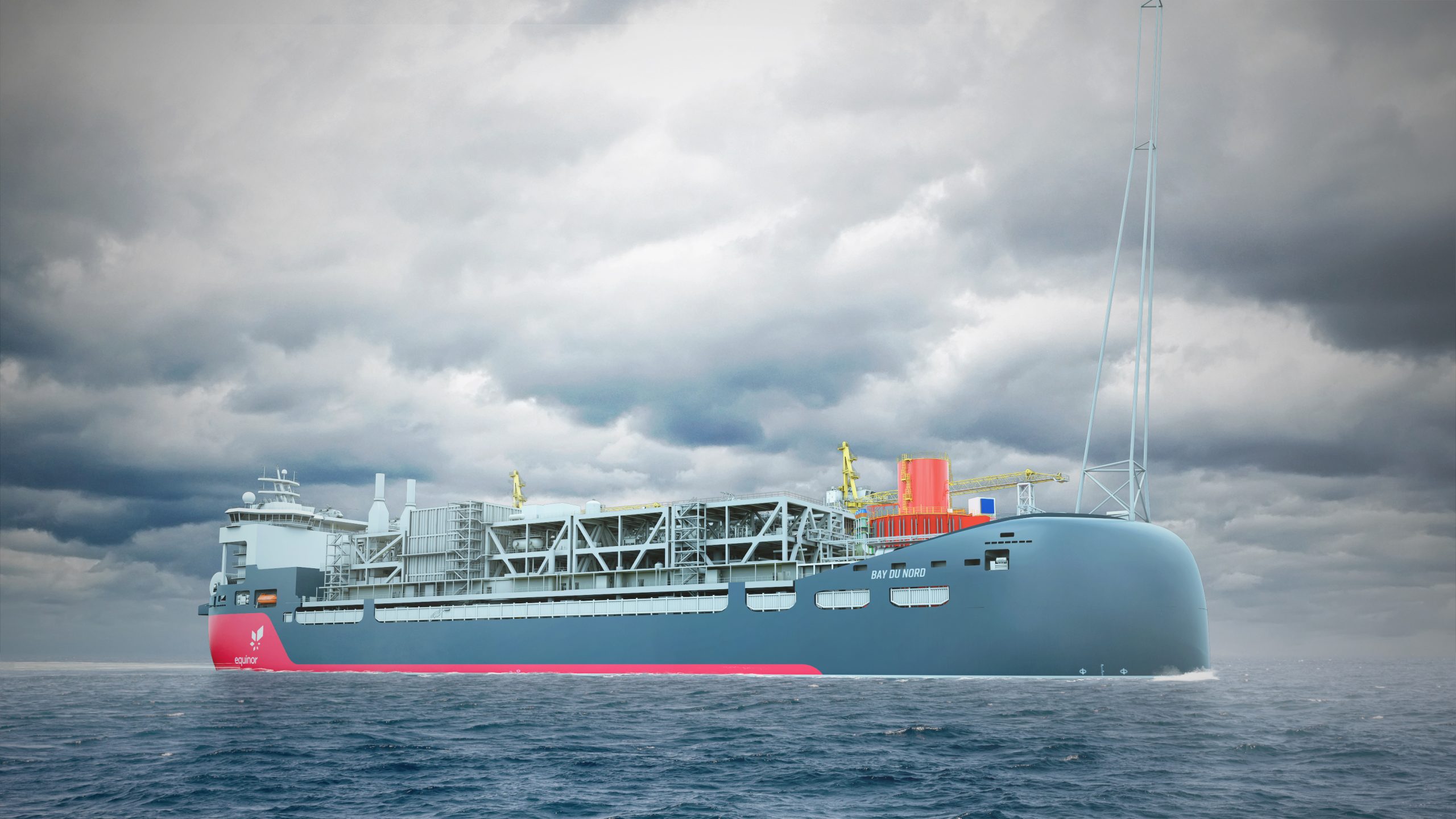
The recent Head of Agreement (HoA) between BW Offshore and Equinor Canada Ltd. marks a pivotal step forward for the Bay du Nord project, Canada’s inaugural deepwater oil development offshore Newfoundland and Labrador. This selection of BW Offshore as the preferred bidder for the Floating Production, Storage and Offloading (FPSO) unit underscores a significant commitment to unlocking an estimated 400 million barrels of recoverable light crude. With Equinor at the helm, partnered with bp, this project is poised to be a cornerstone of future Canadian oil production, demanding close attention from investors tracking global energy supply and specialized infrastructure plays. Our analysis delves into the strategic implications of this development, navigating both the project-specific catalysts and the broader market dynamics influencing deepwater investments.
Bay du Nord: A Strategic Deepwater Venture and Key Milestones
The Bay du Nord project represents a substantial long-term investment in a challenging yet resource-rich frontier. Equinor and bp’s commitment to this venture, alongside BW Offshore’s specialized expertise, signals confidence in its economic viability despite the inherent complexities of deepwater, sub-Arctic operations. The planned FPSO unit is engineered for resilience, featuring a disconnectable turret system and extensive winterization to withstand the harsh environment. Furthermore, its design capacity of up to 160,000 barrels of oil per day (bopd) and provisions for future tiebacks highlight a vision for sustained value creation beyond the initial phase. Environmental considerations are also embedded in the design, with emission reduction initiatives like high-efficiency power generation, heat recovery, variable speed drives, and a closed flare system, appealing to a growing segment of ESG-focused investors.
The HoA, formalized on September 1 following constructive dialogue since late 2023, initiates a critical phase of project maturation. BW Offshore and Equinor are now advancing discussions on technical and commercial aspects, including Front End Engineering Design (FEED) work. This involves developing a smart and cost-effective design, a crucial factor given the capital intensity of deepwater projects. Following the pre-FEED completion in mid-September, the partners will enter a bridging phase to prepare for FEED in early 2026, subject to approvals from Equinor and bp. BW Offshore’s commitment to establishing a local office in Newfoundland during the FEED phase also underscores a dedication to local value creation, a factor increasingly scrutinized by stakeholders and governments.
Navigating Volatility: The Macro Backdrop for Deepwater Investments
The advancement of Bay du Nord occurs against a backdrop of significant volatility in crude oil markets. As of today, Brent crude trades at $90.38, experiencing a notable 9.07% decline within the day, having ranged between $86.08 and $98.97. Similarly, WTI crude sits at $82.59, down 9.41% today, with its daily range spanning $78.97 to $90.34. This intraday swing is part of a broader trend; our proprietary data reveals Brent crude has fallen by 18.5% over the past 14 days, from $112.78 on March 30 to $91.87 just yesterday. Such fluctuations inherently impact the perceived risk and potential returns for long-lead projects like Bay du Nord, which require substantial upfront capital and long-term price assumptions.
For investors evaluating BW Offshore or the broader deepwater sector, these price movements are paramount. While a project like Bay du Nord has robust economics at higher price points, sustained downward pressure or extreme volatility can challenge financing structures and final investment decisions. The emphasis by BW Offshore CEO Marco Beenen on developing a “fit-for-purpose and cost-attractive solution” directly addresses this market reality. Project developers must meticulously manage capital expenditure and operational efficiency to ensure resilience across various price scenarios. The recent dip in gasoline prices to $2.93, a 5.18% drop today, further signals potential shifts in demand dynamics, which, if sustained, could weigh on future crude prices and the overall oil market sentiment.
Forward-Looking Catalysts: Upcoming Events and Investor Insights
Our proprietary reader intent data indicates a strong focus among investors on future oil price predictions for late 2026 and current OPEC+ production quotas. These questions directly tie into the long-term viability and financing prospects for projects like Bay du Nord. The timeline for FEED in early 2026 means that Equinor and bp will be closely monitoring global market dynamics as they approach their final investment decision. Upcoming energy events in the next fortnight offer critical insights into these very concerns.
The OPEC+ Joint Ministerial Monitoring Committee (JMMC) meeting on April 18, followed by the Full Ministerial meeting on April 19, are pivotal. Any adjustments to production quotas could significantly impact global supply balances and crude oil prices, directly influencing the economic models for deepwater developments. Investors will be keenly watching for signals regarding supply discipline or potential increases, which could either support or challenge the investment case for new production. Furthermore, the weekly API and EIA crude inventory reports, scheduled for April 21/28 and April 22/29 respectively, will provide crucial demand-side indicators. Consistent inventory builds could signal weakening demand or oversupply, adding pressure on prices, while draws would suggest a tightening market. Finally, the Baker Hughes Rig Count on April 24 and May 1 offers a forward-looking view on drilling activity and future production trends, vital for assessing overall market supply growth. These collective data points will shape the macro environment in which Bay du Nord seeks its final approvals and funding.
Investment Implications and Outlook for Deepwater Development
For investors, the Bay du Nord project highlights several key themes in the current energy landscape. First, it underscores the continued strategic importance of deepwater resources in meeting global energy demand, especially for light crude. BW Offshore’s selection validates its specialized FPSO expertise, making it a compelling play for those interested in energy infrastructure and services. Second, the project’s emphasis on emission reduction initiatives positions it favorably within the evolving ESG investment framework, a critical consideration for capital allocation today. The project’s long-term production profile and potential for future tiebacks suggest significant value creation over decades.
However, the inherent risks of deepwater projects – including large capital expenditures, potential for cost overruns, and the long development timelines – remain. These risks are amplified by the current volatility in crude oil prices. Equinor and bp’s bridging phase and the subsequent FEED in early 2026 provide a window to observe how geopolitical tensions, global economic growth, and OPEC+ policy decisions coalesce to shape the long-term price environment. For investors, monitoring these macro factors alongside project-specific milestones and BW Offshore’s execution capabilities will be crucial for assessing the full investment potential of Bay du Nord and its ripple effects across the deepwater oil and gas sector.


