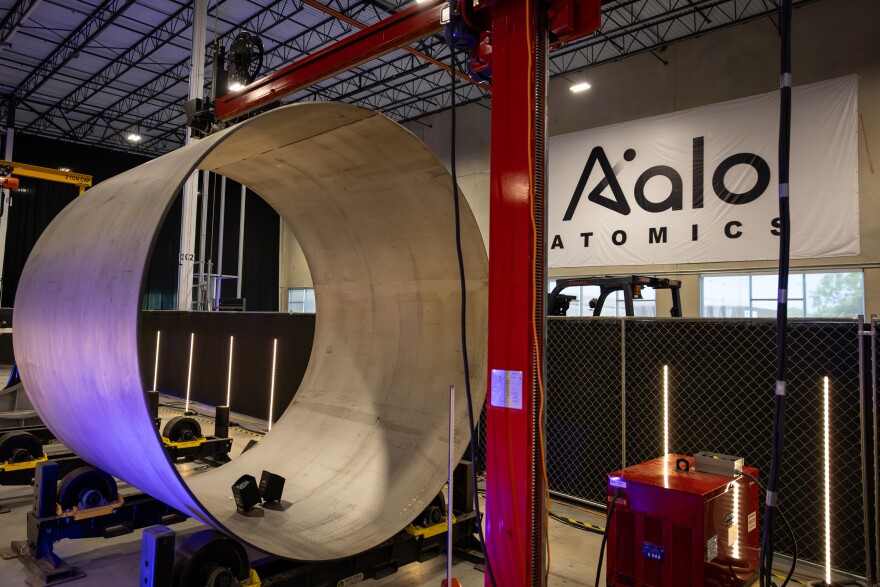
The energy landscape is undergoing a profound transformation, driven by unprecedented demand from emerging technologies like Artificial Intelligence. While the oil and gas sector grapples with immediate market dynamics, a significant long-term shift is taking shape with the advent of Small Modular Reactors (SMRs) designed specifically to power the AI revolution. This week’s major funding announcement for Aalo Atomics, securing $100 million in Series B capital to accelerate their Extra Modular Nuclear Reactor (XMR) development, underscores a pivotal moment where new energy solutions are rapidly scaling to meet this burgeoning demand. For oil and gas investors, understanding this evolving ecosystem is not merely a matter of tracking competition, but of recognizing how new demand centers and energy sources will redefine the future of hydrocarbon consumption and investment strategy.
The AI Power Surge: A New Frontier for Energy Demand
The scale of energy required by Artificial Intelligence is staggering, with industry leaders projecting triple-digit increases in power supply needs in the coming months and years. This creates an immense commercial opportunity for innovative energy solutions, and nuclear SMRs are rapidly positioning themselves at the forefront. Aalo Atomics, with its latest $100 million Series B funding round, bringing its total capital raised to over $136 million, is a prime example of this accelerating trend. The company plans to begin construction on its first XMR this month, targeting operational status as early as 2026. Their flagship “Aalo Pod,” a 50 MWe sodium-cooled LEU+ fueled reactor, is designed for onsite scalability with data centers, directly addressing the concentrated, high-density power requirements of AI. For oil and gas, this signifies a potential long-term diversion of future electricity demand that might otherwise have been met by natural gas-fired power plants. As these modular nuclear facilities become a viable, mass-manufactured solution, their impact on the energy mix, particularly for industrial electrification, cannot be overstated.
Navigating Current Oil Market Dynamics Amidst Long-Term Shifts
While the long-term energy transition unfolds, oil and gas investors must contend with immediate market realities. As of today, Brent crude trades at $98.3 per barrel, reflecting a 1.1% decline over the session, with an intraday range of $98.11 to $98.3. Similarly, WTI crude is priced at $89.84, down 1.46%, fluctuating between $89.72 and $90.08. This recent downward pressure follows a notable trend over the past 14 days, where Brent crude saw a significant correction, dropping from $108.01 on March 26th to $94.58 by April 15th – a decline of over 12%. This volatility is driven by a complex interplay of macroeconomic concerns, geopolitical tensions, and ongoing supply-demand dynamics. While the emergence of SMRs for AI power generation is a multi-year development, the consistent need for robust analysis of current market data remains paramount for investors navigating the daily fluctuations and positioning their portfolios effectively. The shift towards new, clean energy sources for high-growth sectors like AI will undoubtedly influence the long-term demand outlook for fossil fuels, adding another layer of complexity to these price movements.
Upcoming Catalysts: OPEC+ Decisions and Inventory Levels
The immediate future for crude prices will largely hinge on a series of critical upcoming events, which investors are keenly monitoring. A key highlight on the calendar is the OPEC+ Joint Ministerial Monitoring Committee (JMMC) meeting scheduled for April 18th, swiftly followed by the full OPEC+ Ministerial Meeting on April 20th. These gatherings are crucial for assessing the group’s stance on current production quotas and potential adjustments to market supply, directly impacting global crude benchmarks. Our proprietary reader intent data indicates a strong investor focus on understanding OPEC+’s current production policies and their implications for market stability. Beyond OPEC+, the weekly inventory reports from the American Petroleum Institute (API) on April 21st and 28th, and the subsequent official EIA Weekly Petroleum Status Reports on April 22nd and 29th, will provide vital insights into U.S. crude, gasoline, and distillate stockpiles, serving as barometers for short-term demand and supply imbalances. Additionally, the Baker Hughes Rig Count reports on April 17th and 24th will offer a glimpse into North American drilling activity, hinting at future production trends. These events collectively represent significant catalysts that could introduce further volatility into oil prices, requiring investors to maintain a sharp focus on real-time data and forward-looking analysis.
Investment Implications for Oil & Gas Portfolios
For oil and gas investors, the rapid advancement of SMR technology for AI power generation presents a compelling long-term strategic consideration, even as they manage short-term market fluctuations. The narrative of energy transition is expanding beyond electric vehicles and renewable grid integration to encompass industrial and computational demand. The significant capital infusion into companies like Aalo Atomics, coupled with their aggressive timeline for deployment by 2026, signals a serious contender for future power generation that could mitigate, or even displace, traditional fossil fuel demand in key sectors. Investors are increasingly asking about the underlying models and data powering market responses, underscoring a need for sophisticated tools to parse these complex dynamics. This shift necessitates a re-evaluation of long-term demand growth assumptions for natural gas, particularly in regions where data center expansion is robust. Companies heavily invested in natural gas for power generation may face evolving competitive pressures. Strategic diversification, investment in carbon capture technologies, or pivoting towards hydrogen production could become increasingly critical for O&G firms seeking to future-proof their portfolios against the backdrop of an accelerating energy transition driven by novel demand vectors like AI.


