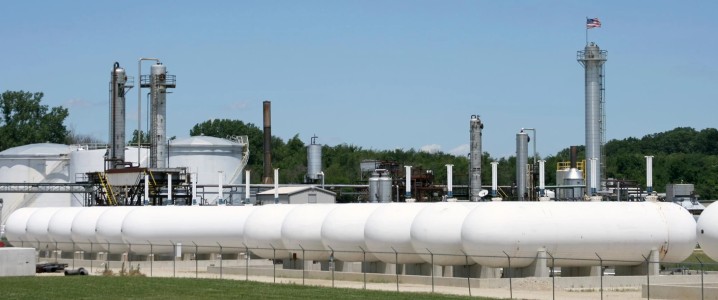
Exxon’s recent long-term energy outlook provides a crucial lens for investors navigating the complex shifts in global energy markets. The company projects a robust increase in global natural gas demand, estimating a more than 20% surge by 2050 from 2024 levels. This significant growth is underpinned by natural gas’s pivotal role in displacing coal for industrial heat and expanding electricity generation in burgeoning economies, alongside a structural increase in U.S. domestic consumption and LNG exports. While oil demand is anticipated to plateau after 2030, remaining above 100 million barrels per day through mid-century, the combined share of oil and gas is expected to maintain around 55% of the total global energy mix. For investors, understanding these foundational forecasts is essential for positioning portfolios in a rapidly evolving landscape where transition fuels like natural gas are poised for sustained relevance.
Natural Gas: The Enduring Growth Story for Investors
Exxon’s forecast for over 20% growth in global natural gas demand by 2050 highlights a compelling investment thesis for the coming decades. This demand surge is not uniform but concentrated in key areas. Emerging Asia is identified as the primary driver of incremental gas consumption, where industrialization and expanding power grids increasingly rely on natural gas to transition away from higher-carbon fuels like coal. Concurrently, the United States is poised for record-breaking natural gas consumption as early as 2025, fueled by robust power generation needs and a burgeoning LNG export industry along the Gulf Coast. The commissioning of new liquefaction capacity and persistent peak summer electricity demand will solidify structural demand for Henry Hub-linked supply. Our proprietary intent data shows investors are keenly focused on long-term price predictions, with many asking about oil prices by the end of 2026. Exxon’s outlook offers a fundamental underpinning for such long-term commodity views, particularly for natural gas, emphasizing its role as a stable and growing energy source amidst the broader energy transition. This trajectory underscores the strategic importance of upstream gas producers, midstream infrastructure, and LNG project developers.
Navigating Current Market Volatility Amidst Long-Term Visions
While Exxon’s long-term outlook paints a picture of steady natural gas growth, the immediate energy markets remain highly dynamic. As of today, Brent crude trades at $90.38, reflecting a significant decline of 9.07% within the day, with its range fluctuating between $86.08 and $98.97. Similarly, WTI crude stands at $82.59, experiencing a sharp 9.41% drop, trading within a daily range of $78.97 to $90.34. This immediate volatility is stark, especially when considering the 14-day Brent trend, which saw prices fall from $112.78 on March 30th to $91.87 on April 17th, a substantial decrease of $20.91 or 18.5%. Our first-party data reveals this immediate volatility directly impacts investor sentiment, prompting frequent inquiries such as, “What do you predict the price of oil per barrel will be by end of 2026?” and “What are OPEC+ current production quotas?” These questions underscore the market’s attempt to reconcile short-term supply-demand dynamics and geopolitical influences with the longer-term structural shifts outlined by major players like Exxon. Despite daily fluctuations, the strategic investor will likely view current price dips as potential entry points, particularly for companies with strong exposure to the long-term natural gas thesis, which remains largely insulated from these daily crude price swings due to its distinct demand drivers.
Upcoming Catalysts and Strategic Positioning
Exxon’s strategic response to this outlook includes an 18% production increase over five years, signaling a commitment to meeting future energy demand, particularly in the gas sector. This expansion aligns with an evolving demand profile: while gasoline consumption is projected to fall by approximately 25% by 2050 due to accelerated electric vehicle adoption, demand for distillates like diesel and jet fuel is expected to remain comparatively resilient, reflecting persistent needs in aviation and heavy-duty transport. For investors, understanding these nuanced sectoral shifts is critical. Looking ahead, the energy market faces several near-term catalysts that will influence both sentiment and supply. The upcoming OPEC+ Joint Ministerial Monitoring Committee (JMMC) meeting on April 18th, followed by the Full Ministerial Meeting on April 19th, will be crucial. These meetings often dictate short-to-medium term supply decisions, directly impacting the market sentiment that has driven Brent down nearly 18.5% over the past 14 days. Furthermore, the API Weekly Crude Inventory reports on April 21st and 28th, along with the EIA Weekly Petroleum Status Reports on April 22nd and 29th, will offer granular insights into US supply and demand, particularly relevant given Exxon’s forecast for record US gas demand by 2025 driven by LNG exports and power generation. The Baker Hughes Rig Count on April 24th and May 1st will provide a pulse on upstream activity, signaling potential future supply adjustments. These events will provide crucial data points for investors evaluating the short-term market against Exxon’s long-term strategic direction.
Investment Implications Across Regions and Environmental Goals
The regional dynamics of natural gas demand present distinct investment opportunities. Emerging Asia is clearly positioned as the engine of incremental growth, while OECD power systems are expected to integrate more renewables alongside flexible gas-fired generation, highlighting gas’s role in grid balancing. Supply growth is anticipated to be concentrated in North America, the Middle East, and key LNG basins, making companies with strong operational footprints in these regions particularly attractive. Beyond demand and supply, Exxon’s outlook also addresses environmental considerations, estimating energy-related CO2 emissions at roughly 27 billion metric tons by 2050. While this represents a ~25% decline from current emissions and assumes continued efficiency gains and methane-abatement progress, it still exceeds levels aligned with UN goals. This aspect is increasingly relevant for investors focusing on ESG criteria. Companies actively investing in methane abatement technologies and carbon capture solutions, alongside their core production, could gain a competitive edge. The overarching message for investors is clear: natural gas remains a foundational element of the global energy system for decades to come, offering substantial opportunities in upstream production, midstream infrastructure, and LNG export projects, especially for firms strategically positioned in high-growth regions and committed to operational efficiency and emissions reduction.


